
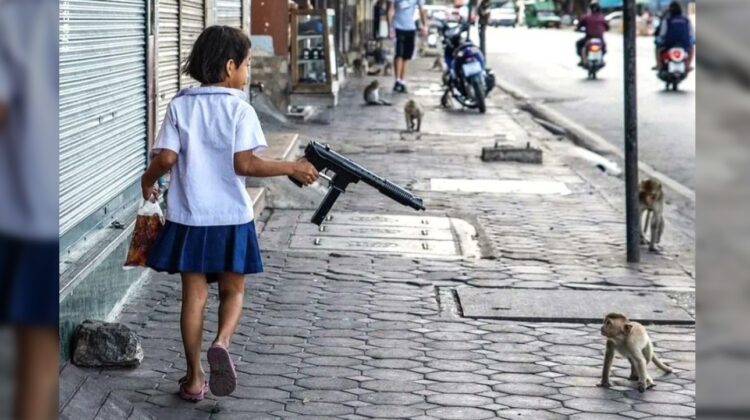
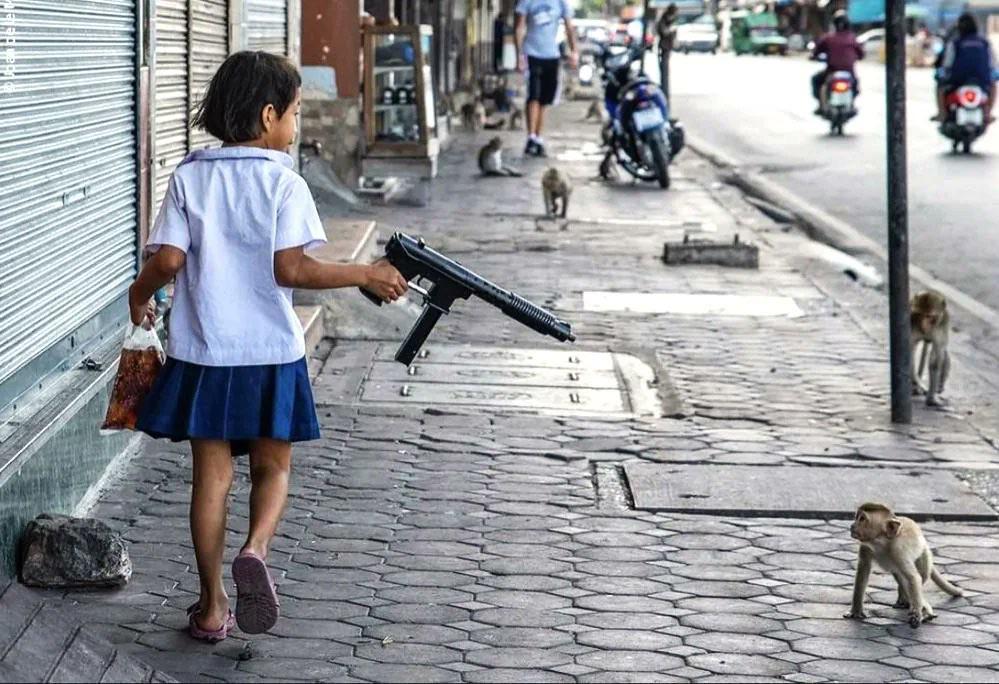
In the city of Lop Buri, Thailand, a young girl carries a bag of food through the streets — yet her journey is far from ordinary. All around her, hundreds of long-tailed macaques roam the rooftops, electric wires, and sidewalks, drawn by the scent of the food she carries. Once revered as sacred creatures linked to the Hindu god Hanuman, these monkeys have now been pushed into a delicate struggle for survival, navigating a world shaped by humans who have fed them for generations.
Over decades, well-intentioned feeding by locals and tourists created a dependency. The macaques learned that humans meant food, and their population swelled into the thousands. Today, they raid markets, climb through windows, and snatch treats from children or street vendors — not out of malice, but because the world around them has changed. Their intelligence and resourcefulness are a testament to their adaptability, not a sign of defiance.
During the COVID-19 lockdowns in 2020, when tourists disappeared and handouts vanished, the consequences of this dependency became clear. Rival troops clashed over scarce resources in chaotic “monkey wars,” leaping across cars and streets — a heartbreaking illustration of what happens when human intervention disrupts nature.
Thai authorities have tried humane measures: sterilization campaigns and containment efforts aimed at restoring balance without harming the animals. Yet the macaques’ cleverness makes management difficult. Residents, frustrated and sometimes fearful, carry sticks or airsoft guns — not to hurt, but to protect themselves and their belongings.
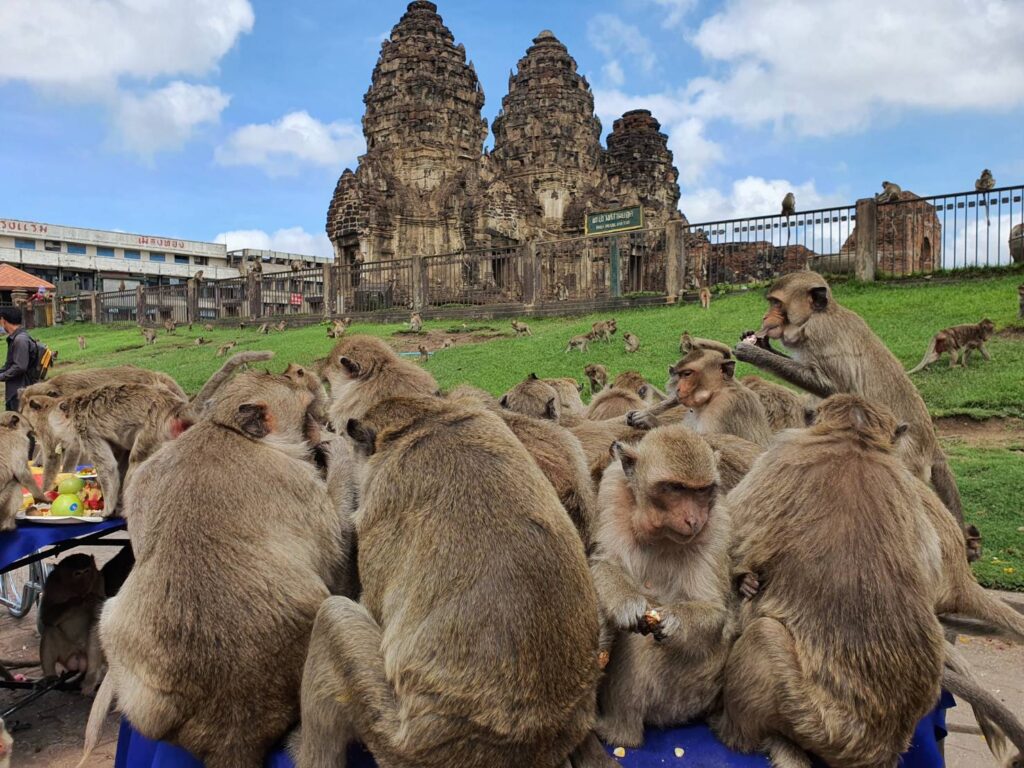
For Lop Buri’s people, life is now a negotiation between tolerance and survival. The monkeys bring tourism and income, yet also conflict and tension. Streets lined with temples and ancient ruins echo not just with prayers, but with the cries of creatures struggling to navigate a city transformed by human hands.
Conservationists see Lop Buri as a cautionary tale. When wild animals become dependent on humans, it disrupts their natural behaviors and creates instability for both species. True coexistence will require education, humane population control, and responsible waste management — addressing the root causes rather than punishing the animals for survival instincts they did not choose.
Until then, the girl with the bag of food is a symbol of this uneasy truce: a child walking alongside a city’s wildlife, where ancient reverence meets modern chaos, and where survival depends on learning to share space with the wild, rather than fearing or harming it.
Leave a Reply