
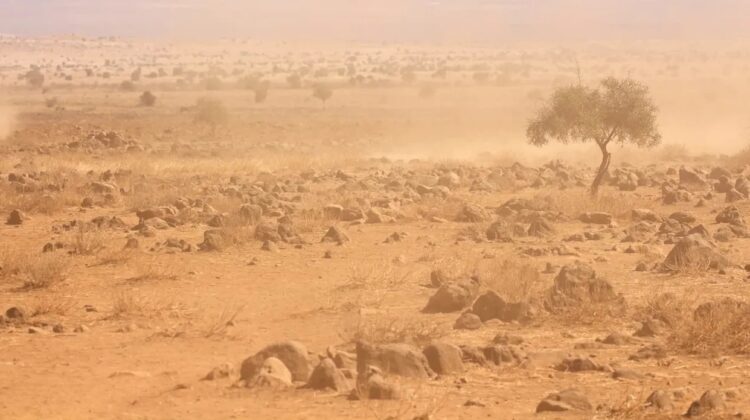
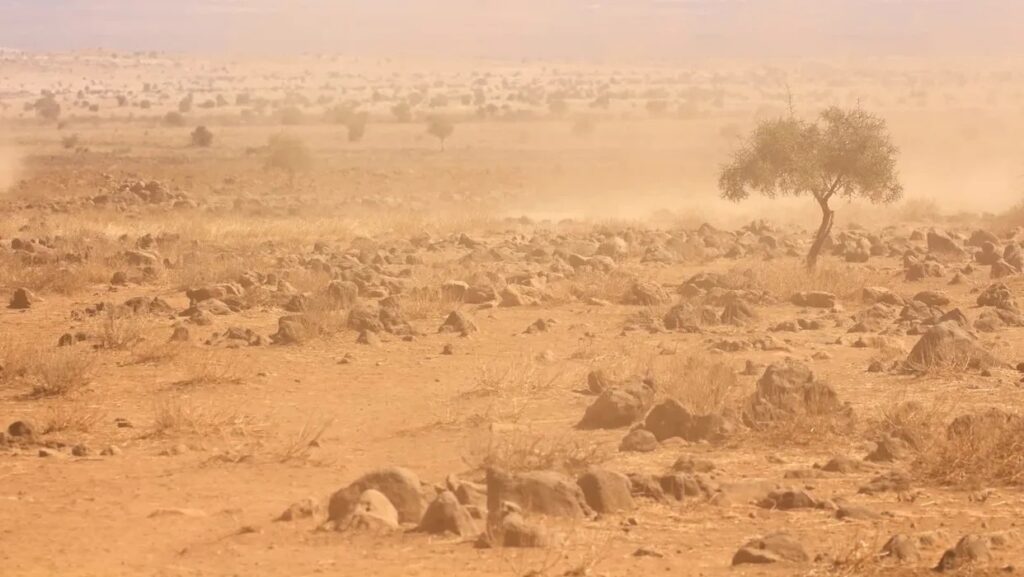
Across the sun-scorched plains of Somalia, the land tells a story before words are spoken. Riverbeds have turned to dust. Pastures have withered into brittle straw. Animal carcasses lie scattered where herds once grazed.
The numbers are staggering.
More than 3 million people in Somalia have been forced from their homes as a devastating drought grips the country’s rural regions. Nearly 6 million people now require humanitarian aid, including 1.85 million children.
What began as failed rains has evolved into a cascading humanitarian emergency — one that threatens lives, livelihoods, and regional stability.
Four Failed Rainy Seasons — And a Collapsing Food System
The crisis follows four consecutive failed rainy seasons, an event that has decimated crops and triggered widespread livestock deaths across large swaths of East Africa.
While Somalia faces the most severe impacts, neighboring Ethiopia and Kenya are also suffering under the same relentless climate pattern.
In Kenya alone, more than 2 million people are experiencing hunger, particularly in pastoralist communities where livestock form the backbone of survival. Animals — once symbols of wealth and resilience — now stand emaciated, ribs protruding, too weak to survive prolonged dehydration.
For many families, livestock are not just economic assets. They are savings accounts, food sources, and generational security. Their loss represents not only hunger today, but uncertainty tomorrow.
Children Showing “Visible Signs of Malnutrition”
Humanitarian organizations on the ground are witnessing the toll firsthand.
Islamic Relief — founded in 1984 in the United Kingdom and operating in more than 40 countries — recently issued a report titled “Urgent action needed to save lives as severe drought worsens across the Horn of Africa.”
The findings are stark.
According to reporting by the Associated Press, children arriving at displacement camps are “showing visible signs of malnutrition and wasting.”
Entire communities are abandoning rural areas, traveling toward makeshift camps in search of food and water. But aid resources remain critically limited.
Aliow Mohamed, Islamic Relief’s Country Director in Somalia, warned:
“The situation is desperate, but we fear the worst is yet to come. Our teams across Somalia are already seeing livestock deaths, water scarcity, and rising malnutrition.”
He added:
“Masses of people are fleeing rural areas for camps where they hope to get some aid, but there is not enough aid for everyone. The next few months are critical — we must act now to stop this drought turning into famine.”
Echoes of a Recent Catastrophe
The unfolding crisis resurrects painful memories of another prolonged drought that gripped the region from 2020 to 2023.
During that period, millions of animals perished across Kenya, Ethiopia, and Somalia. The United Nations World Food Programme reported that nearly 10 million livestock died during the earlier drought.
In Somalia, livestock accounts for approximately 45% of national GDP, making the loss both an economic and humanitarian disaster.
The region has barely recovered from that catastrophe — and now faces renewed devastation.
Climate Change and Extreme Weather in the Horn of Africa
According to Islamic Relief’s report:
“Climate change is driving increasingly frequent extreme weather events in the Horn of Africa — this latest drought comes as the region is still recovering from its worst drought in 70 years due to successive failed rains between 2021 and 2023, which was followed by deadly floods.”
The report highlights a striking disparity:
Somalia, Ethiopia, and Kenya collectively produce only around 0.1% of global carbon emissions, yet they are among the most severely affected by climate-related extremes.
The cycle is increasingly volatile — prolonged droughts followed by intense flooding. Crops fail in dry seasons. Floodwaters then wash away fragile recovery efforts.
Kenya’s Expanding Climate Risks
Kenya, in particular, faces compounding environmental threats.
A report from the National Council for Population and Development outlines escalating climate vulnerabilities, including:
- Frequent and intense droughts
- Severe storms and flooding
- Heat waves
- Rising sea levels
- Melting glaciers
- Warming oceans
These forces are destabilizing ecosystems and undermining livelihoods.
Scientists also warn that Mombasa, Kenya’s second-largest city, faces a convergence of climate hazards. Flooding, mangrove forest loss, and saltwater intrusion threaten low-lying neighborhoods, transport corridors, and the coastal economy.
A Region at a Crossroads
Across the Horn of Africa, the human cost of climate volatility is becoming increasingly visible.
Herds have thinned. Wells have run dry. Families walk for miles under unforgiving sun, carrying what little they can salvage.
Local communities often share what limited food and water they have with newly displaced families — acts of solidarity in the face of scarcity. But humanitarian leaders stress that community resilience alone cannot withstand prolonged climate shocks.
Without expanded aid and coordinated international response, drought conditions risk escalating into full-scale famine.
In Somalia and across the Horn of Africa, this is no longer a distant environmental issue — it is a daily struggle for survival. Failed rains have triggered a chain reaction: livestock deaths, food shortages, mass displacement, and rising child malnutrition. Nations contributing almost nothing to global carbon emissions now stand on the front lines of the climate crisis. As humanitarian agencies warn that the worst may still lie ahead, the coming months will determine whether this drought becomes another preventable tragedy — or a turning point in global climate accountability.
Leave a Reply