
A simple change in your fingernails—known as nail clubbing—can sometimes point to serious conditions like lung cancer, heart failure, or liver disease. Learn what it means and when to seek medical help.
A Small Change That Could Mean Something Big
Your body often whispers before it screams.
Among those whispers is a strange but revealing sign—nail clubbing, a subtle change in the shape and texture of your fingertips that could point to an underlying serious disease.
While it might appear harmless, experts warn that clubbing may be linked to lung cancer, chronic heart disease, or liver failure, conditions that require immediate medical attention.
What Exactly Is Nail Clubbing?
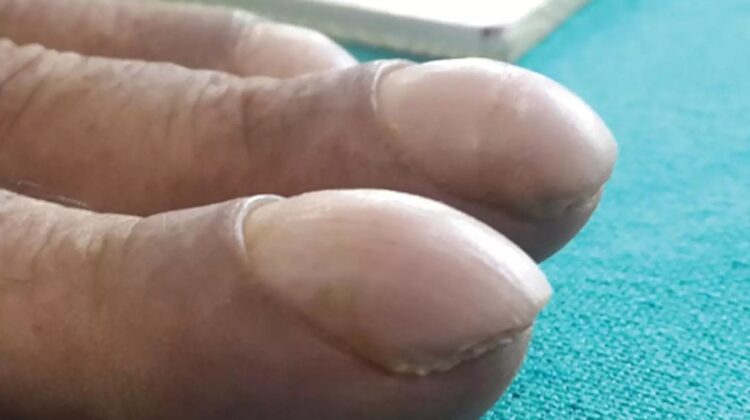
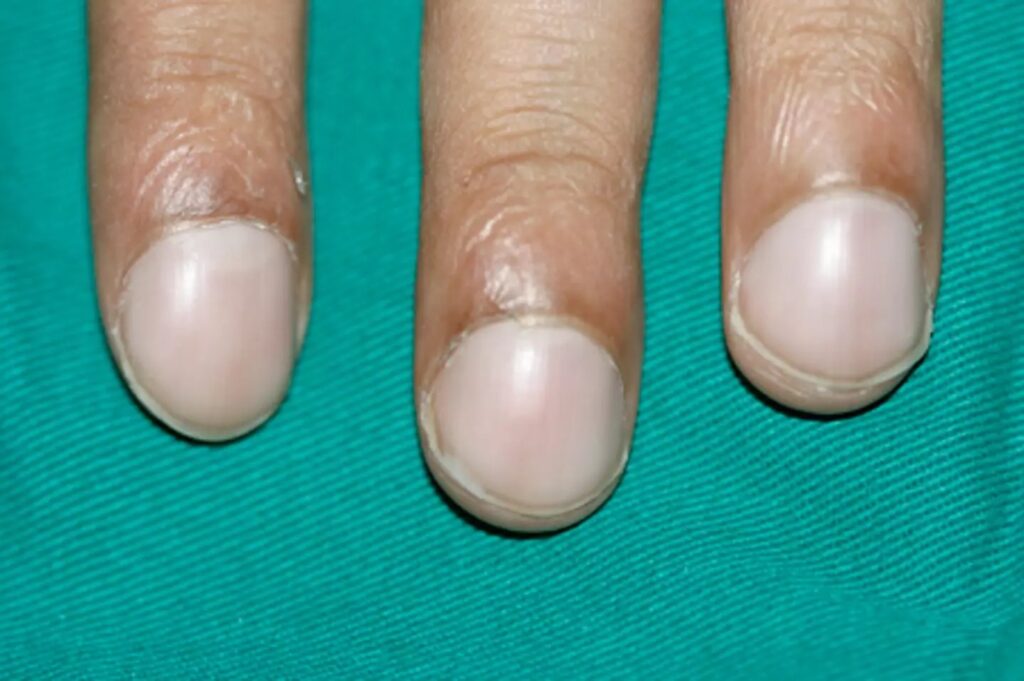
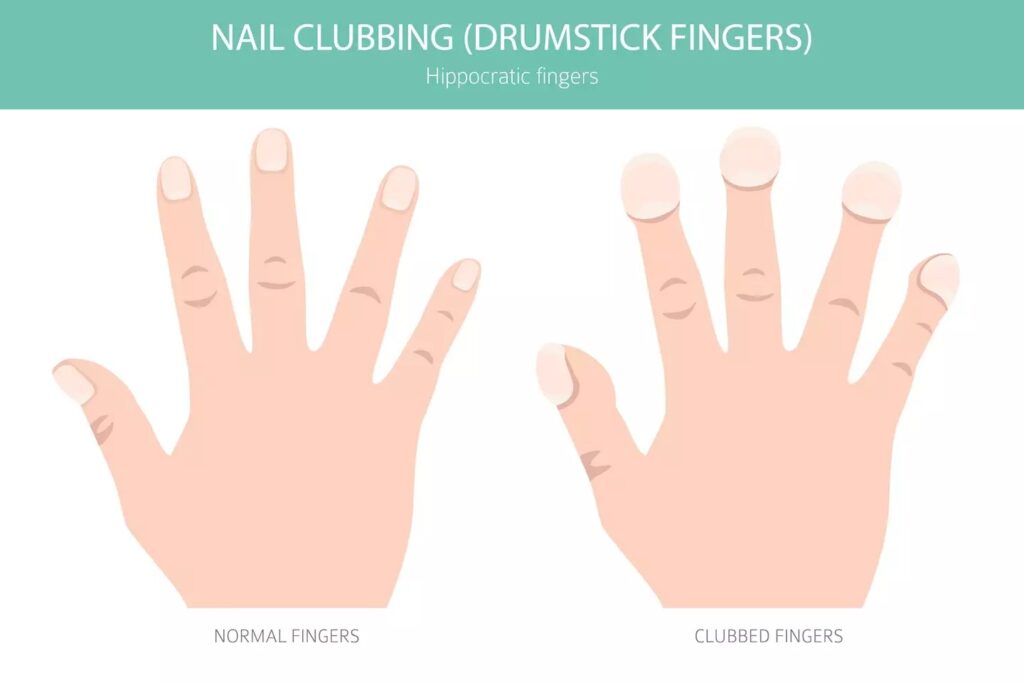
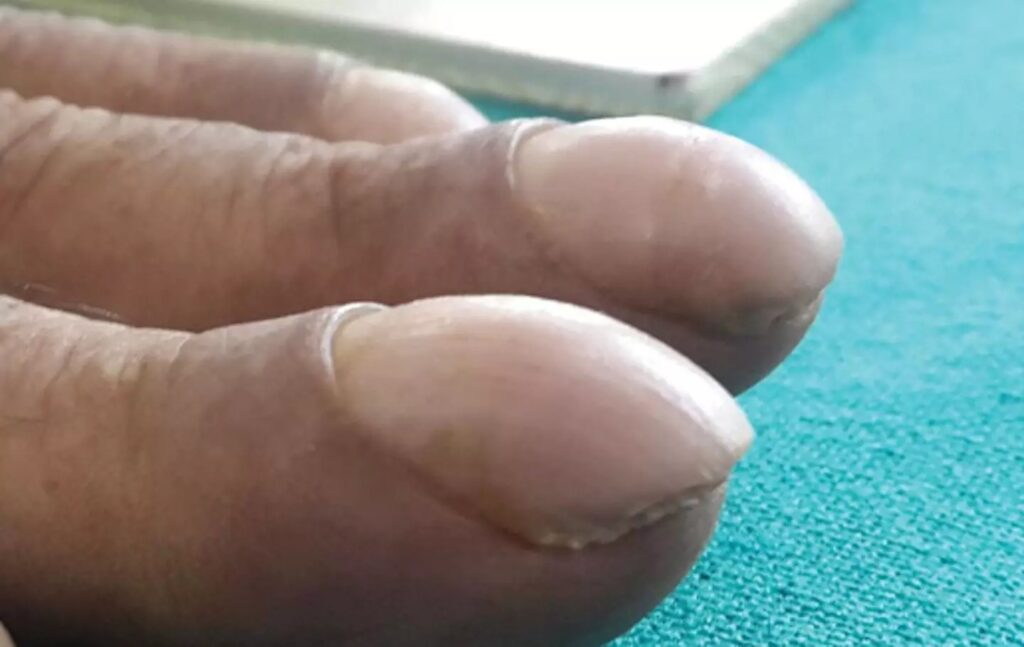
According to the Cleveland Clinic, nail clubbing is a visible change in the shape, curve, and thickness of your fingernails or toenails.
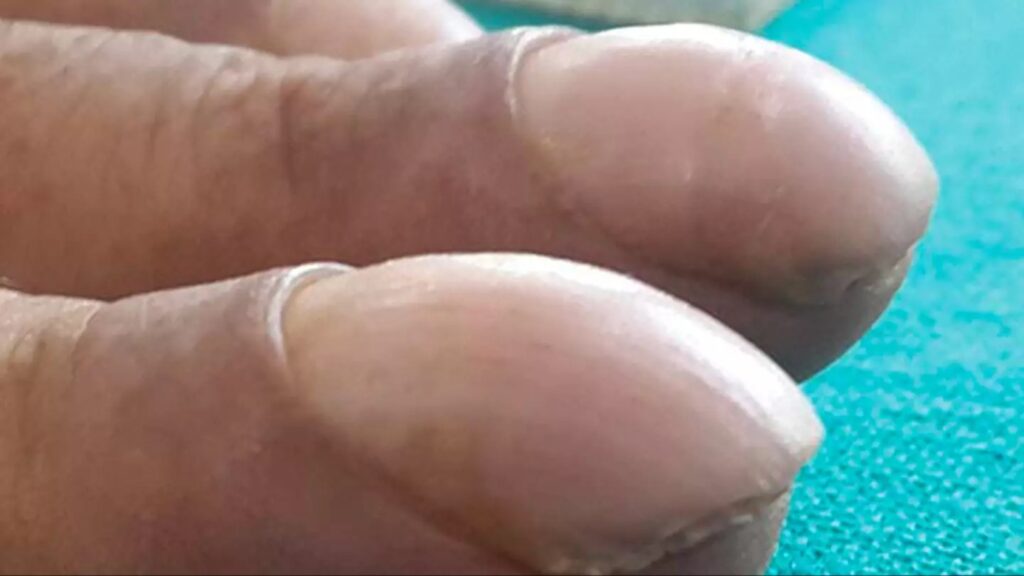
In this condition:
- The nail beds become soft or spongy to the touch.
- Nails curve downward, taking on the look of an upside-down spoon.
- The fingertips may appear red, warm, and swollen.
It often starts with the thumb and index finger, then spreads to other digits. While sometimes only a few nails are affected, the underlying reason may be systemic—meaning it involves your lungs, heart, or liver.
The Connection to Lung and Heart Diseases
Medical research links 90% of nail clubbing cases to lung-related conditions, including:
- Lung cancer
- Interstitial lung disease
- Cystic fibrosis
- Chronic lung infections
Dr. Malay Sarkar, a leading oncologist and pulmonologist, found that finger clubbing appears in nearly 9 out of 10 lung cancer patients (Journal of Thoracic Oncology, 2012).
Cardiologists also observe the condition in patients with congenital heart disease or infective endocarditis, where poor oxygen circulation changes tissue structure over time.
Beyond the Lungs: Other Hidden Triggers
Experts at London’s Guy’s and St Thomas’ Hospital highlight that clubbing may also occur in people suffering from:
- Liver disease (including cirrhosis)
- Gastrointestinal disorders (such as Crohn’s disease or ulcerative colitis)
- Thyroid or metabolic conditions
- Rare skin and connective tissue diseases
Additionally, dark or vertical lines forming beneath the nail—known as melanonychia—may, in rare cases, indicate subungual melanoma, a form of skin cancer under the nail.
When to Seek Medical Advice
Doctors emphasize that noticing early changes and getting a professional diagnosis can save lives.
If your nails:
- Become abnormally curved, swollen, or soft
- Turn red or develop lines under the nail
- Feel warmer or thicker than usual
…you should consult your doctor or dermatologist immediately.
Early testing—like a chest X-ray, CT scan, or liver function panel—can help detect hidden diseases before they progress.
The Takeaway
Sometimes, your body sends signals in small, quiet ways.
A slight change in your nails may be the first warning sign of something deeper.
By paying attention to these subtle shifts, you’re not just protecting your health—you’re giving yourself the gift of early discovery.
Because even a single fingertip can tell a story your heart or lungs haven’t yet spoken aloud.
Leave a Reply