
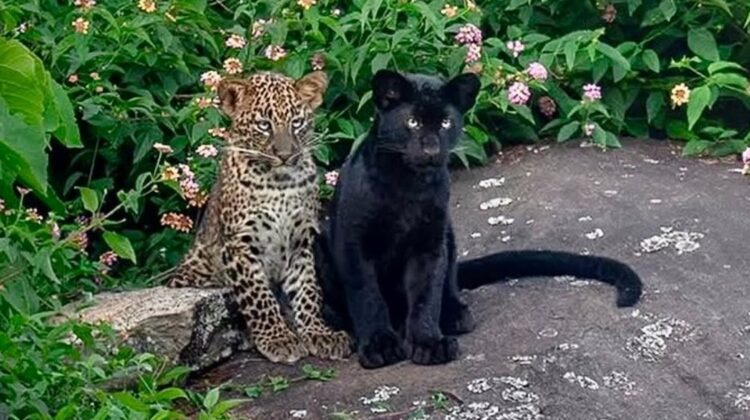
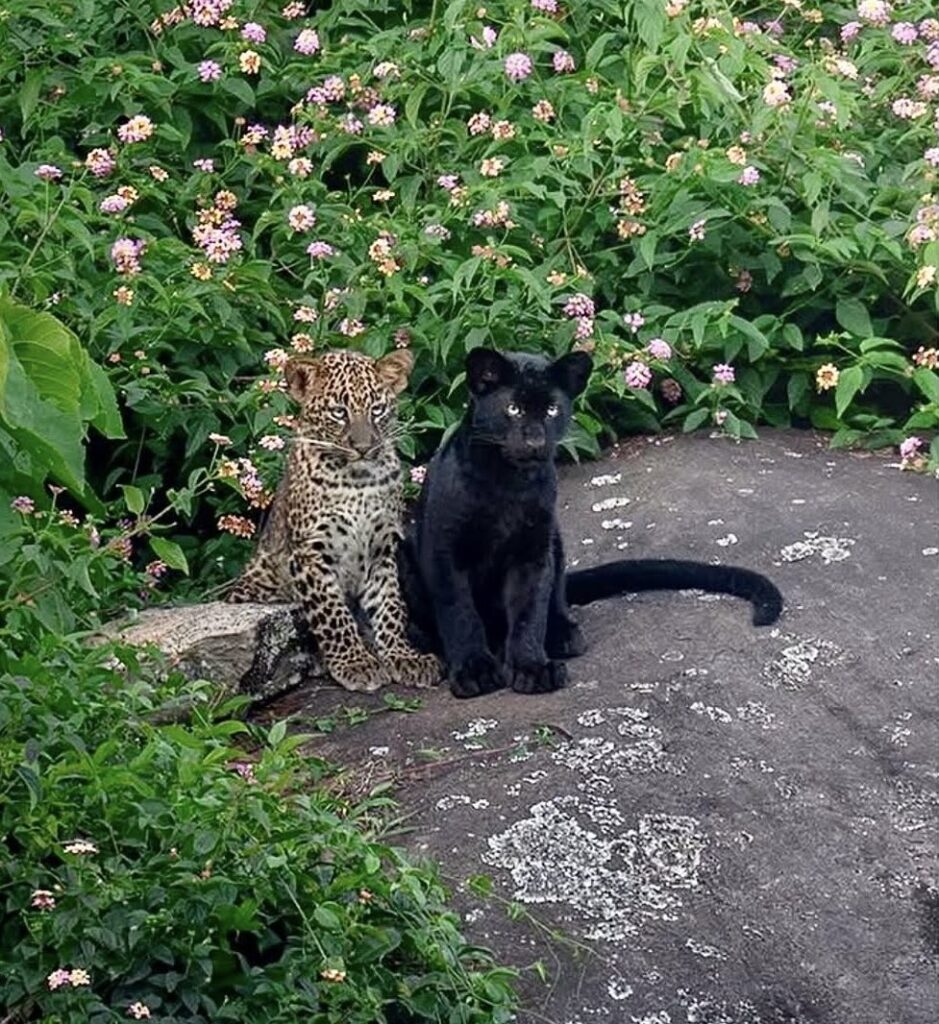
In a remarkable and rarely documented moment in the wild, wildlife photographers have captured two leopard cub siblings sitting side by side — one with the classic golden coat covered in dark rosettes, and the other with a deep, velvety black coat that gleams under the sunlight.
Despite their strikingly different appearances, both cubs belong to the same species, Panthera pardus. The black cub’s unique coloring is the result of melanism — a rare genetic variation that causes an overproduction of dark pigment, turning the animal’s fur completely black. Yet, when light hits it just right, the leopard’s trademark rosettes can still be seen faintly beneath the dark sheen.
Experts say sightings like this are extraordinarily rare, as melanistic leopards make up only a small percentage of the global leopard population. Most often, they are found in the dense forests of India, Sri Lanka, and parts of Southeast Asia — regions where their dark coats offer better camouflage.
The photograph of the two siblings, one golden and one black, serves as a powerful symbol of nature’s genetic diversity — a reminder of how evolution continues to shape even the most familiar of species in fascinating ways.
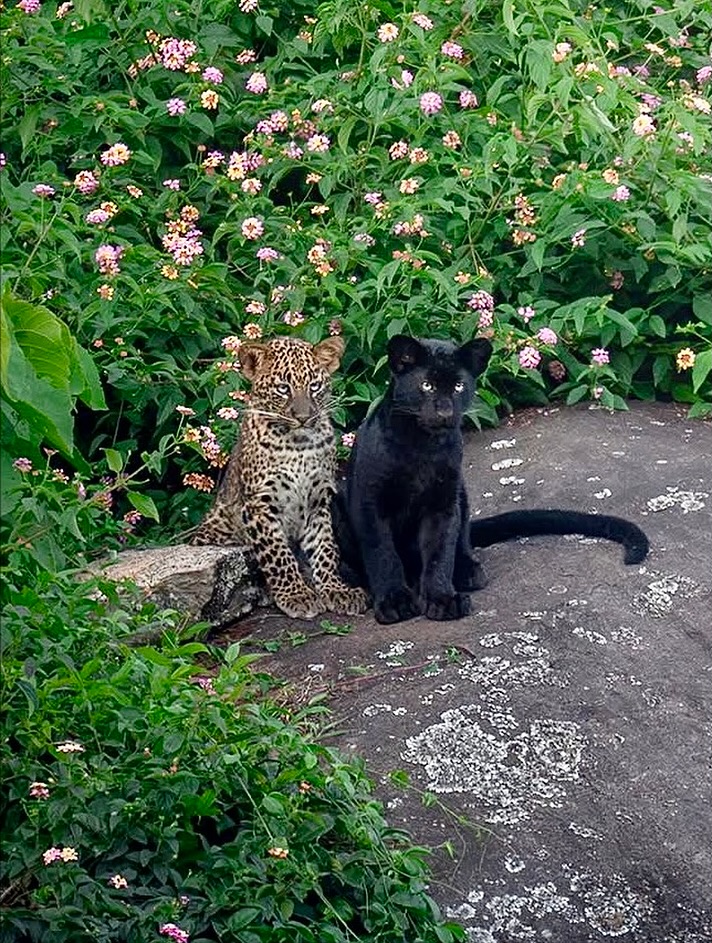
“This is nature’s artistry at work,” said one conservationist. “Two cubs from the same mother, each perfectly adapted in its own way — it’s a living example of how beauty takes many forms in the wild.”
Leave a Reply