
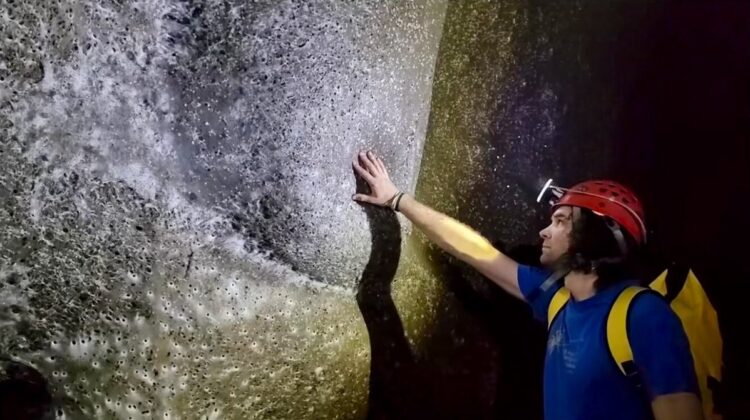
In an astonishing discovery that sounds like something out of a sci-fi movie, scientists have uncovered the world’s largest spiderweb — deep inside a pitch-black Sulfur Cave on the border between Greece and Albania.
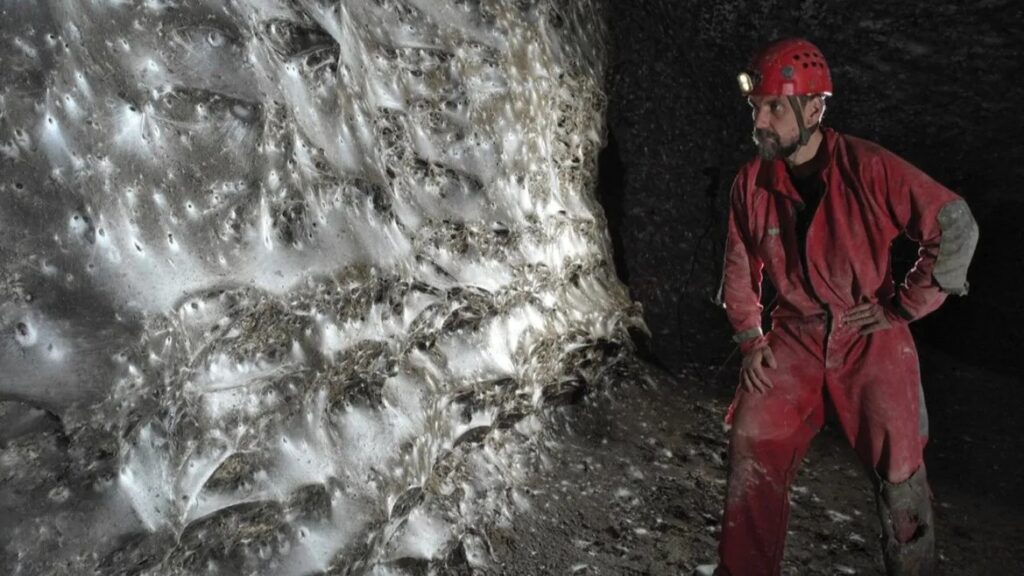
Inside this mysterious, sulfur-filled chamber, more than 111,000 spiders were found living together in a single colossal web — stretching across over 1,140 square feet (106 square meters) of rock wall. This discovery has left researchers both stunned and fascinated.
A Hidden “Spider City” Beneath the Earth
According to biologist István Urák of Sapientia Hungarian University of Transylvania, the discovery represents the first-ever evidence of two spider species cohabiting peacefully in one giant web — a phenomenon never before observed.
The web was first noticed by cave explorers in 2022, but it wasn’t until scientists returned in 2024 that the true scale of the “spider city” was revealed.
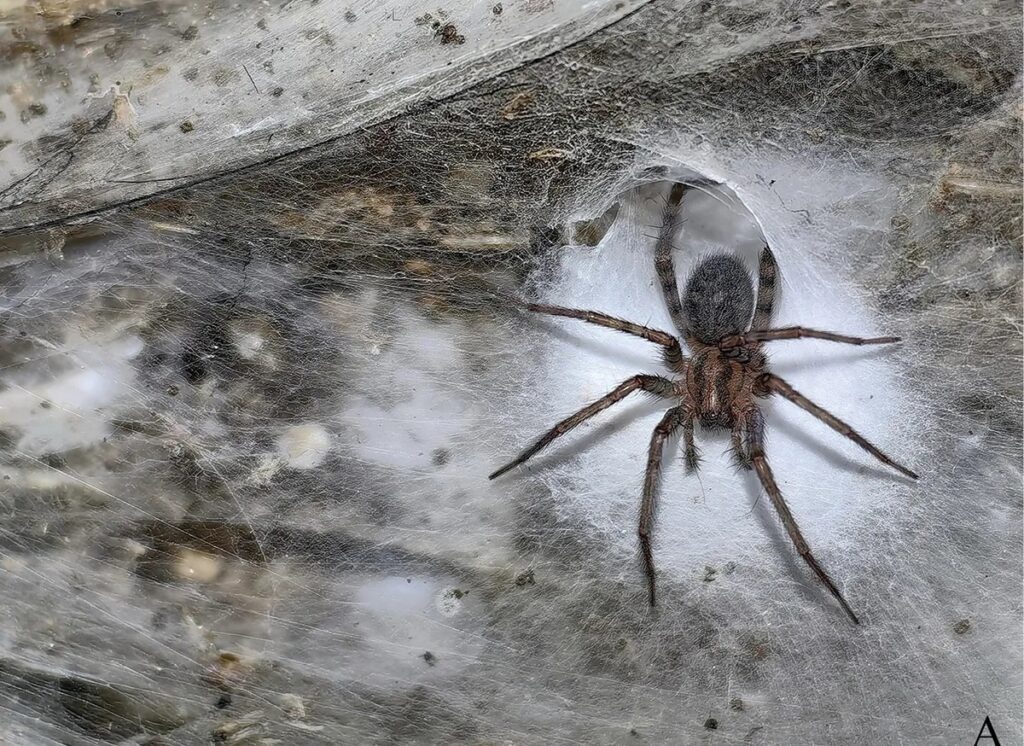
Inside, they identified two species: Tegenaria domestica (the common barn funnel weaver) and Prinerigone vagans, both living in perfect harmony — an incredible twist since these spiders would normally compete or even prey on each other.
How Do They Survive in Such Harsh Conditions?
Sulfur Cave is unlike any other habitat. It’s filled with toxic hydrogen sulfide gas, acidic groundwater, and total darkness — an environment where most creatures couldn’t survive.
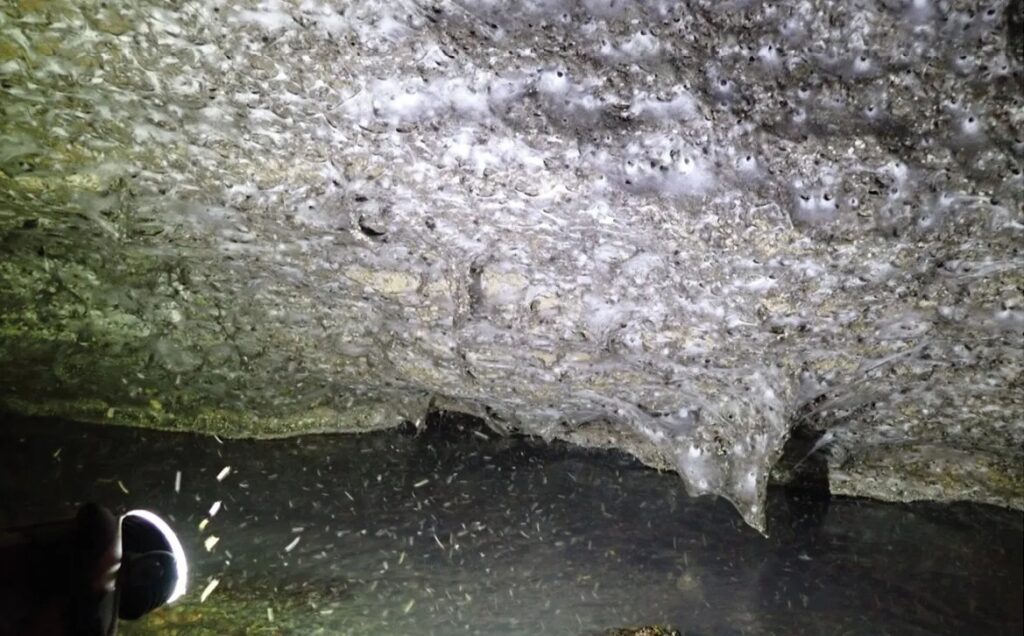
Yet these spiders have adapted to the sulfur-rich ecosystem, feeding on tiny non-biting midges that live off white microbial biofilms formed by sulfur-oxidizing bacteria.
Researchers found that the spiders’ microbiomes had changed dramatically compared to their above-ground relatives — evidence of rapid evolutionary adaptation to extreme environments.
Evolution in Real Time
DNA analysis confirmed that the cave spiders were genetically distinct from their outdoor cousins. In other words, scientists may be witnessing evolution in progress, right under our feet.
“This discovery reminds us that the natural world still holds endless surprises,” said Urák. “To stand in front of this massive living web was humbling — a true miracle of nature.”
Why This Discovery Matters
Beyond the sheer curiosity, this finding could reshape how scientists understand cooperative behavior and survival strategies among solitary species.
It also raises the importance of protecting cave ecosystems, many of which remain unexplored and fragile.
Hidden Potential: From Spider Silk to High-Tech Innovation
Spider silk has long fascinated researchers for its strength, flexibility, and potential in biomedical and industrial applications. The massive web in Sulfur Cave could help inspire new breakthroughs in nanofiber technology, tissue engineering, and biodegradable materials — all multi-billion-dollar industries.
From scientific innovation to eco-tourism potential, this one hidden cave might hold the key to future breakthroughs in both nature and technology.
If you’re fascinated by the mysteries of nature and the science behind extreme ecosystems, this discovery opens a new frontier for environmental research and bioengineering. Scientists are now exploring how the silk structure of these cave spiders could inspire next-generation industrial materials, medical sutures, and nanofiber technology — industries worth billions of dollars annually.
From biotechnology investments to eco-tourism opportunities, this sulfur cave may one day attract researchers, adventurers, and innovators alike. Stay tuned as more studies unfold — and remember, the smallest creatures often hold the keys to the biggest breakthroughs in human science and technology.
Leave a Reply