
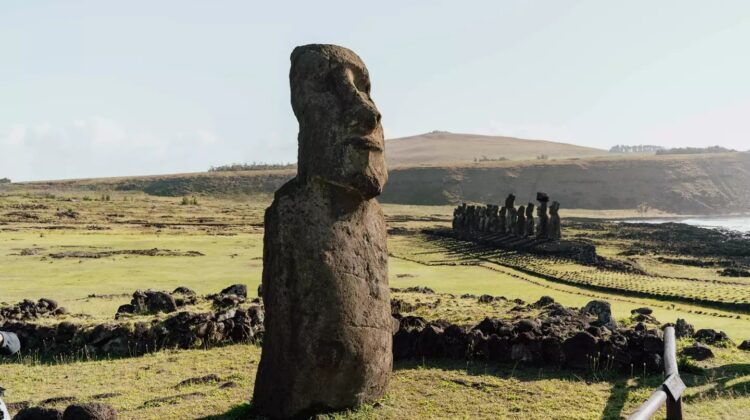
After centuries of speculation, scientists reveal how the ancient Rapa Nui civilization moved the massive Moai statues of Easter Island. This groundbreaking study combines physics, archaeology, and anthropology to decode one of history’s greatest engineering mysteries.
The Mystery That Baffled Historians for Centuries
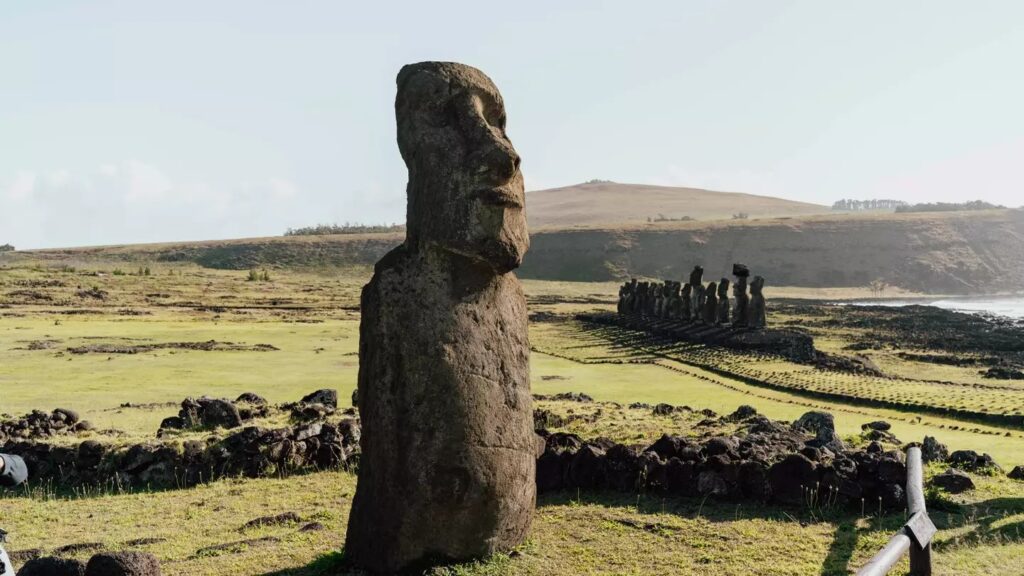
For generations, Easter Island has captivated archaeologists, travelers, and scientists with its monumental Moai statues — giant stone figures scattered across the remote Chilean island.
These towering icons, some weighing over 14 tons, have stood as silent sentinels for nearly 900 years, guarding secrets of ancient craftsmanship and cultural genius.
Now, after years of research and debate, scientists believe they’ve finally cracked the code of how these colossal statues were moved across the island — without modern machinery.
The Discovery That Changed Everything
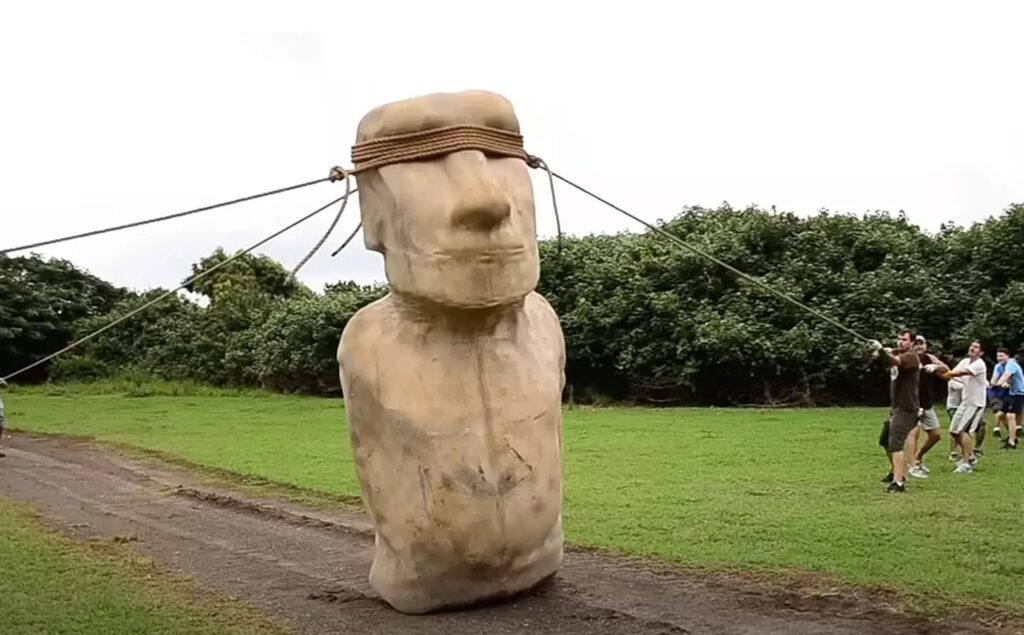
According to new research led by Professor Carl Lipo of Binghamton University and Professor Terry Hunt of the University of Arizona, the Rapa Nui people likely developed a sophisticated rope-and-pulley system that allowed them to “walk” the statues to their final locations.
Using this technique, the statues were tilted slightly forward and rocked side-to-side in a controlled rhythm, moving them forward like a walking motion.
“Once you get it moving, it isn’t hard at all — people are pulling with one arm,” said Professor Lipo.
“It conserves energy and moves surprisingly quickly. The hardest part is getting it rocking in the first place.”
Recreating Ancient Engineering
To test their theory, the research team built a 4.35-ton replica Moai and used just 18 people to move it over 100 meters in 40 minutes — no cranes, no wheels, no modern tools.
Their findings were astonishing. The technique worked perfectly, confirming that ancient Polynesian engineers used brilliant physics and balance rather than brute strength.
“The physics makes sense,” Lipo explained.
“The larger the statue, the more stable and efficient the movement becomes. It’s the only method consistent with both physics and the archaeological evidence.”
The Roads That Told the Story
Archaeologists also discovered ancient pathways across Easter Island that align perfectly with the direction the statues face. These routes show overlapping tracks and cleared segments, consistent with the “walking” theory.
“We can see where they cleared paths, moved a statue, then cleared another path,” said Lipo.
“They were strategic — spending as much time preparing the roads as moving the statues themselves.”
This discovery not only solves the mechanical mystery but also reveals how coordinated and socially advanced the Rapa Nui civilization was.
Redefining Ancient Intelligence
For centuries, Western explorers assumed that moving such massive structures required external help or lost technologies.
But this new evidence highlights the Rapa Nui people’s ingenuity, proving that they developed their own methods based on deep understanding of physics, teamwork, and balance — long before modern engineering existed.
“These weren’t primitive builders,” Lipo emphasized. “They were scientists in their own right — innovators using natural laws and human cooperation to create cultural masterpieces.”
Easter Island: A Living Archaeological Wonder
Today, Easter Island remains one of the world’s most fascinating travel destinations, drawing thousands of eco-tourists, historians, and photographers every year.
Recognized as a UNESCO World Heritage Site, it offers rare insight into ancient engineering, Polynesian culture, and the enduring mystery of human innovation.
If the new research continues to gain global attention, Easter Island could soon become a center for scientific tourism and archaeological study, drawing millions in research funding and sustainable travel.
What This Means for Science and Humanity
The discovery has reignited global discussion on how ancient civilizations solved complex engineering challenges using only natural materials and human coordination.
It also inspires modern scientists and engineers to rethink how sustainable design and physics can solve today’s infrastructure problems — just as the Rapa Nui did 900 years ago.
“Find evidence that shows it couldn’t be walking,” Lipo challenged.
“Because nothing we’ve seen disproves that. Everything fits.”
Final Thought
What was once a mystery lost to time has now become a testament to human intelligence, collaboration, and creativity.
The Rapa Nui didn’t need machines — they needed only knowledge, rhythm, and unity.
And in rediscovering their secret, we are reminded that even the most immovable mysteries can be solved — one step at a time.
Leave a Reply