
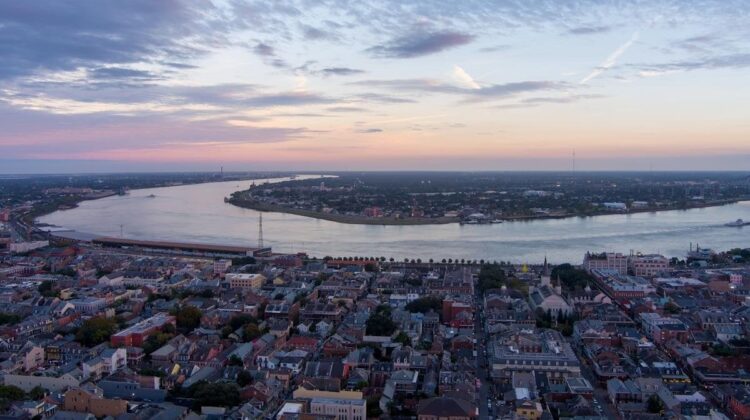
One of America’s most culturally vibrant cities is facing a growing environmental threat. Scientists warn that New Orleans is slowly sinking while rising sea levels continue to increase the risk of flooding.
Known for its unique music, cuisine, and history, the Louisiana city attracts millions of visitors each year. Tourism alone supports tens of thousands of jobs and plays a major role in the local economy.
But researchers say the future of this iconic city could be at risk.
Why New Orleans Is Sinking
Studies from NASA and Tulane University suggest that parts of New Orleans are sinking at a rate of about one to two inches per year.
The city sits on land formed by centuries of sediment from the Mississippi River. This land consists largely of soft, marshy soil that naturally compresses over time — a process known as land subsidence.
While this gradual sinking is partly natural, scientists say human activity has made the situation worse.
According to research from NASA Jet Propulsion Laboratory, the landscape of southeastern Louisiana developed over thousands of years as river sediments built up a large coastal delta.
However, modern infrastructure has changed that natural system.
Human Activity Is Contributing to the Problem
Flood-control levees were constructed to protect communities and economic infrastructure along the Gulf Coast.
While these levees help prevent flooding, they also block the natural flow of sediment from the Mississippi River that once replenished the land. Without fresh sediment deposits, the ground slowly compacts and sinks.
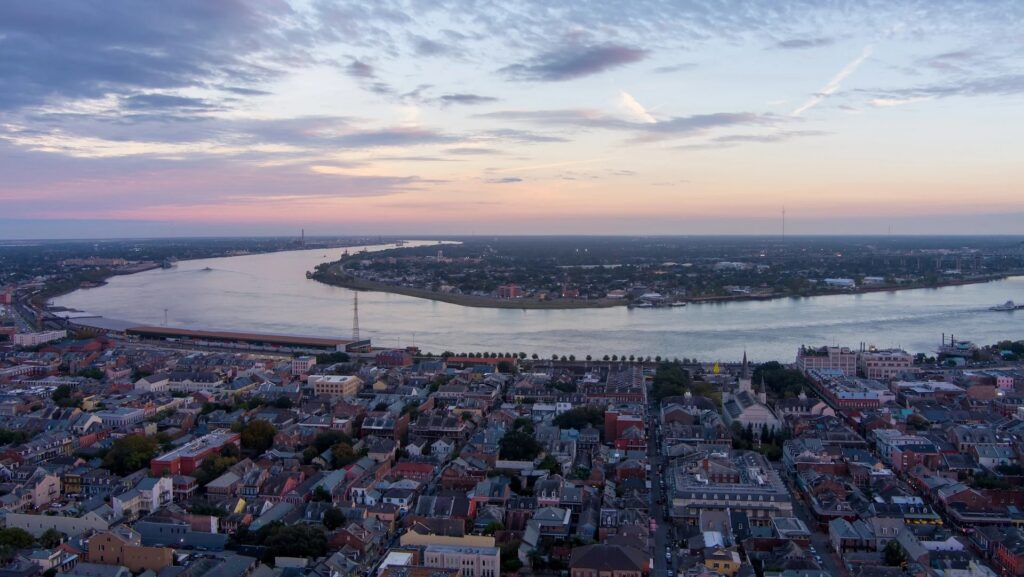
At the same time, rising global temperatures are causing sea levels to rise, adding further pressure on coastal areas like New Orleans.
Wetlands surrounding the city once served as natural barriers that helped absorb storm surges. But as these wetlands disappear due to erosion and rising water levels, the city becomes even more vulnerable to flooding.
A Global Climate Concern
The challenges facing New Orleans highlight a larger issue affecting coastal communities worldwide.
The Intergovernmental Panel on Climate Change has projected that global sea levels could rise between 1.4 and 2.8 feet by the end of the century.
In extreme scenarios, sea levels could rise even higher, dramatically changing coastlines and threatening low-lying regions.
For Louisiana, this could mean significant portions of the state becoming vulnerable to permanent flooding.
Efforts to Understand and Address the Issue
Researchers are continuing to study how climate change and land subsidence will affect coastal infrastructure and communities.
Tulane University recently received funding to examine how sea-level rise could impact more than 1,800 military installations worldwide. Data from this research may help governments better prepare for future environmental challenges.
Scientists and environmental experts also emphasize the importance of reducing greenhouse gas emissions to slow global warming.
Transitioning to cleaner energy sources such as solar and wind power, improving energy efficiency, and supporting sustainable infrastructure projects are all seen as part of the long-term solution.
Climate change adaptation and sustainable infrastructure are becoming major priorities for cities worldwide. Governments, researchers, and technology companies are investing in renewable energy, flood protection systems, and smart urban planning to protect vulnerable coastal communities. Innovations in clean energy, environmental monitoring, and climate resilience strategies are expected to play a key role in protecting cities from rising sea levels and extreme weather events.
Leave a Reply