

Imagine riding a bicycle without a chain — yet it pedals just as smoothly as any modern bike. This isn’t science fiction; it’s a reality dating back to the late 1800s and early 1900s, when engineers invented the shaft-driven bicycle.
Unlike conventional bicycles, which rely on exposed chains to transfer power from the pedals to the rear wheel, the shafted bicycle used a closed system of gears inside the frame. This innovative design transmitted energy efficiently while protecting the mechanism from dirt, rain, and wear.

Why the Shafted Bicycle Was Ahead of Its Time
Chains, while simple, have notable drawbacks: they often get dirty, break, and require constant cleaning and lubrication. The shaft-driven system solved these problems: it was cleaner, more durable, and required far less maintenance.
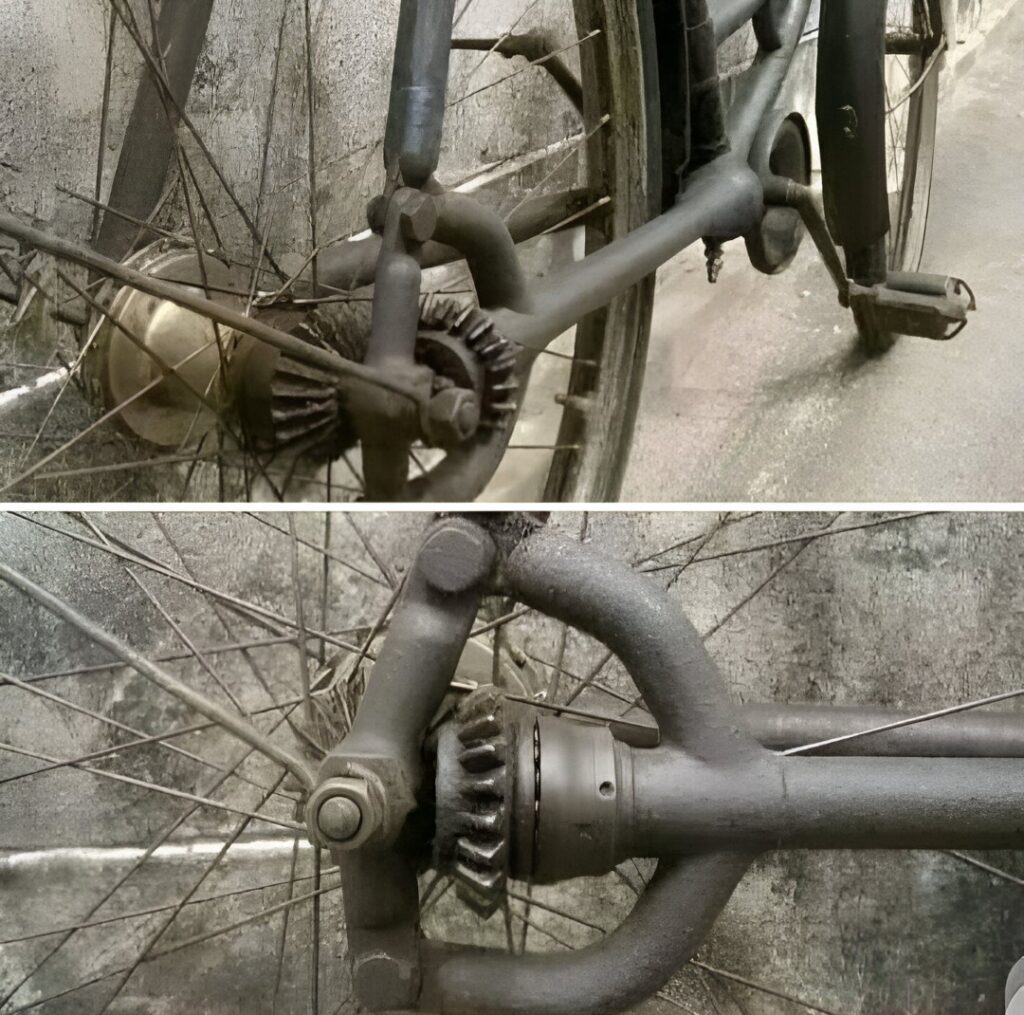
However, the complexity of the internal gear system made these bicycles expensive and difficult to manufacture, preventing them from becoming mainstream.
A Collector’s Treasure Today
Today, shaft-driven bicycles are extremely rare. Vintage enthusiasts and collectors prize these models not just for their rarity, but for the craftsmanship, precision engineering, and attention to detail that they represent — a testament to the ingenuity of early bicycle designers.

Owning one is like holding a piece of history, a reminder of a time when innovation met elegance in the simplest of machines: the bicycle.
Leave a Reply