
It begins as a moment of hesitation.
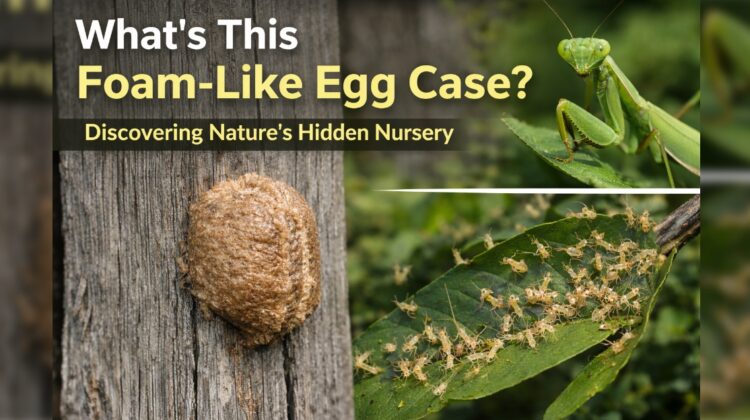
You notice a hard, brown, foam-like mass attached to a fence post in your backyard. Rough-textured. Oblong. Slightly ridged. It looks unnatural — perhaps invasive, perhaps even threatening. Your first instinct may be to scrape it away.
But pause.
That small structure is likely an ootheca — the egg case of a praying mantis — and inside it, hundreds of lives are quietly waiting for spring.
A Backyard Mystery Explained
At first glance, a praying mantis egg case can resemble a dried clump of expanding foam or a small wasp nest. Typically tan to light brown, about 1–2 inches long and roughly half an inch wide, it is firmly attached to solid surfaces: twigs, shrubs, garden furniture, or fence posts.
Its unusual texture is no accident. In late summer or autumn, after mating, the female mantis secretes a frothy, protein-rich substance around her eggs. Within hours, the foam hardens into a durable casing — lightweight yet resilient enough to endure winter’s cold, wind, and predators.
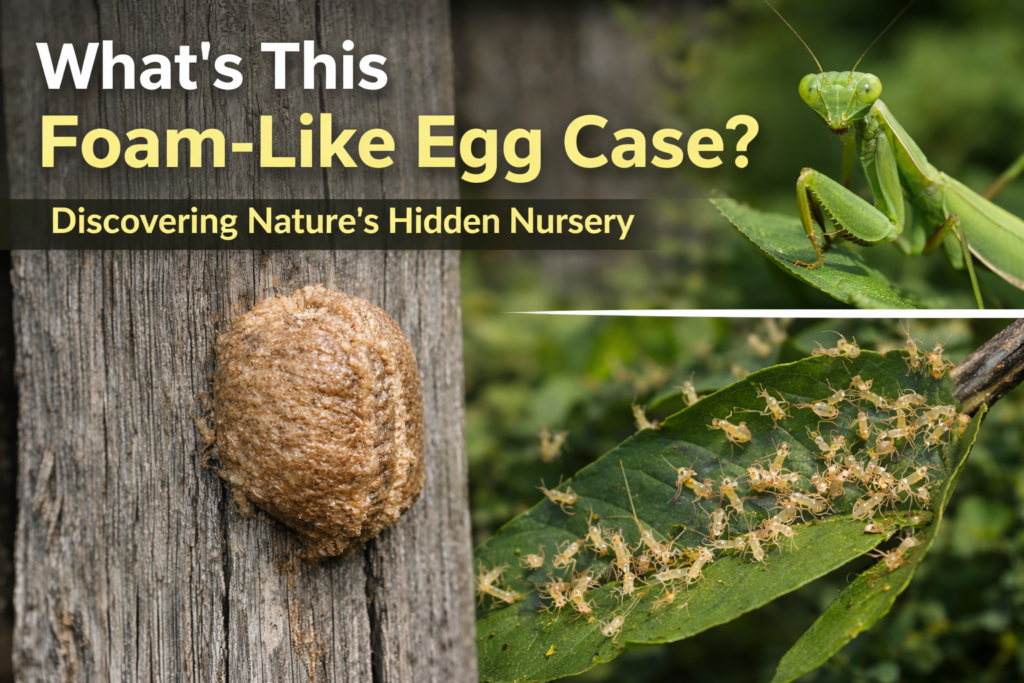
What appears strange is, in fact, a precisely engineered survival chamber.
The Architect: Nature’s Ambush Predator
Praying mantises, belonging to the order Mantodea, are among the most skilled insect predators in the garden. Recognizable by their elongated bodies and folded forelegs — held in a posture reminiscent of prayer — they are ambush hunters.
They feed on flies, moths, crickets, beetles, caterpillars, and even agricultural pests that damage plants. Their presence often signals a balanced ecosystem, where natural predators help regulate insect populations without chemical intervention.
Each ootheca may contain dozens — sometimes hundreds — of eggs, ensuring that at least a portion of the next generation survives.
Engineering for Survival
An ootheca feels firm but slightly spongy. Its internal chambers are arranged in orderly rows, each housing developing embryos protected from freezing temperatures and parasitic insects.
The female’s choice of placement is deliberate. She selects sheltered yet accessible locations where her young will hatch near abundant food sources. A fence post overlooking a garden, a sturdy shrub branch, or thick vegetation provides both camouflage and strategic positioning.
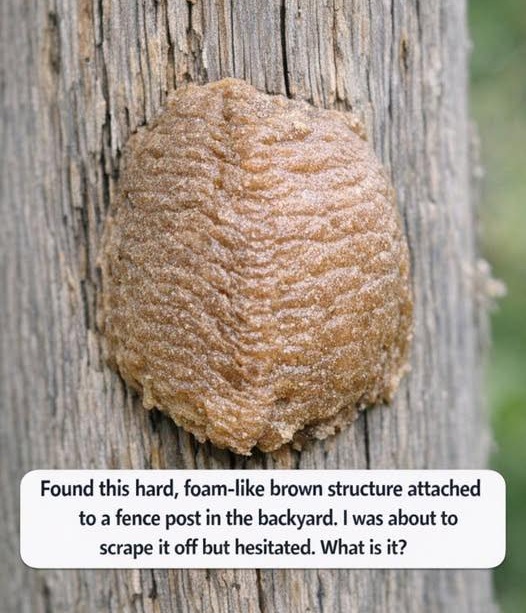
When spring temperatures remain consistently warm, the case splits open.
The Moment of Emergence
Hatching is brief — and extraordinary.
Tiny mantises, pale and threadlike, emerge in waves, climbing out of the protective casing. Within hours, they darken in color and begin dispersing into nearby foliage.
Though miniature in size, they are fully equipped hunters from birth, instinctively grasping prey with specialized forelegs.
Few backyard moments capture the rhythm of seasonal life as vividly as this one.
Harmless — and Beneficial
Despite its unusual appearance, a mantis egg case poses no threat to people or pets. On the contrary, it represents the promise of natural pest control.
Mantises reduce populations of aphids, caterpillars, flies, and other plant-damaging insects. For gardeners seeking sustainable methods, they are allies.
Destroying the egg case interrupts this ecological cycle. Unless it is in immediate danger of being crushed or damaged, leaving it undisturbed supports biodiversity and reduces the need for chemical pesticides.
When Relocation Is Necessary
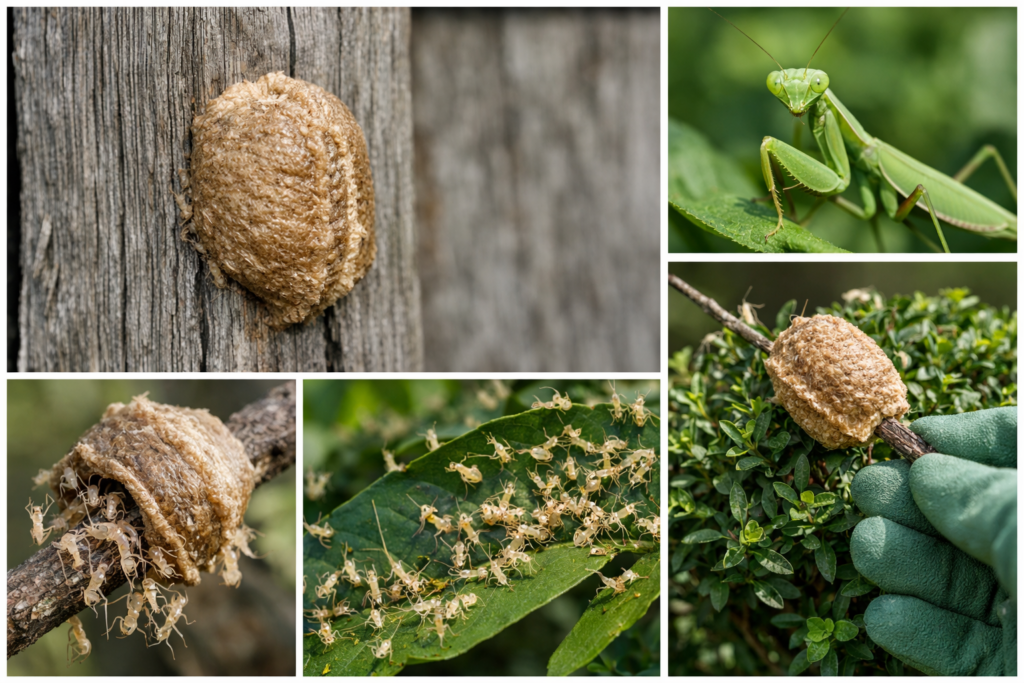
If the ootheca is positioned in a high-traffic area, careful relocation is possible.
Instead of scraping it off, gently cut the twig or branch to which it is attached. Secure it upright in a protected shrub or quiet garden corner using soft ties or string. Maintaining its orientation helps ensure successful hatching.
The key is preservation, not removal.
Avoiding Common Misidentifications
Mantis egg cases are frequently mistaken for wasp nests or fungal growths.
- Wasp nests are papery and reveal honeycomb-like cells.
- Fungi are typically softer, irregular, and organic in texture.
- Oothecae are firm, foam-like, elongated, and subtly ridged.
Recognizing the difference prevents the accidental destruction of beneficial wildlife.
A Living Science Lesson in Your Yard
What initially appears unsettling can become an opportunity for discovery. Observing an egg case through winter and noting the timing of its spring emergence offers a direct window into insect life cycles.
For children especially, such encounters transform a backyard into a living classroom — where curiosity replaces fear, and understanding fosters respect.
In an era where chemical pest control often dominates suburban landscapes, the presence of a praying mantis egg case is a quiet testament to nature’s self-regulating design. Within that modest, foam-like capsule lies a generation of predators poised to restore balance to the garden. Before reaching for a scraper, consider the hidden complexity it contains. Sometimes, the most unusual discoveries are not problems to remove — but ecosystems to protect.
Leave a Reply