• Skip to main content
  • Skip to primary sidebar
  • Skip to footer
  • Home
  • About Us
  • Copyright Report
  • Submit Content
  • Terms
  • Privacy Policy
  • Legal Disclaimer

Hasan Jasim

Hasan Jasim is a place where you may get entertainment, viral videos, trending material, and breaking news. For a social generation, we are the largest community on the planet.

These Creepy Looking Deep-Sea Fish Are Actually Extremely Human-Friendly

by Hasan Jasim Editorial Team

ShareTweet

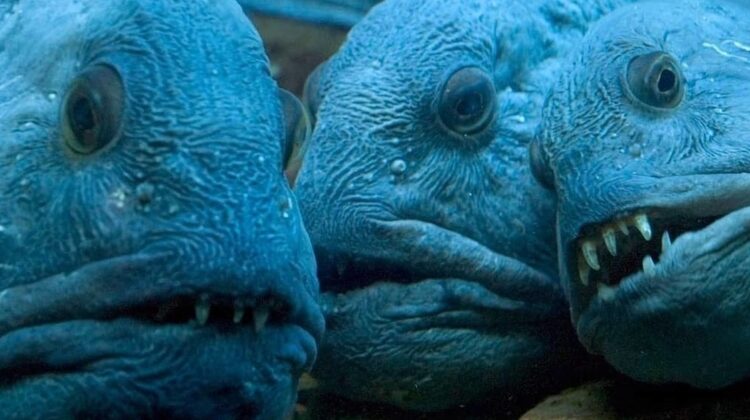
The wolffish has a motherly visage, but it’s also surprisingly loving. It also makes antifreeze.

The Atlantic wolffish (Anarhichas lupus) has just one thing in common with wolves: it possesses sharp teeth and a powerful jaw to help it rip apart its meal. Its teeth are so pronounced that some of them even protrude from its mouth, giving it a scary and amusing aspect – at least by human standards.

Could be a nightmare for a kid, but these guys actually make friends with humans. Source

Those massive chompers, on the other hand, have a function. They are used by the fish to dig for food in the mud on the ocean bottom and to crack the hard shells of crabs, urchins, clams, and other sea creatures. The Atlantic wolffish is distinguished by its long, eel-like body in addition to its fangs.
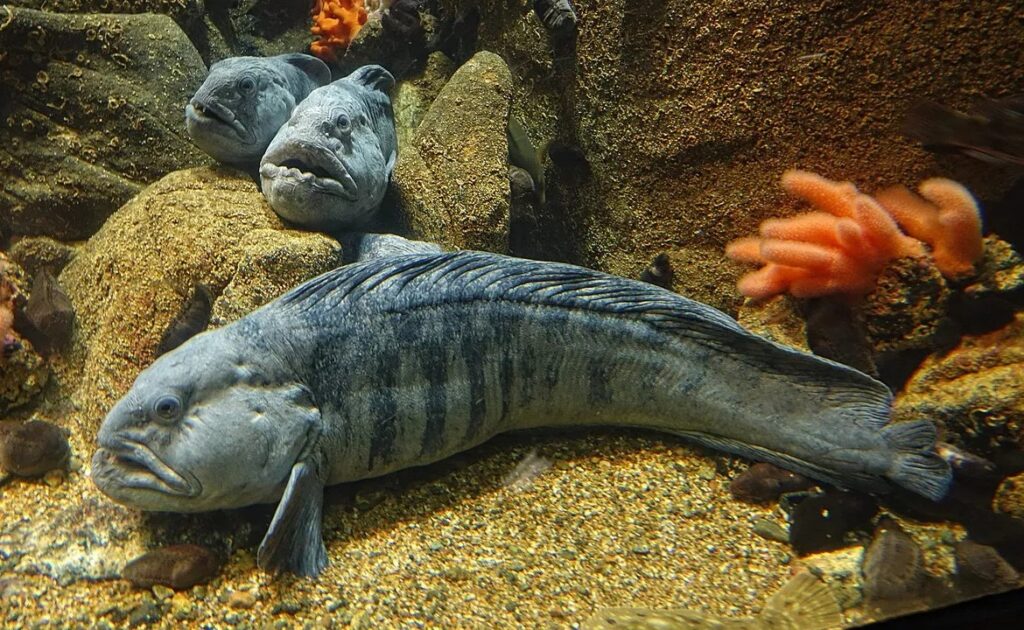
Photo: Bjørn Christian Tørrissen/CC BY-SA 4.0

This benthic inhabitant may be found on both the west and east sides of the Atlantic Ocean, dwelling on the hard ocean floor at roughly 2000 feet and commonly observed in nooks and tiny caves. It also has a unique trick! To keep its blood circulating freely, its system creates antifreeze. It, too, need it, as it thrives in water temperatures ranging from 1 to 11 degrees Celsius.

And that’s not the only thing that distinguishes this species!
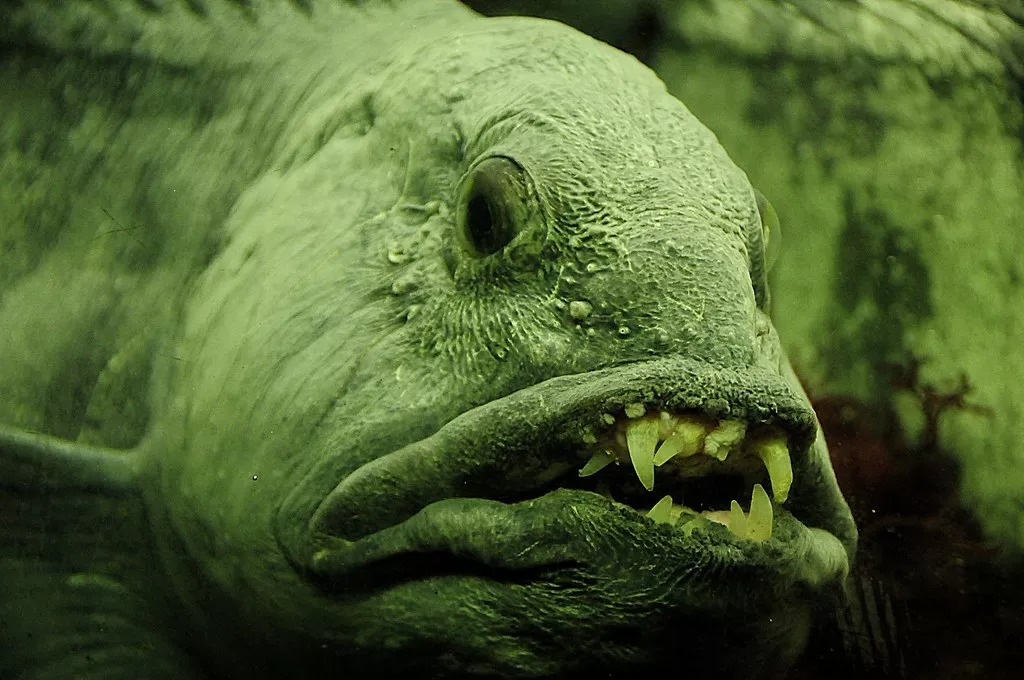
Definitely in need of some dental work. Photo: Kamil Porembiński/CC BY-SA 2.0

While most fish species “broadcast spawn,” with females releasing hundreds of eggs into the water and males trying to fertilize them outwardly, wolffish couple up and fertilize the female’s eggs inside, much like mammals do! And it’s not the end of the story.

The female incubates the eggs for four to nine months, depending on the water temperature, before laying them in enormous clusters. After that, for around four months until the eggs hatch, the male zealously defends the eggs.
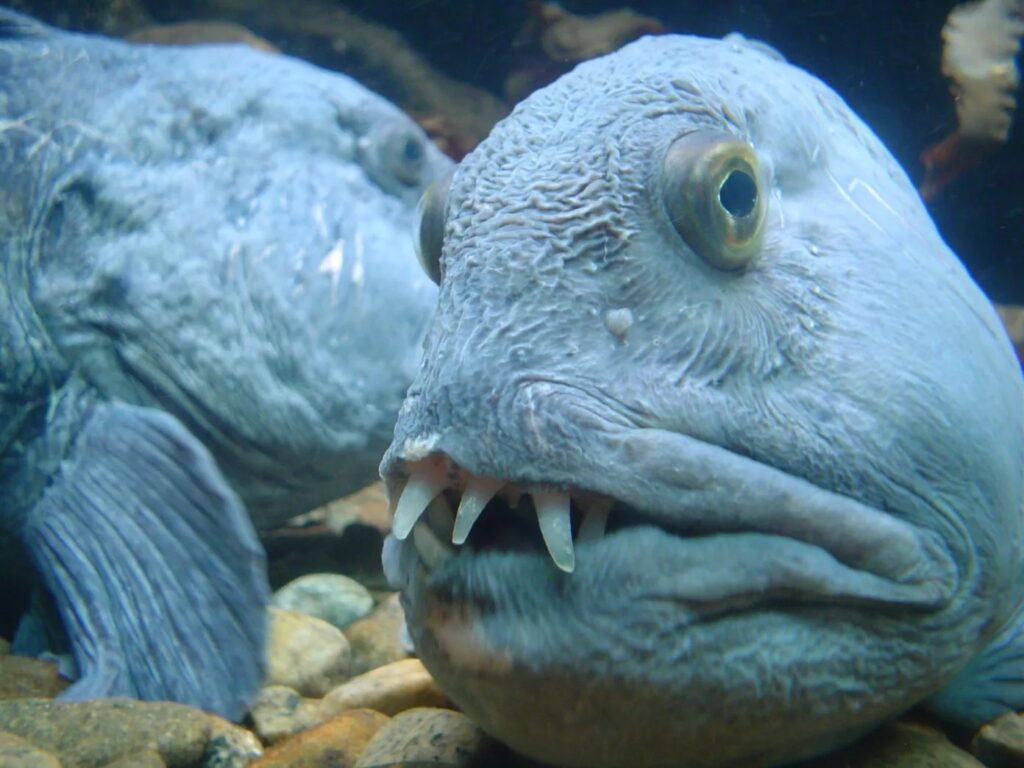
Hello, human. Source

Despite their frightening appearance, these fish are really friendly to people! As a result, some divers go out of their way to find them, and they frequently become friends with their local wolffish. So, have a look at this.

Truly a remarkable species.

Sources: 1, 2, 3

Filed Under: Trends Worldwide Tagged With: Creepy, Deep-Sea, Deep-Sea Fish, Human-Friendly

Primary Sidebar

More to See

When Optical Illusions Play Tricks on Your Mind: The Earth and Cityscape Illusion

By Hasan Jasim Editorial Team

Mudskippers: The Fish That Walks on Land and Dances to Find a Mate

By Hasan Jasim Editorial Team

Huge fish ‘kills itself’ after being startled by camera flash in aquarium

By Hasan Jasim Editorial Team

The Biggest Search For The Loch Ness Monster Is Set To get Under Way

By Hasan Jasim Editorial Team

The Story of Hollywood’s Most Famous Lion

By Hasan Jasim Editorial Team

Seeing These Photos Will Make You Want To Recycle Everything!

By Hasan Jasim Editorial Team

Are 265 75r15 the same as 31×10 5r15?

By Hasan Jasim Editorial Team

Footer

ABOUT HASANJASIM.ONLINE

Hasanjasim.online is a digital platform dedicated to publishing well-researched articles about the animal kingdom, nature, and the environment. Our editorial team works to source stories from credible outlets, scientific research, and verified reports, aiming to inform as much as we entertain. From wildlife conservation and animal behavior to natural wonders and environmental science, we cover the topics that help readers better understand and appreciate the natural world. Whether you're a lifelong nature lover or simply curious about the planet we share, Hasanjasim.online aims to be a trustworthy destination for stories worth reading — and worth citing.

Recent

  • Euphorbia Hirta (“Asthma-Plant”): What Traditional Use and Real Research Actually Show
  • A Mystery Animal Has Been Randomly Attacking People in New Hampshire — Here’s What We Know
  • A Woman Was Filmed Sharing Her Ice Cream With Her Dog — Here’s What Vets Actually Say About It
  • Dolphin Calf Incident in Ceuta Sparks Outrage After Disturbing Beach Footage Emerges
  • Lactuca Serriola Root: Traditional Uses of Prickly Lettuce (Wild Lettuce) Root
  • The Puppy a Firefighter Couldn’t Leave Behind — and the Story Didn’t End There
  • A Mother Dog Dove Into Floodwater Again and Again — Until All 7 of Her Puppies Were Safe

Search