
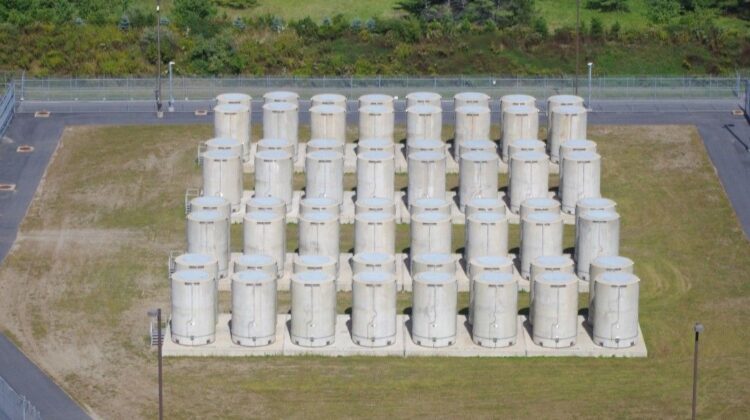
What you’re looking at is a carefully designed storage yard filled with enormous concrete cylinders, each containing spent nuclear fuel. These containers, called dry casks, are used once nuclear fuel has cooled sufficiently in a reactor’s spent fuel pool, allowing it to be moved safely outdoors. The construction of each cask is meticulous: layers of thick concrete and steel ensure that radiation remains completely contained, with no need for active cooling systems, pumps, or constant supervision inside the cask itself.
The entire site is fenced, heavily monitored, and engineered for long-term stability, allowing the spent fuel to remain safe for decades. For most people, one of the most surprising aspects is just how compact the waste is. Despite the enormous amount of energy produced by a nuclear reactor over 20 years, the resulting spent fuel occupies a remarkably small volume. A single reactor operating for decades will produce only a handful of casks like the ones seen in the photo, highlighting the efficiency of nuclear energy compared to other forms of power generation.
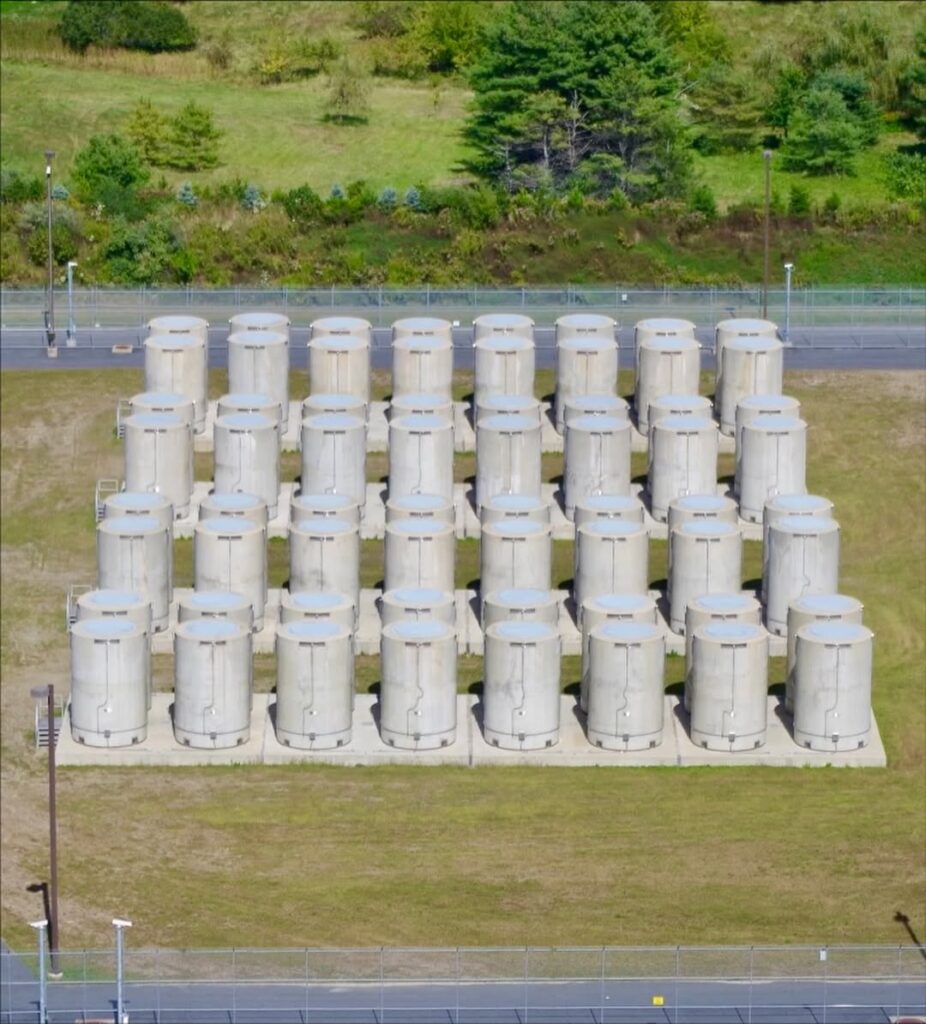
Understanding this visual makes it easier to appreciate the scale and safety of nuclear energy storage. Each cask represents years of energy production and strict safety standards, showcasing how modern nuclear technology combines power and responsibility. These storage solutions are part of a broader framework ensuring that nuclear power remains a reliable, sustainable, and safe energy source for generations to come.
Whether you’re curious about nuclear physics, energy sustainability, or modern engineering, this glimpse into a spent fuel storage yard offers both a surprising and educational perspective on how human ingenuity manages one of our most powerful energy sources.
Leave a Reply