
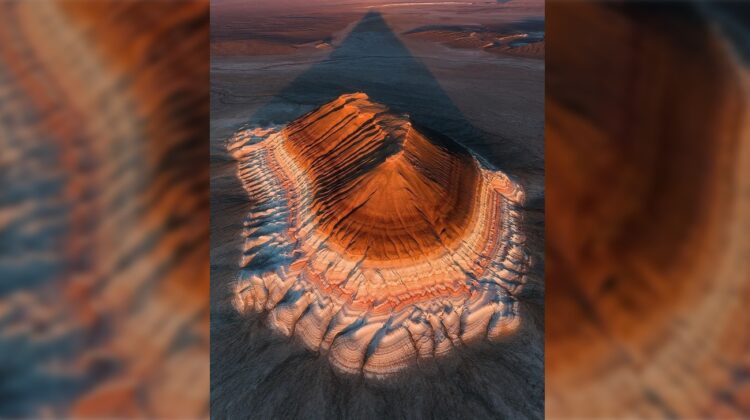
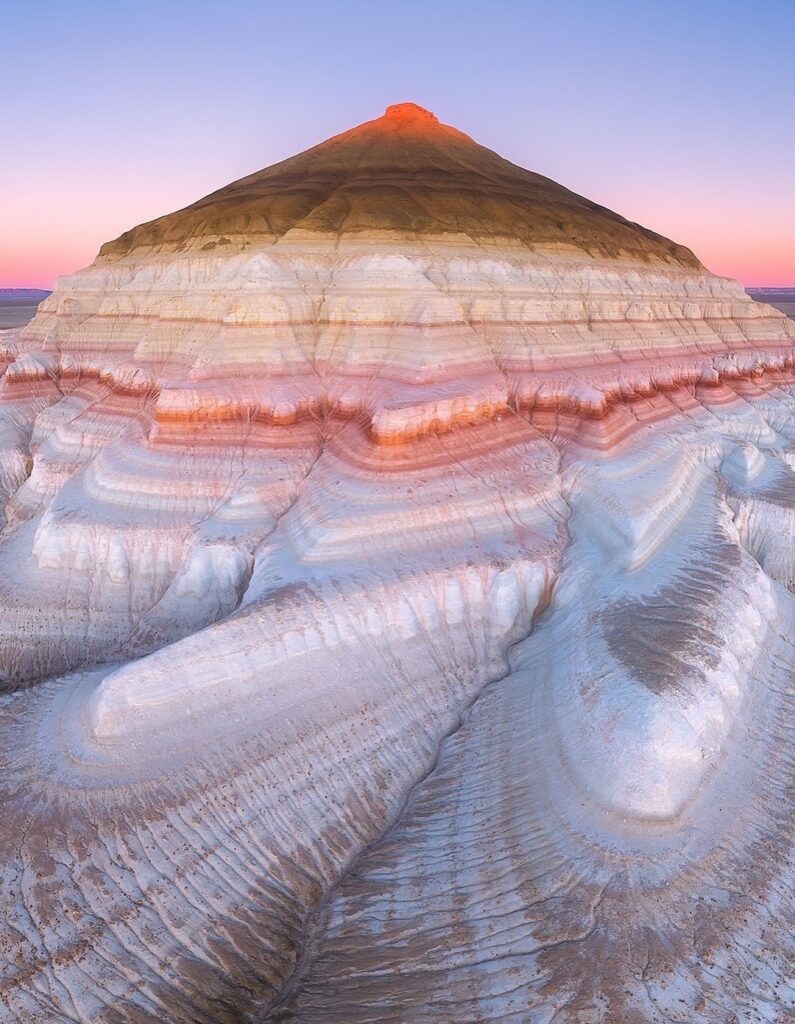
Rising from the dry plains of western Kazakhstan, one mountain stops travelers in their tracks. From a distance, it looks almost unreal — like a perfectly sliced layered cake set carefully in the middle of the desert. This is Bokty Mountain.
Located in the Mangystau region, Bokty is famous for its striking horizontal stripes. The bands of color — soft browns, pale creams, and muted reds — were formed over millions of years as sediment accumulated layer upon layer. Over time, pressure hardened those deposits into rock. Then wind, erosion, and extreme desert conditions sculpted the formation into the clean, symmetrical shape we see today.
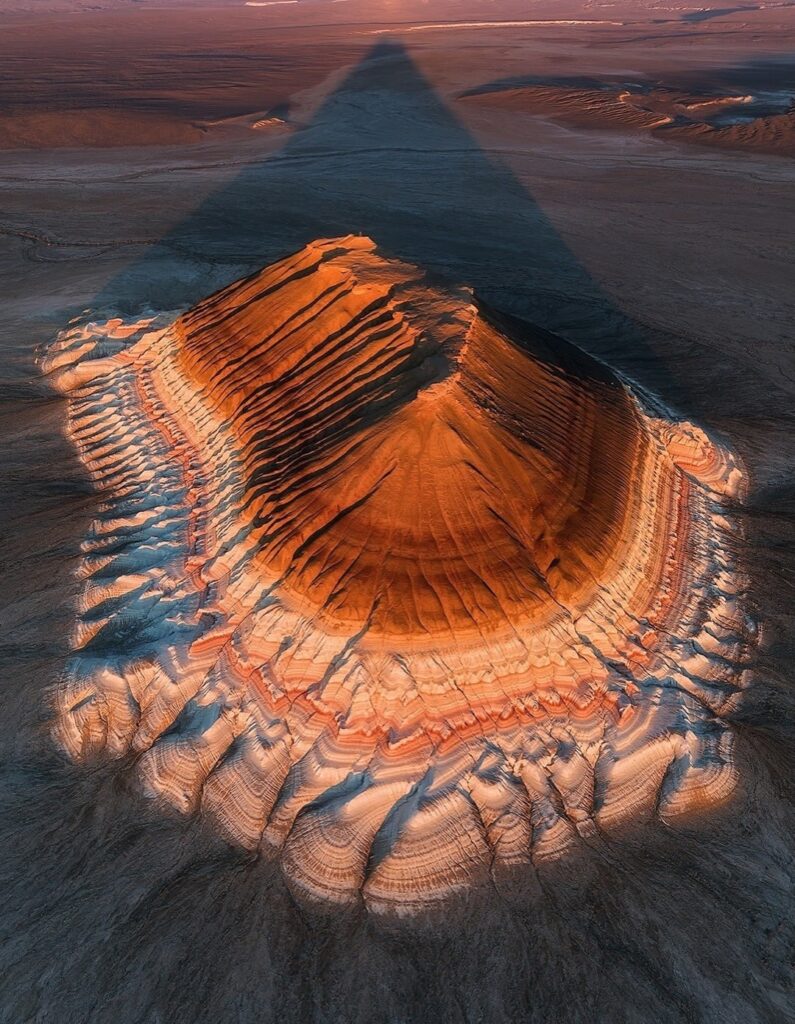
The result is a natural geological cross-section exposed in plain sight.
The surrounding landscape is vast and dramatic — open steppe, chalk cliffs, and rocky desert stretching toward the horizon. In such a minimal environment, Bokty’s near-perfect lines stand out even more sharply. There are no forests or dense vegetation to soften its outline. Just sky, stone, and silence.
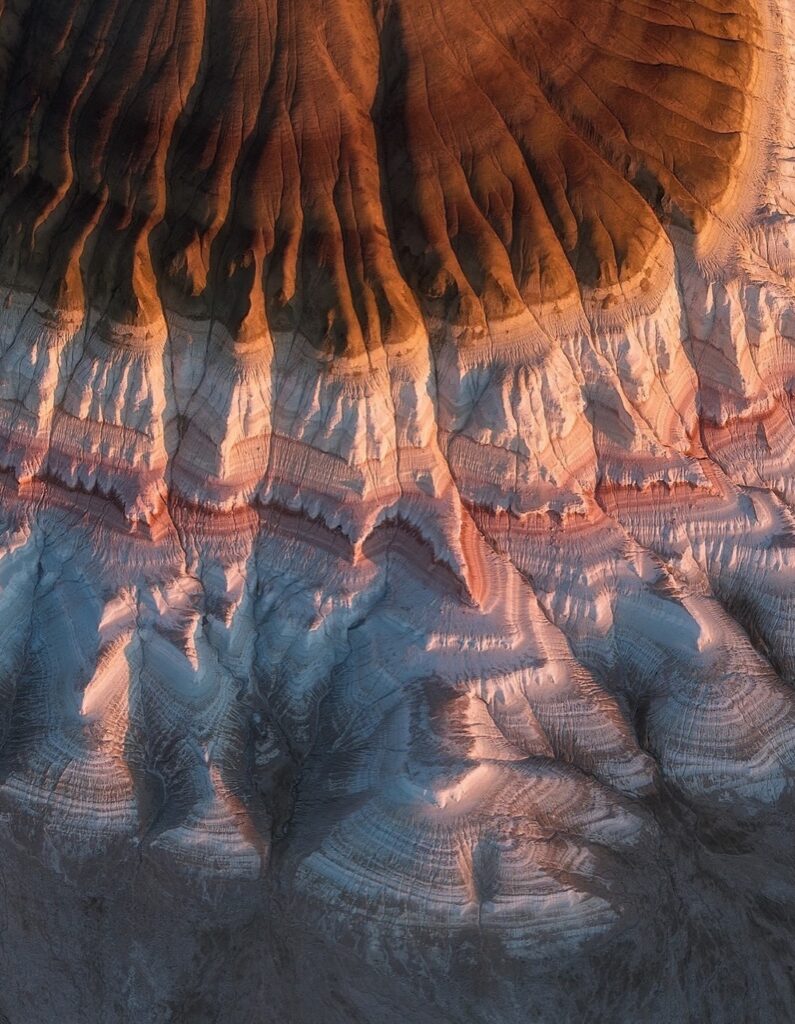
For photographers and geology enthusiasts, Bokty has become one of Mangystau’s most visually compelling landmarks. The mountain’s symmetry and layered structure create strong natural contrast, especially during sunrise and sunset when shifting light deepens its bands and casts long shadows across the terrain.
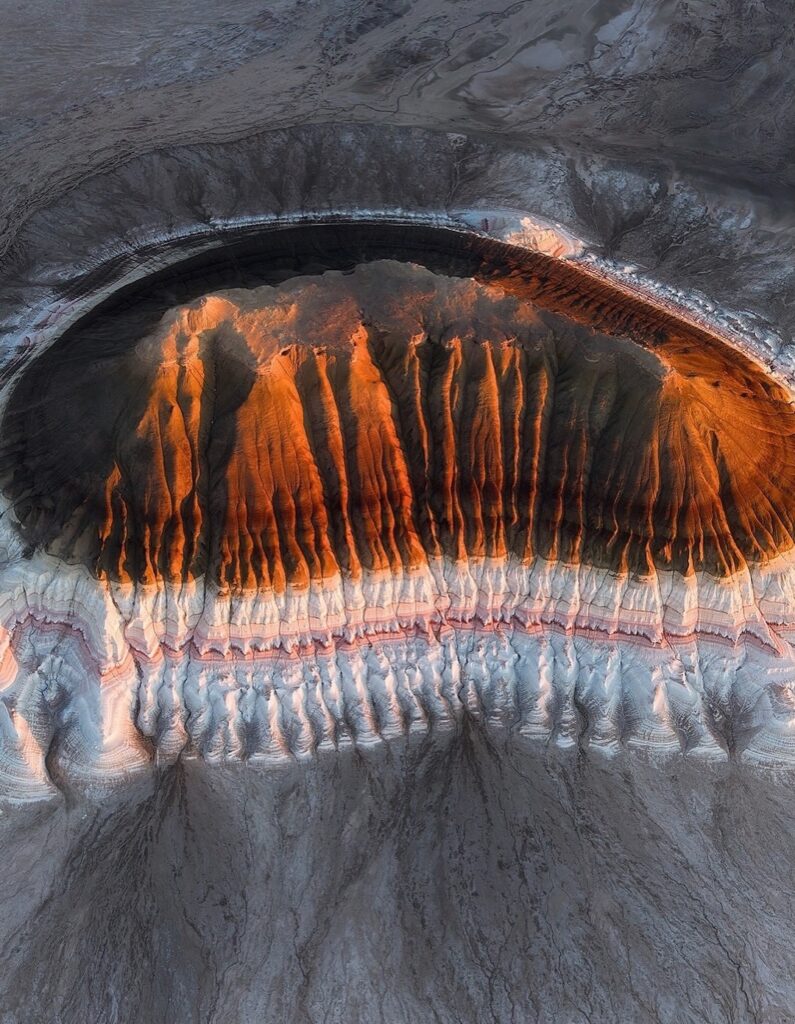
Beyond its visual appeal, Bokty is a reminder of geological time. Each stripe represents a different era — ancient climates, shifting seas, and environmental transformations recorded in stone. What looks playful and almost artificial from afar is actually the result of immense natural forces operating across millions of years.
In a region defined by raw, open beauty, Bokty Mountain stands as one of western Kazakhstan’s most distinctive formations — a desert landmark shaped by patience, pressure, and wind.
Bokty Mountain is part of the unique sedimentary landscape of Kazakhstan’s Mangystau region, known for its chalk cliffs, fossil-rich rock layers, and dramatic desert formations. Geological tourism in western Kazakhstan has grown steadily as travelers seek remote destinations, landscape photography opportunities, and eco-adventure experiences. Sustainable desert tourism initiatives help protect fragile rock formations from erosion and off-road damage while supporting local economies through guided tours and conservation-based travel programs.
Leave a Reply