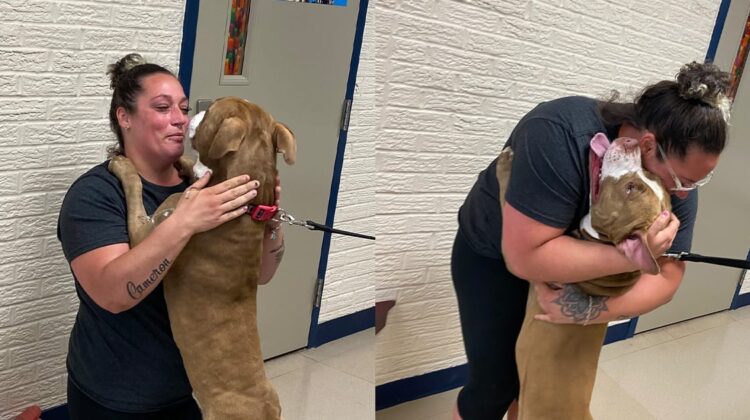
It’s always heartbreaking when a pet goes missing, especially when it’s a pet you depend on for emotional support. But sometimes lost pets return when we least expect them — months or even years after they disappeared. That’s exactly what happened for one Indiana woman, reunited with her emotional support dog after two years apart.
Two Years of Not Knowing
Samantha Powers, from Fort Wayne, Indiana, was devastated when her emotional support dog Loki got loose while a friend was watching him. She searched, but as time passed with no leads, hope faded. “I kind of lost hope after a while,” she told WPTA.
A Microchip Scan Changes Everything
Nearly two years later, Fort Wayne Animal Care & Control took in a dog found on the loose. A routine microchip scan identified him instantly: it was Loki, alive and apparently well cared-for during his time away.
“We were able to contact his owner and that is when we found out she had been missing him for almost 2 years and could not contain her excitement that we had her baby!” the shelter wrote on Facebook.
Video of the reunion, shared on the shelter’s TikTok, shows Loki jumping with joy the moment he recognizes Samantha. Staff described the scene simply: “Not a dry eye in the room.”
It’s not known who cared for Loki during those two years, but he appeared to have been well looked after throughout.
Why This Story Keeps Happening — and How to Prevent It
Both Samantha and Fort Wayne Animal Care & Control pointed to the same lesson: microchipping is what made this reunion possible after so much time. “This is why we advocate so frequently to please get your pets microchipped in the event they ever become lost,” the shelter wrote. “The microchip was a lifesaver,” Samantha told WPTA. “Without that, I wouldn’t have gotten my boy back.”
A microchip is a small, permanent chip about the size of a grain of rice, implanted just under a pet’s skin in a quick procedure that typically causes no more discomfort than a routine vaccination. Unlike a collar tag, it can’t fall off or become unreadable — any shelter or vet with a scanner can pull up the owner’s contact information instantly, even years later, as this case shows.
Cost is rarely a barrier: many shelters, including Fort Wayne’s, offer microchipping for a small flat fee — often well under $20 — making it one of the most affordable forms of long-term pet protection available.
Frequently Asked Questions
How much does it typically cost to microchip a pet? Costs vary by location, but many shelters and low-cost clinics charge $15–$25 for the procedure, while veterinary clinics may charge somewhat more — it’s generally a one-time cost covering the pet’s lifetime.
Does a microchip work like a GPS tracker? No — a microchip doesn’t transmit location and can’t be used to actively track a pet. It only stores an ID number that’s read when a scanner is passed over it, which is why shelter or vet intake is what triggers a successful reunion.
What should I do after getting my pet microchipped? Registering the chip’s ID number with your current contact information in the manufacturer’s database is essential — a microchip that isn’t registered, or is registered with outdated contact details, can’t reconnect a lost pet with its owner.
Sources: WPTA (21Alive News) and Fort Wayne Animal Care & Control’s official Facebook and TikTok accounts, cited above.
Leave a Reply