
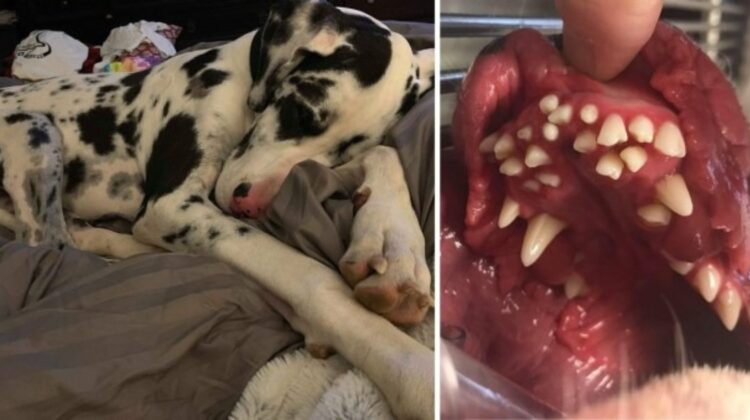
When Aurora Rutledge adopted a Great Dane named Loki, she believed she was welcoming a perfectly normal rescue dog into her family. At 31 years old and a mother of three, Aurora had experience with animals and expected nothing more than the usual challenges of caring for a giant-breed puppy.
But a routine veterinary checkup quickly revealed that Loki was anything but ordinary.
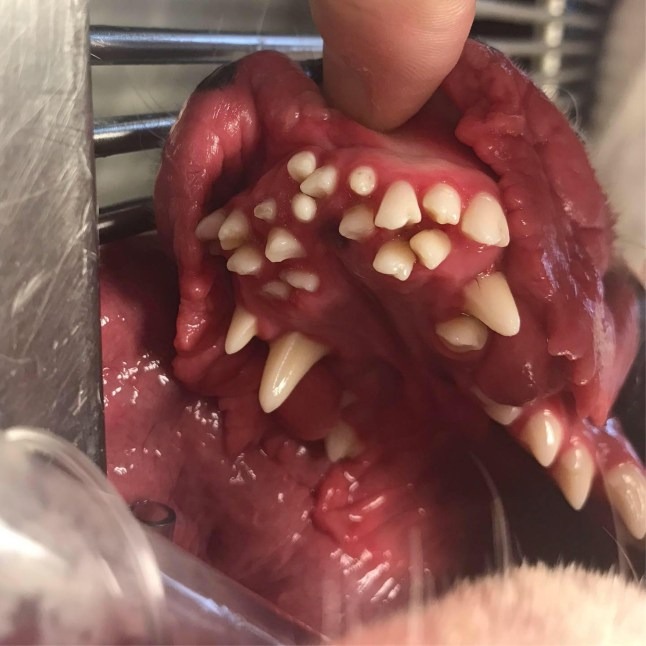
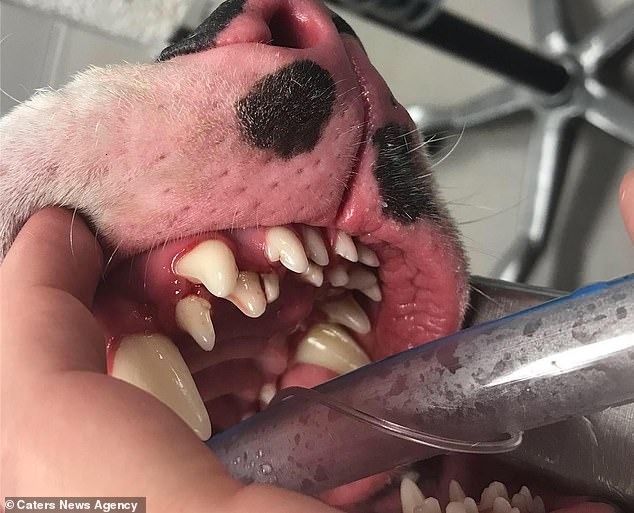
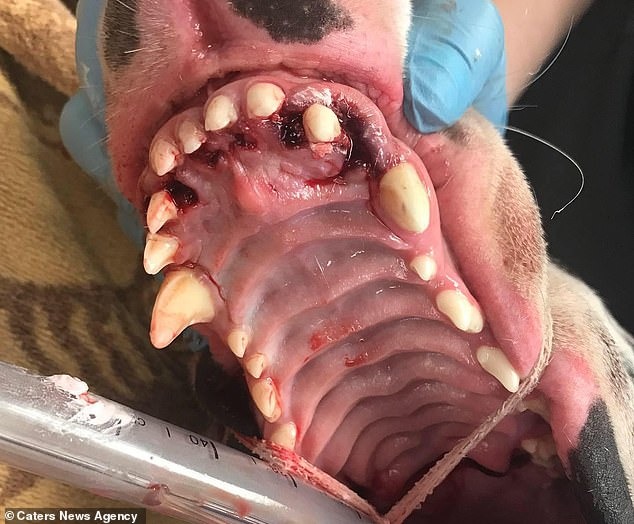
As the veterinarian examined Loki’s mouth, he made a startling discovery: Loki had 70 teeth. For a dog of his age, size, and breed, the normal number is around 42. The diagnosis was clear—Loki was suffering from hyperdontia, a rare condition characterized by an abnormal excess of teeth. According to the vet, this was one of the most severe cases he had ever encountered.
Hyperdontia can cause serious health problems if left untreated, including chronic pain, infections, difficulty eating, and jaw misalignment. In Loki’s case, the overcrowding was so extreme that immediate intervention was necessary. The veterinarian removed 21 teeth during surgery, yet even after the extractions, Loki still retained more teeth than the average dog.
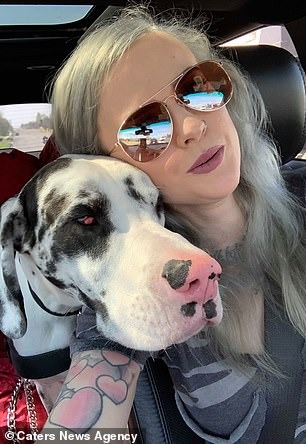
The procedure came at a significant cost. Aurora paid $770 for the dental surgery, but she never hesitated. Loki was already family.
“I took him in for a routine checkup because he was a new rescue,” Aurora explained. “The previous owners mentioned he might have retained baby teeth, but he’s a giant, energetic puppy. I hadn’t had the chance to look closely myself.”
Despite the shock, Aurora focused on Loki’s recovery. He was placed on a soft-food diet while his mouth healed, and his playful personality never faded. His resilience became a reminder that even animals born with serious medical challenges can thrive when given proper care and love.
Veterinarians believe Loki’s condition may be linked to poor breeding practices, a known risk factor for congenital abnormalities. The rescue organization involved is now working to trace the breeder in hopes of preventing similar cases in the future—an effort that highlights the importance of ethical breeding and responsible adoption.
Today, Loki is recovering comfortably in his forever home, surrounded by people who chose compassion over convenience. His story is unusual, surprising, and deeply human in its message.
Why Loki’s Story Matters
Loki’s case sheds light on the hidden medical challenges many rescue animals carry—and the responsibility that comes with adopting them. Conditions like hyperdontia often go unnoticed without proper veterinary care, underscoring the importance of early health screenings, ethical breeding standards, and informed adoption. Stories like this remind us that animal welfare is not just about saving lives, but about ensuring long-term health, accountability, and compassion. When families commit to care despite unexpected challenges, they help set a higher standard for how society values and protects animals.
Leave a Reply