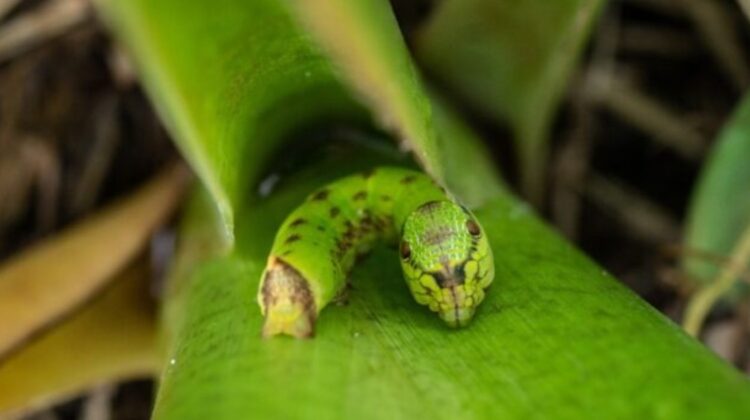
In the quiet town of Santa Fe, Argentina, a routine moment in a backyard turned into an unforgettable encounter. Lujan Eroles, 46, was startled when she noticed a small, snake-like creature moving through her garden. At first glance, it appeared to be a young serpent—slender, alert, and unsettlingly realistic.
What she had actually discovered was not a snake, but one of nature’s most impressive examples of visual deception.
A Frightening First Impression
Eroles recalls that her first reaction was fear. The creature’s movements and unusual eye-like markings immediately suggested danger.
“I looked down and encountered this strange animal,” she explained. “I was afraid it could be poisonous.”
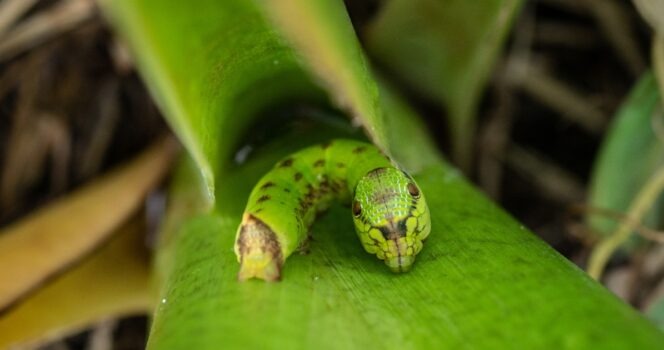
The shock drew neighbors outside, all trying to understand what they were seeing. None of them had encountered anything similar before. Its body shape, coloration, and “eyes” gave the clear illusion of a small snake—convincing enough to alarm anyone unfamiliar with the species.
From Fear to Curiosity
Unsure of what she was dealing with, Eroles recorded a video and shared it online, hoping others could help identify the creature. The footage quickly gained attention, triggering debates, guesses, and expert commentary from around the world.
Many viewers initially believed it was a deformed or mutant reptile. Others suspected a venomous species. The truth, however, was far more fascinating.
The Real Identity: A Master of Mimicry
Experts eventually identified the creature as a caterpillar belonging to a rare moth species, most commonly associated with the elephant hawk-moth family. Native to parts of Central and South America, this caterpillar has evolved an extraordinary defense strategy.
Instead of relying on venom or physical weapons, it uses mimicry.
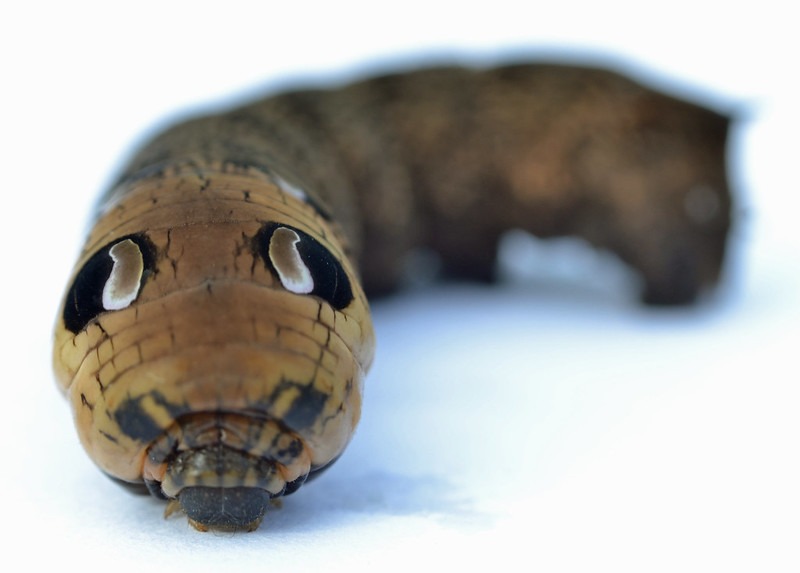
Behind its head are two large eye-shaped markings that resemble the eyes of a snake. When threatened, the caterpillar retracts its head and inflates its body slightly, enhancing the illusion of a small but dangerous serpent.
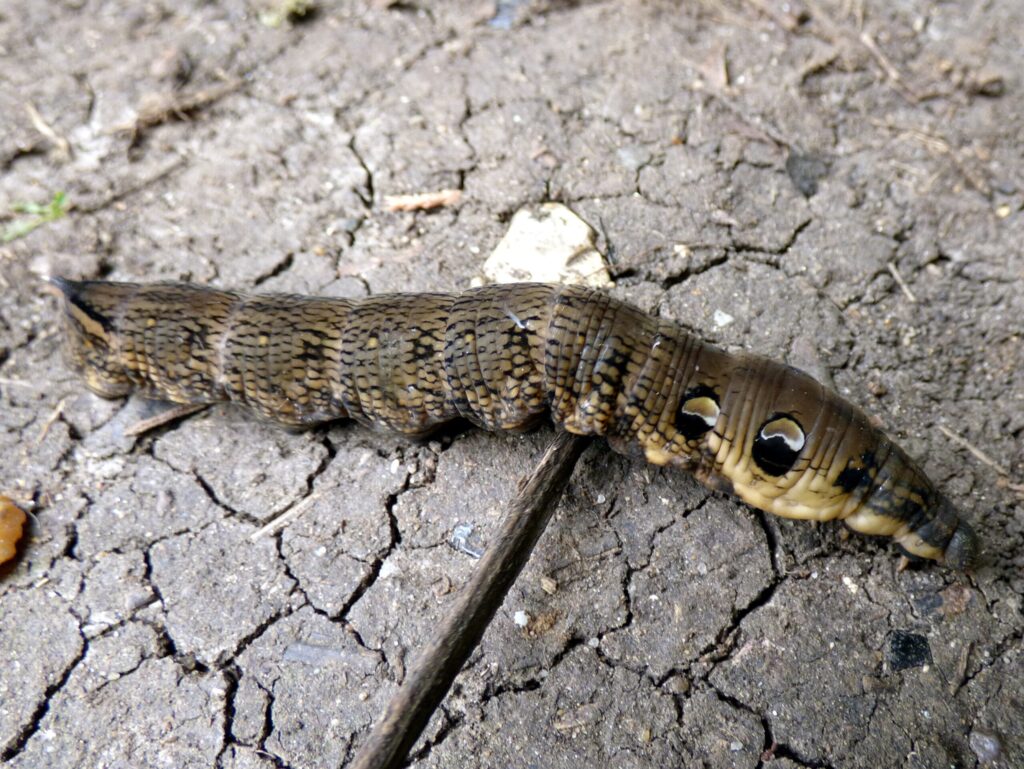
This visual trick is enough to deter birds and other predators, who instinctively avoid snakes.
Why This Adaptation Matters
The caterpillar’s snake-like appearance is a powerful reminder of how evolution favors creativity over force. Lacking claws, fangs, or toxins, it survives by convincing predators it is something else entirely.
This strategy highlights the complexity of ecosystems and the subtle intelligence of natural selection. Even the smallest creatures can develop highly effective survival mechanisms when faced with constant environmental pressure.
A Window into Hidden Biodiversity
Eroles’ unexpected discovery did more than surprise her neighborhood—it offered a glimpse into the richness of biodiversity that often goes unnoticed, even in residential spaces.
Encounters like this remind us that gardens, parks, and natural corners of our communities are shared habitats. Many species live quietly among us, perfectly adapted to survive without ever being seen.
Understanding Nature Reduces Fear
What initially appeared threatening turned out to be harmless. This transformation—from fear to understanding—reflects the importance of environmental awareness and education.
When people recognize how and why animals behave the way they do, fear is often replaced by respect.
Bottom Insight: Why Encounters Like This Matter
Unusual wildlife encounters raise important questions about biodiversity conservation, urban ecosystems, and human–wildlife coexistence. As cities expand, understanding these interactions becomes increasingly important for environmental balance, species protection, and public safety awareness.
Knowledge remains the most powerful tool for peaceful coexistence with the natural world.
Leave a Reply