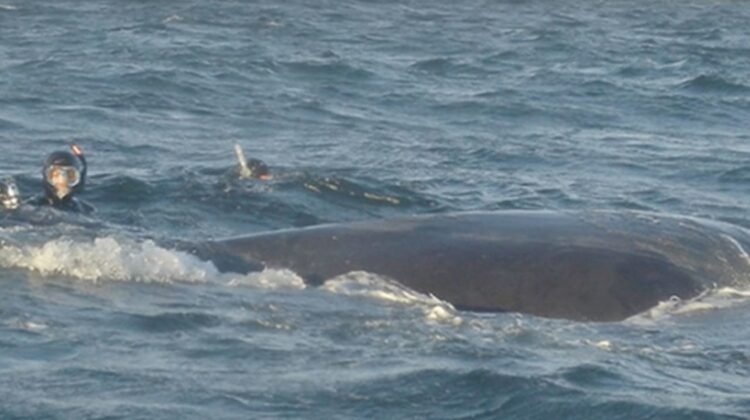
Off the rugged Farallon Islands, west of San Francisco — a region known for its rich marine biodiversity and powerful ocean currents — professional diver James Moskito was part of a volunteer team conducting routine work at sea. What began as an ordinary day on the water quickly turned into an extraordinary encounter between human compassion and wild intelligence.
James noticed a humpback whale behaving unusually at the surface. Instead of the brief, rhythmic appearances typical of healthy whales surfacing to breathe, this animal lingered. It rose slowly, lifted its eye above the waterline, and remained there — watching.
For an experienced diver, the signs were unmistakable. Something was wrong.
“The whale came up on a breath, put its eye above the surface… and stayed there,” James later recalled. “I could tell it was looking at me.”
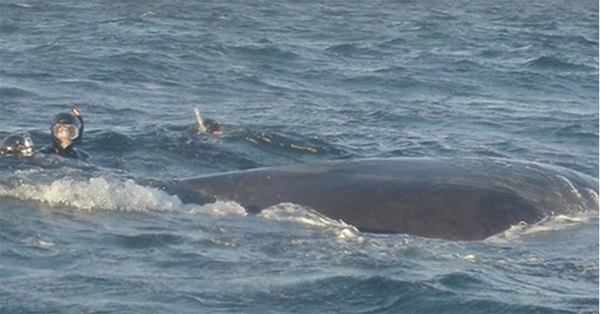
Moved by instinct and experience, James made a decision few would dare. He swam toward the massive animal — a creature weighing tens of tons — and gently placed his hand near its eye.
“I’m here to help you,” he whispered. “I’m not going to hurt you.”
As James circled the whale, the true scale of the danger became clear. A 3,000-pound anchor, attached to a mile-long chain, was wrapped tightly around the whale’s tail — dragging it down, restricting its movement, and slowly exhausting the animal.
What followed was hours of intense, high-risk effort. James and his fellow divers worked methodically, cutting through heavy chains while navigating strong currents and staying clear of the whale’s powerful tail. One sudden movement could have been fatal — yet the whale remained remarkably calm.
Finally, after relentless work, the chain fell away.
Freed at last, the humpback did something no one expected.
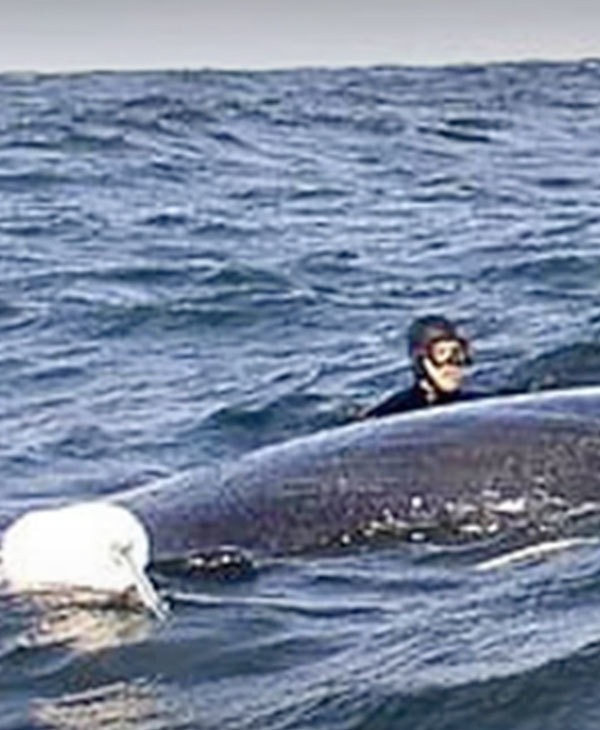
Instead of swimming off into the open ocean, the whale returned.
It circled James repeatedly, tracing slow figure-eight patterns through the water. Then it brushed gently against him — a deliberate, intimate gesture that many observers interpreted as gratitude.
The moment was captured on video and soon spread across the world, captivating millions.
Do Whales Understand What We Do?
Unlike humans, humpback whales must consciously remember to breathe, even while resting. According to Animal Planet, whales are believed to sleep by shutting down half of their brain at a time, allowing them to remain aware of their surroundings and surface for air.
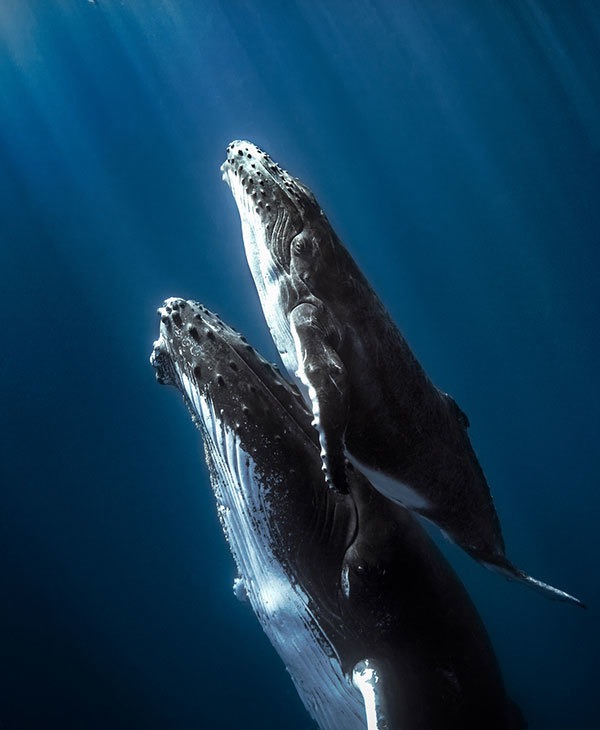
But awareness may go deeper than survival instincts.
Researchers at the Mount Sinai School of Medicine in New York have discovered that whales possess specialized brain cells — the same type involved in emotional processing in humans and great apes. These findings suggest that whales are not only intelligent, but emotionally complex.
So when James spoke calmly to the whale, some might dismiss it as symbolic. Science suggests otherwise.
Whales communicate through sound, body language, and awareness in ways we are only beginning to understand.
A Reminder of Our Role in the Ocean
This rescue is more than a viral moment. It is a stark reminder of how human activity — abandoned anchors, fishing gear, and marine debris — continues to threaten ocean life. Yet it is also proof that human intervention, when guided by respect and courage, can save lives.
In a world where oceans are increasingly under pressure, stories like this one reveal something essential:
wild animals are not indifferent to us — and sometimes, they remember our kindness.
If you believe moments like this matter, share this story.
The ocean is listening.
In an age where oceans face mounting pressure from industrial activity, climate change, and abandoned marine equipment, moments like this rescue carry meaning far beyond a single life saved. They remind us that conservation is not an abstract concept, but a series of human choices with real consequences. Protecting marine ecosystems, investing in sustainable ocean practices, and supporting scientific research are no longer optional—they are essential to the future of life beneath the waves and to our own survival. When humans act with awareness and responsibility, the balance between progress and preservation becomes possible, ensuring that the world’s oceans remain vibrant, resilient, and alive for generations to come.
Leave a Reply