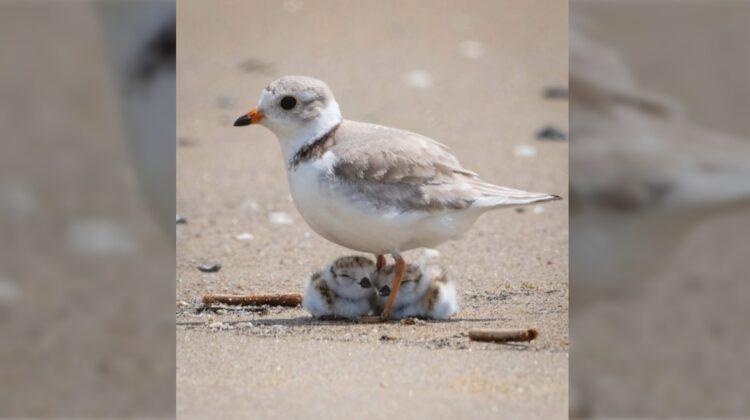
Few sights on a coastal beach are as quietly extraordinary as a newly hatched piping plover chick. No larger than a cotton ball, these fragile shorebirds emerge into a world of wind, waves, and constant danger—yet they are perfectly adapted for it.
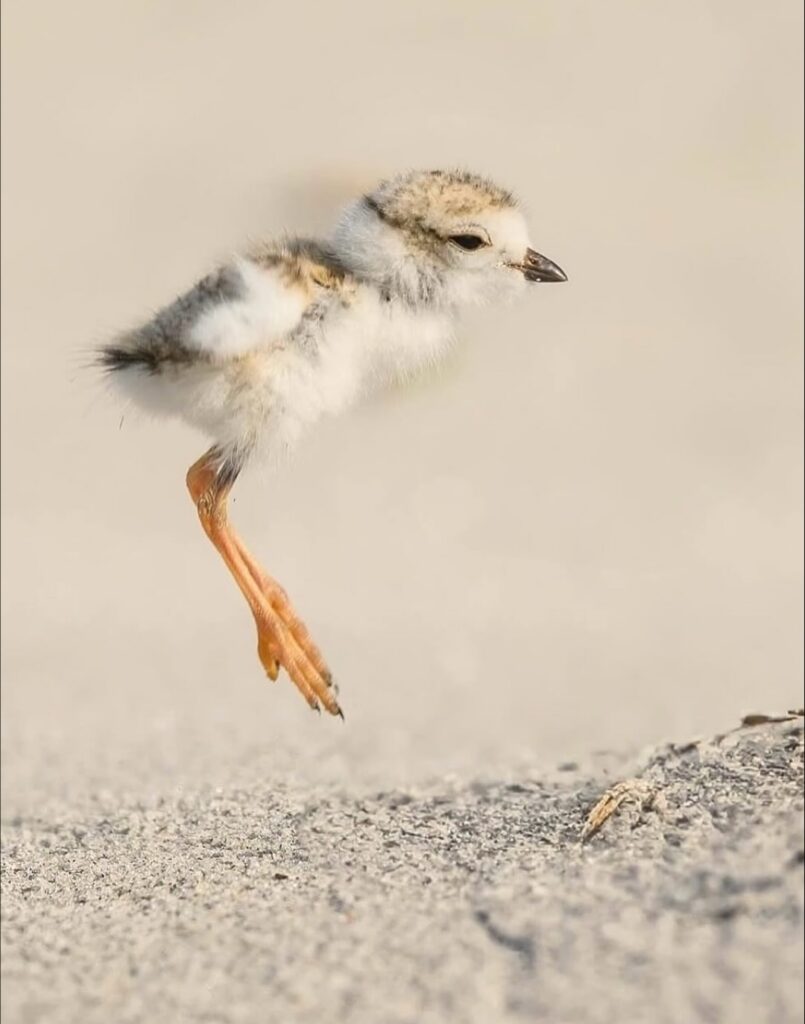
Piping plovers (Charadrius melodus) are small, pale shorebirds that inhabit open beaches, sandy dunes, and coastal flats across parts of North America. Their soft, sand-colored plumage acts as natural camouflage, allowing both adults and chicks to blend almost seamlessly into their surroundings. A thin dark band across the neck, paired with bright orange legs and a short orange-and-black bill, gives the species its delicate but unmistakable appearance.
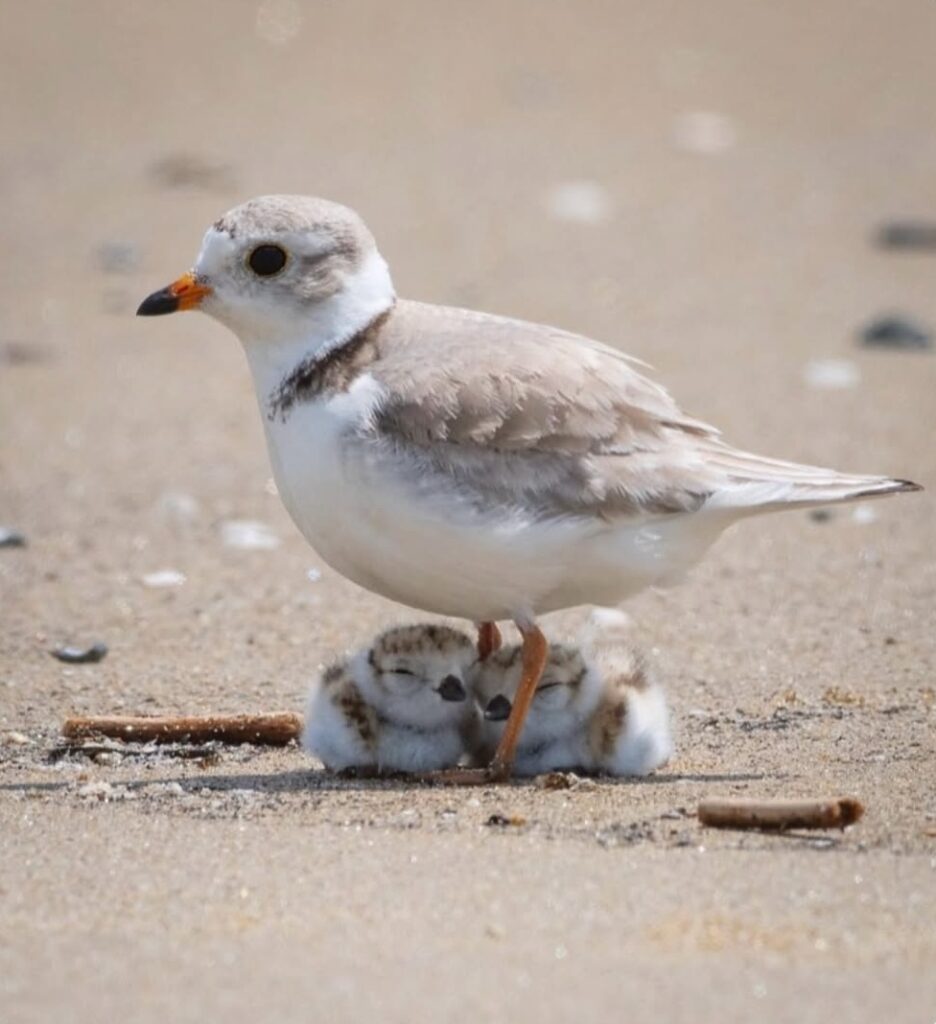
Their name comes from their gentle, melodic whistles—high-pitched calls that carry across the shoreline and serve as both communication and warning signals within family groups.
A Nest With No Shelter
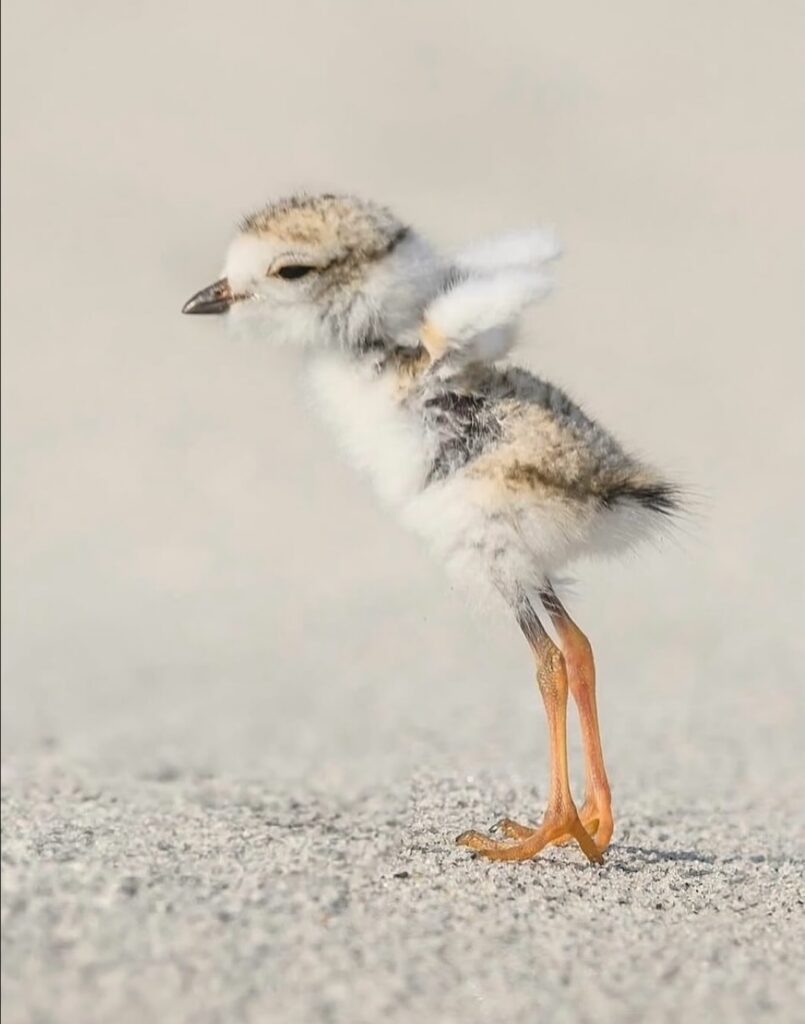
Unlike most birds, piping plovers do not build traditional nests. Instead, they create shallow depressions directly in the sand, often little more than a scraped hollow lined with tiny pebbles or shell fragments. This minimalist strategy offers camouflage but no physical protection.
Because these nests are fully exposed, they are highly vulnerable to disturbance. Foot traffic, off-road vehicles, unleashed pets, rising tides, and natural predators all pose serious risks. For this reason, piping plovers are listed as threatened or endangered in many regions, including parts of the United States and Canada.
Born Ready to Run
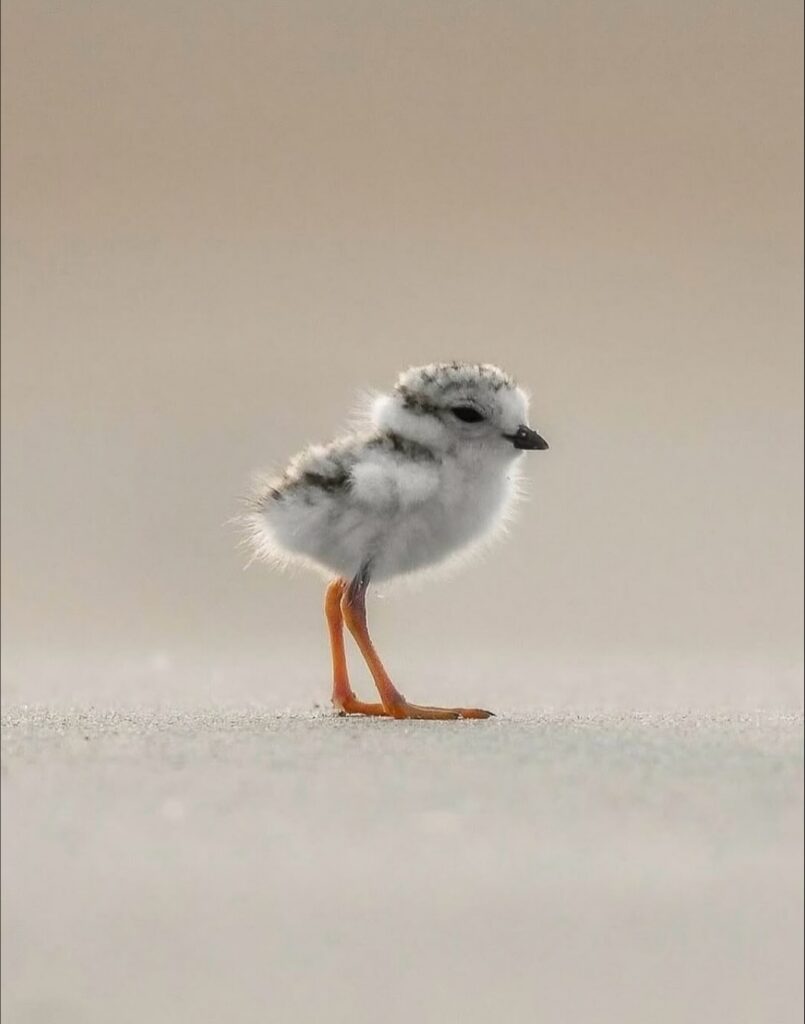
When the eggs hatch, the chicks are precocial—meaning they are born with downy feathers, open eyes, and the ability to walk within hours. Almost immediately, they begin following their parents along the shoreline, learning to forage for insects, marine worms, and tiny crustaceans hidden in the sand.
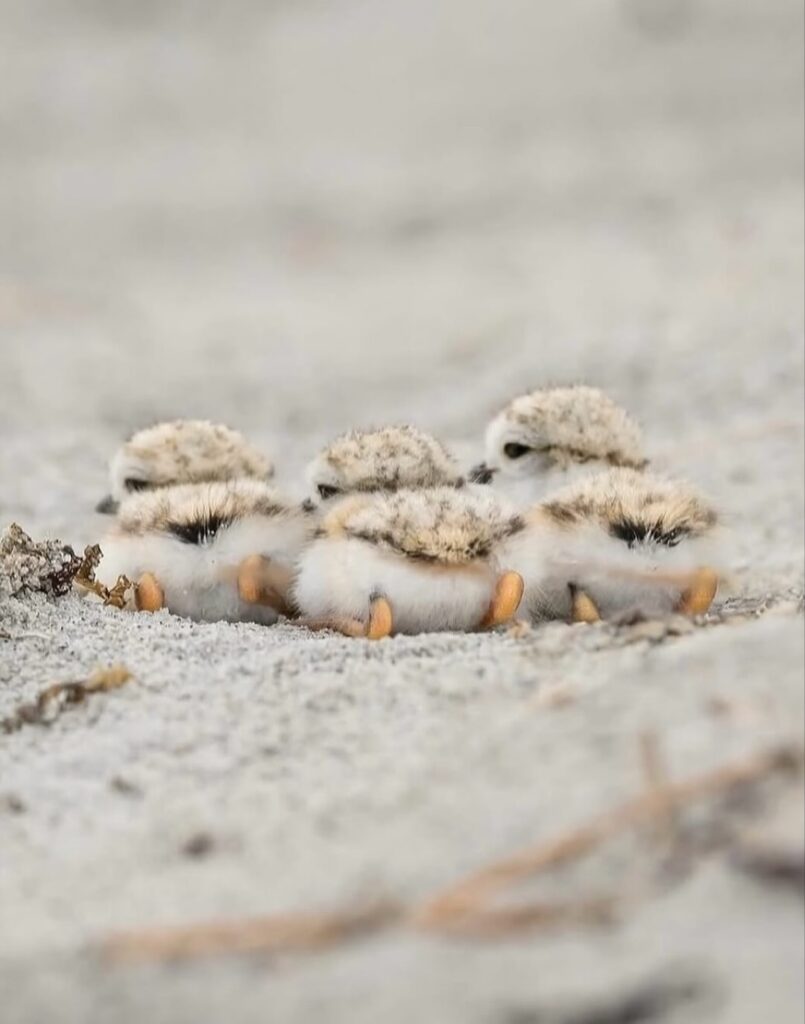
Despite their mobility, the chicks remain extremely vulnerable. They rely on camouflage rather than flight, freezing in place at the first sign of danger. Parents play an active role in defense, often performing dramatic distraction displays—such as fake broken wings—to lure predators away from their young.
A Species Balanced on Human Choices
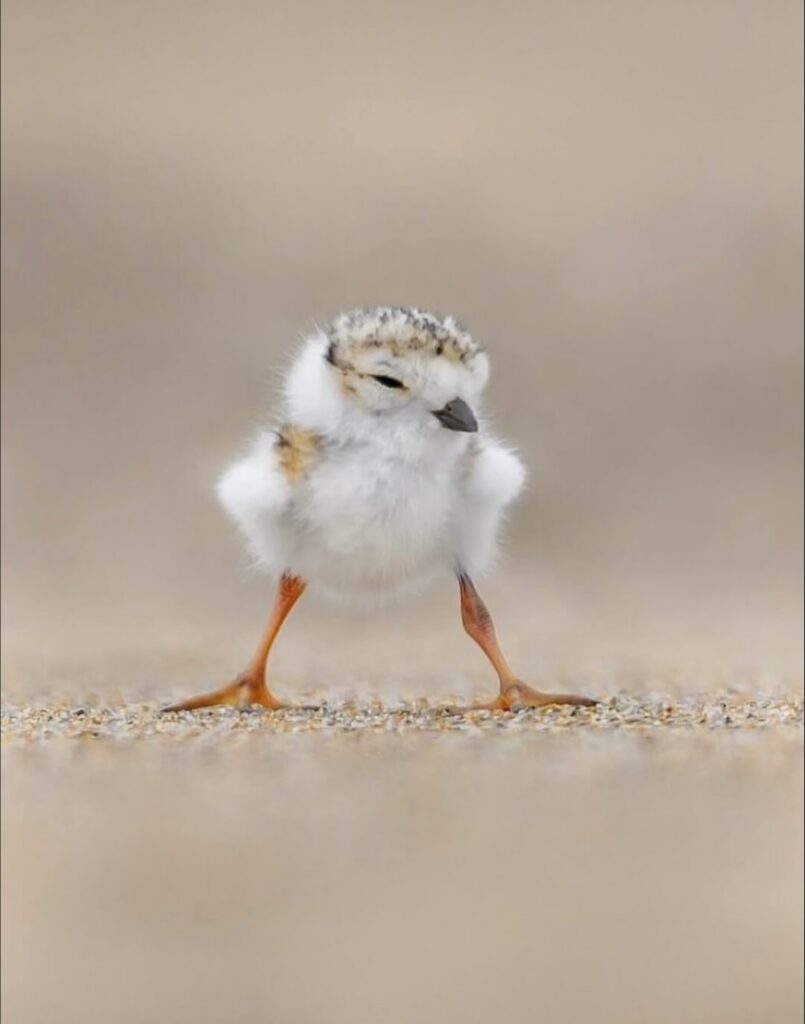
Piping plovers have survived harsh coastal environments for thousands of years, but modern pressures have pushed them to the edge. Habitat loss, recreational beach use, and climate-driven sea level rise now threaten the narrow strips of land they depend on.
Conservation efforts—such as protected nesting zones, seasonal beach closures, and public awareness—have proven effective where respected. Each successful hatch represents not just survival, but hope for a species whose future depends heavily on human behavior.
Why These Tiny Birds Matter
The presence of piping plovers is a sign of a healthy, functioning shoreline ecosystem. Their survival reflects the balance between wildlife and human recreation, between preservation and progress. Protecting these chicks means protecting the beaches themselves—natural spaces shaped by wind, water, and life.
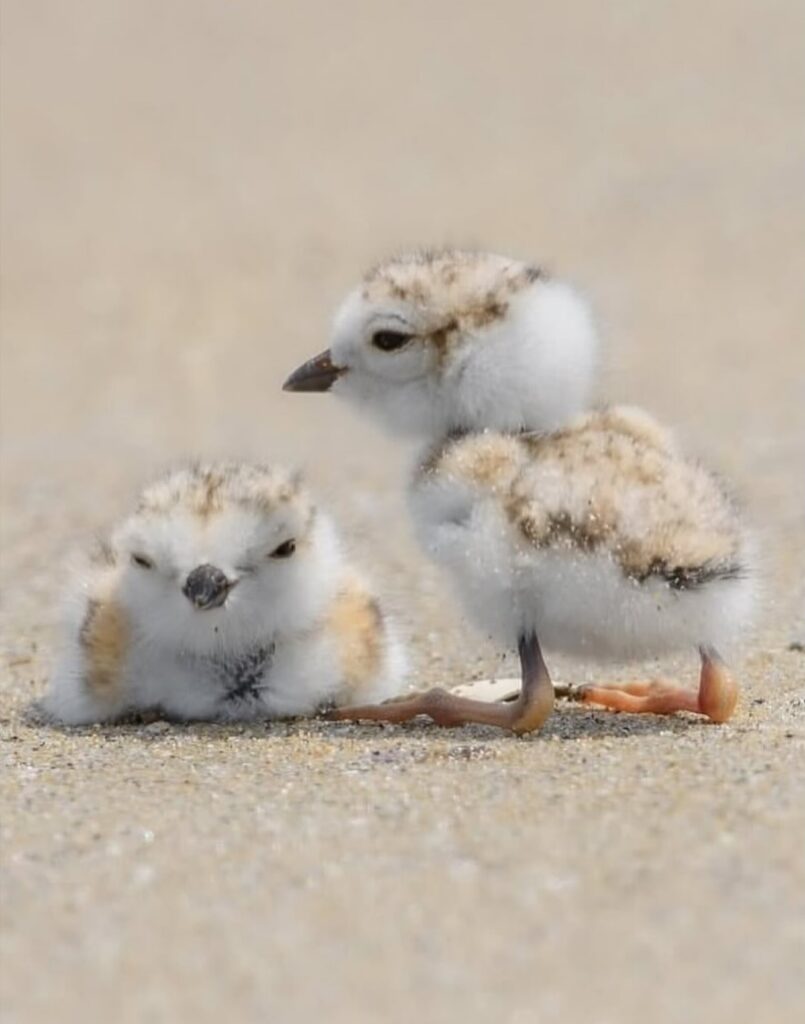
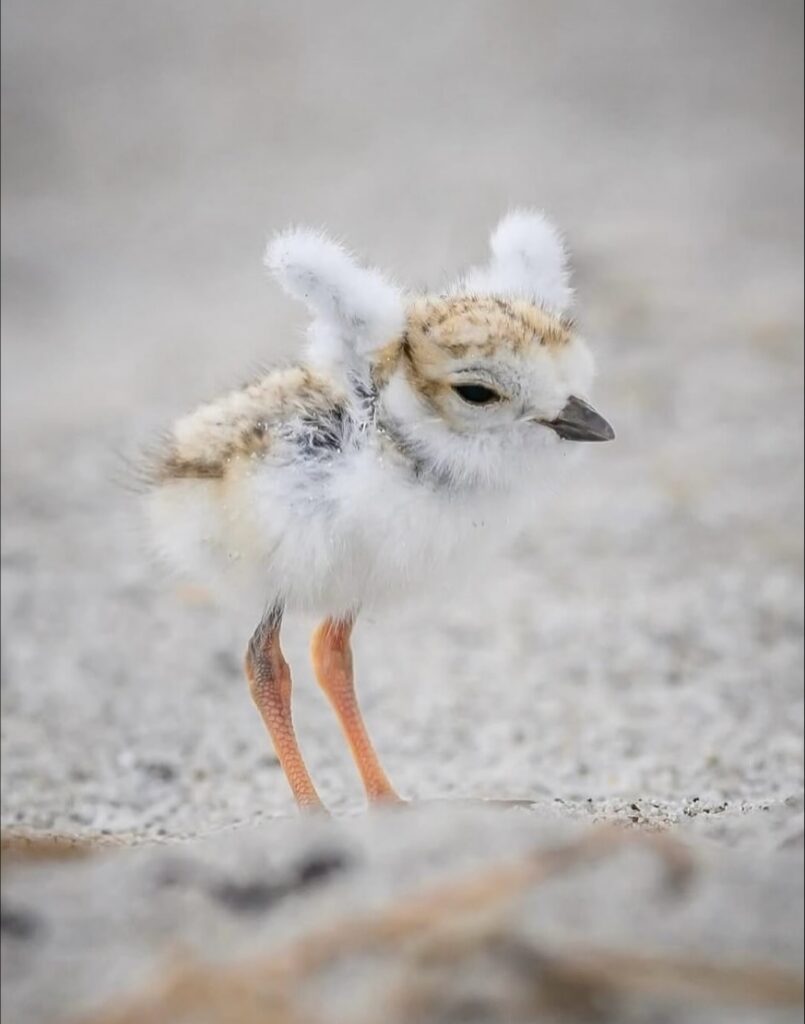
Sometimes, the smallest footprints on the sand carry the greatest significance.
Leave a Reply