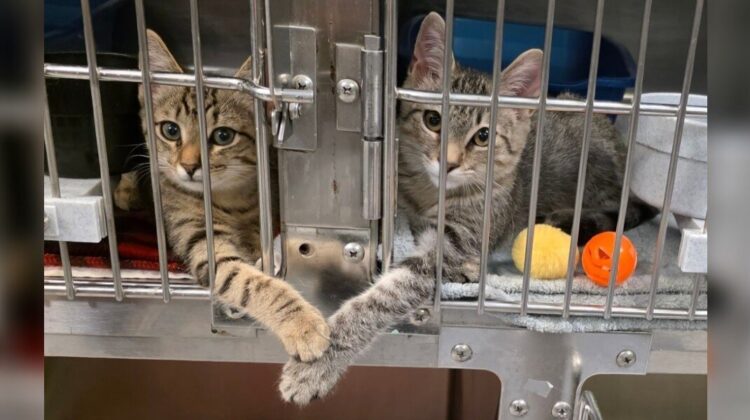
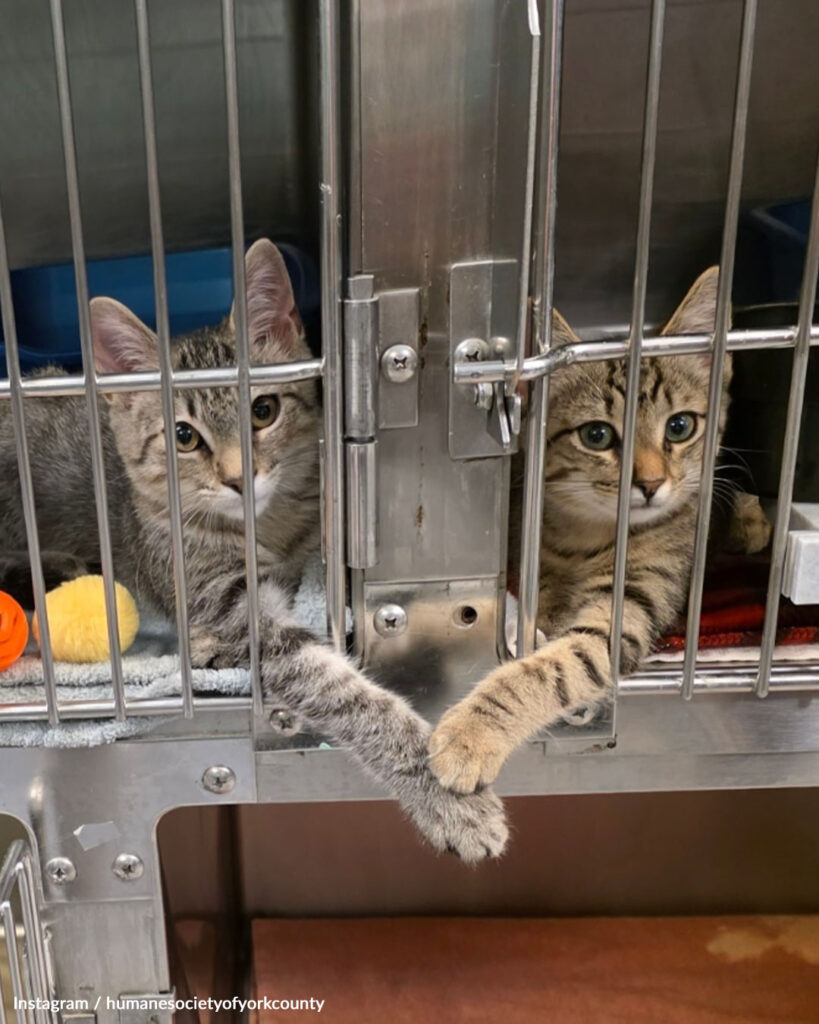
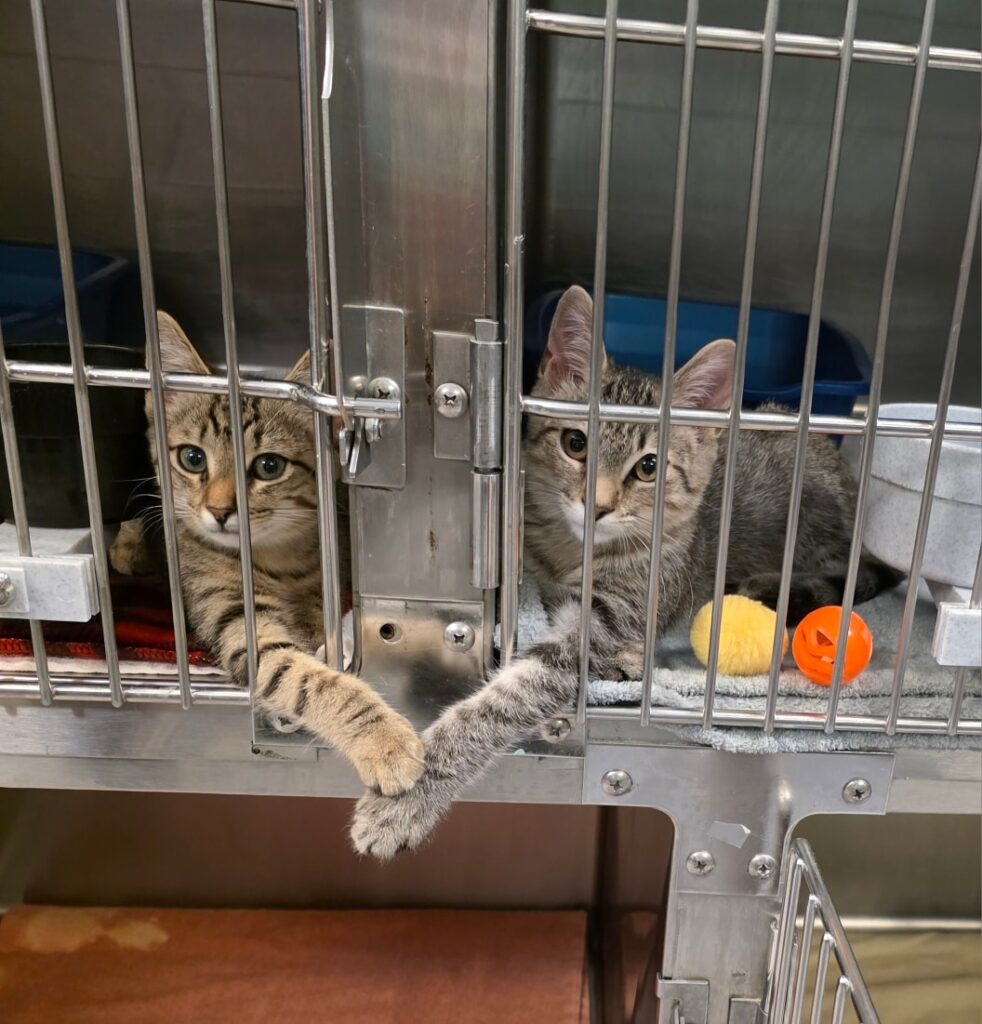
In a quiet corner of South Carolina, inside the cat room at the Humane Society of York County, a small moment unfolded that no one expected to become unforgettable. It wasn’t loud or dramatic. It didn’t demand attention. But when a shelter employee stepped inside and noticed two tiny paws reaching through separate kennel bars, gently touching, it stopped her in her tracks.
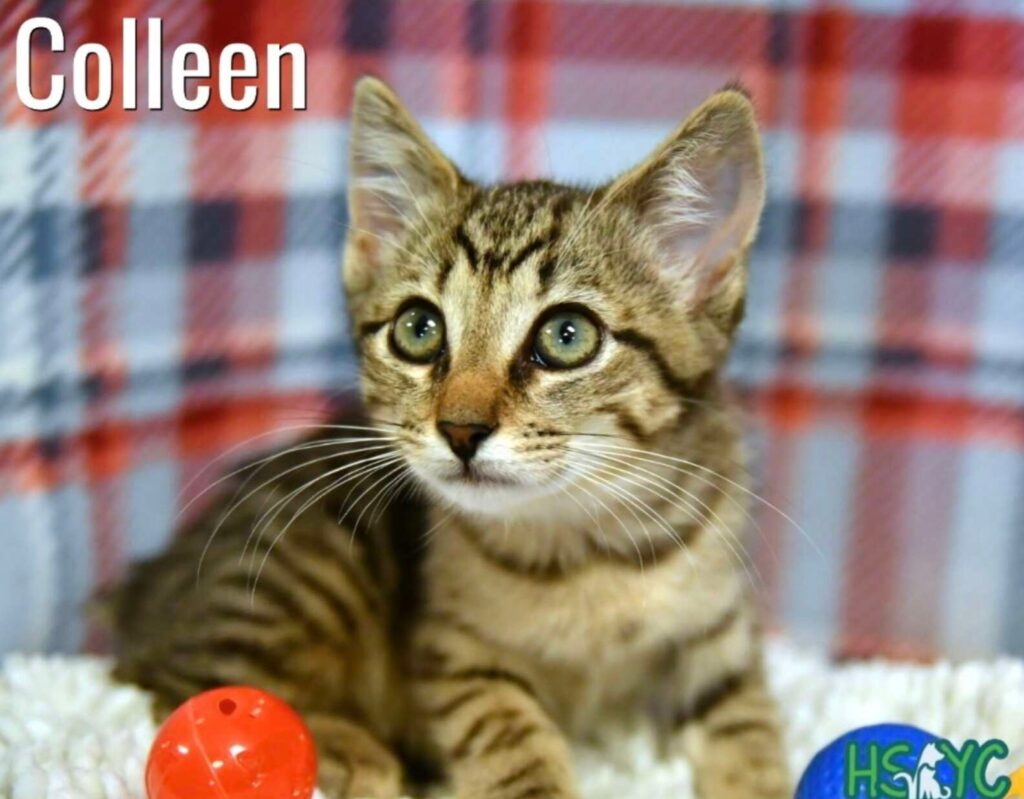
Colleen, a 13-week-old kitten with a personality far bigger than her small frame, had already captured hearts at the shelter. From the moment she arrived, staff noticed something unusual — she didn’t have a tail. Whether it was the result of an injury or something from her unknown past, no one could say. What they did know was this: nothing about her slowed her down. She moved through the shelter like a spark of light, weaving between other kittens, curling into warm piles of fur, chasing shadows, and seeking affection wherever she could find it.
She was fearless. Social. A kitten who refused to let circumstance define her.
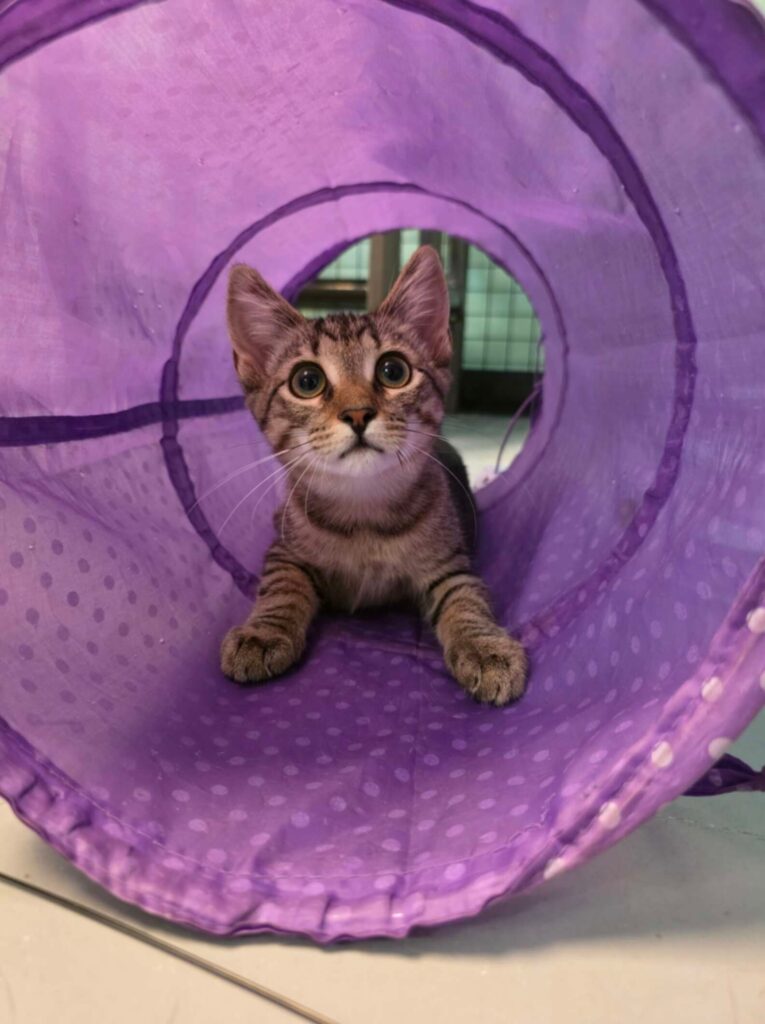
And then there was Pedro Pascal — another young kitten housed nearby. They weren’t littermates. They didn’t share a history. Yet somewhere between mealtimes and play sessions, they formed a quiet bond. Through the cool metal bars of their kennels, they reached for each other. Tiny paws extended, pads touching gently, as if instinctively understanding that comfort doesn’t always require space — only connection.
“It looked like they were making a little heart with their hands,” the shelter attendant later said. And in that still moment, they weren’t wrestling or pawing playfully. They were simply there. Resting. Together.
In animal shelters across the country, scenes like this reveal something powerful: kittens, like humans, thrive on companionship. Research in animal behavior shows that bonded pairs develop healthier social skills, experience reduced stress, and adapt more easily to new homes. For young cats especially, companionship isn’t a luxury — it’s part of their emotional architecture.
Eventually, Pedro was adopted. His journey moved forward. Colleen remained.
But she didn’t retreat into loneliness. True to her nature, she continued seeking friendship, curling beside other kittens, greeting visitors with bright curiosity, proving again and again that resilience can come wrapped in soft fur and bright eyes. Shelter staff often remind adopters that bringing home two kittens isn’t an indulgence — it’s an investment in their long-term well-being. They play together. They comfort each other. They grow together.
Colleen is vaccinated, spayed, and ready for a new chapter. What she needs now is someone willing to see what shelter staff already know — that her missing tail tells only a fraction of her story. The rest is written in courage, affection, and the simple, beautiful gesture of two paws meeting through steel bars.
Some moments don’t roar. They whisper. And sometimes, a tiny heart forms quietly between cages, reminding us that connection is instinct — even for the smallest among us.
Adopting from a certified animal shelter like the Humane Society of York County supports ethical pet adoption practices, reduces overpopulation, and promotes responsible pet ownership. Studies show that adopting bonded kittens can lower long-term veterinary costs by improving behavioral health and reducing separation anxiety. Animal rescue organizations across the United States rely on community support, foster networks, and adoption programs to ensure that abandoned pets receive medical care, vaccinations, microchipping, and spay/neuter services before placement. Choosing shelter adoption over pet store purchases directly contributes to sustainable animal welfare systems and humane treatment initiatives nationwide.
Leave a Reply