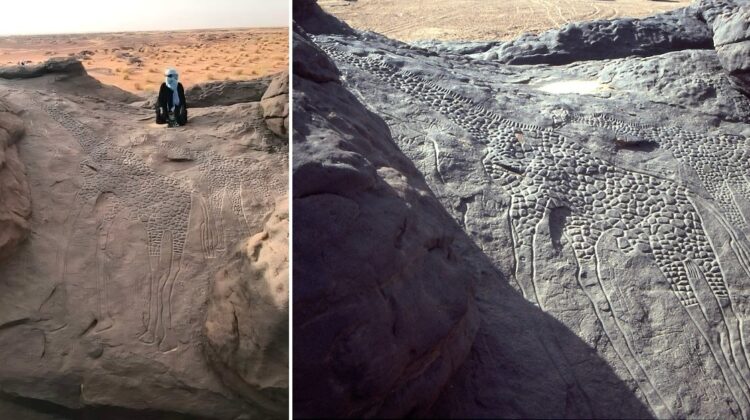
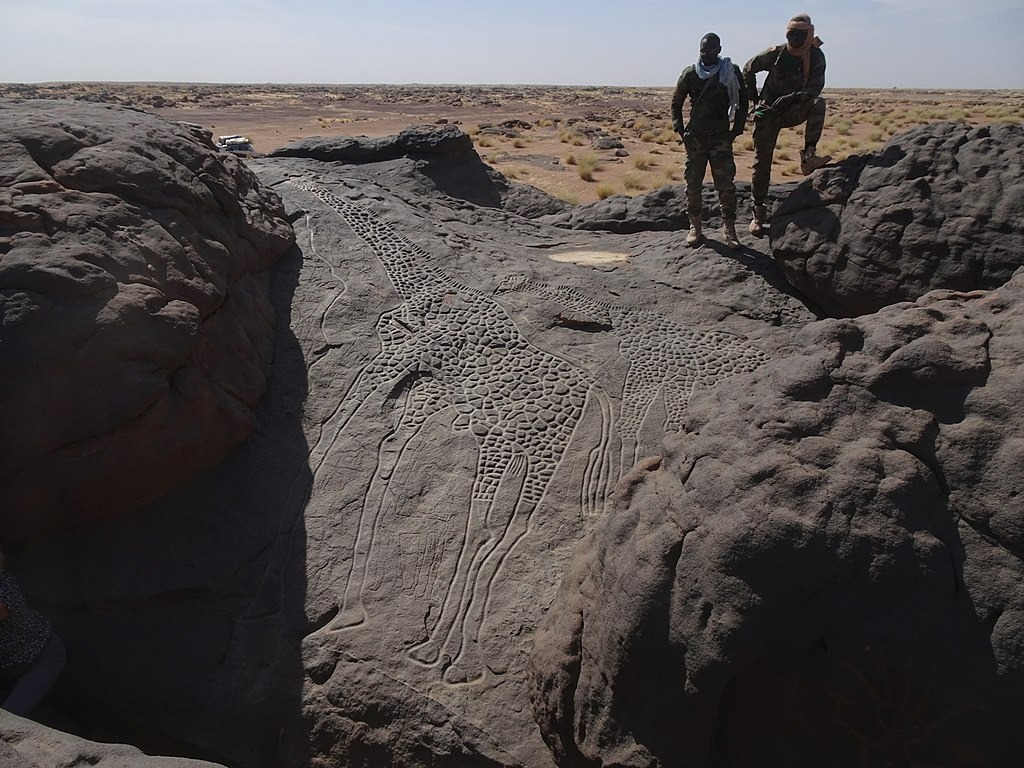
In the vast expanse of the Ténéré Desert in Niger lies a testament to the distant past etched onto the canvas of sandstone rocks – the awe-inspiring Dabous Giraffes. These colossal carvings, the largest known animal petroglyphs globally, unravel a narrative of a bygone era, connecting us to the rich history and natural heritage of the Saharan region.
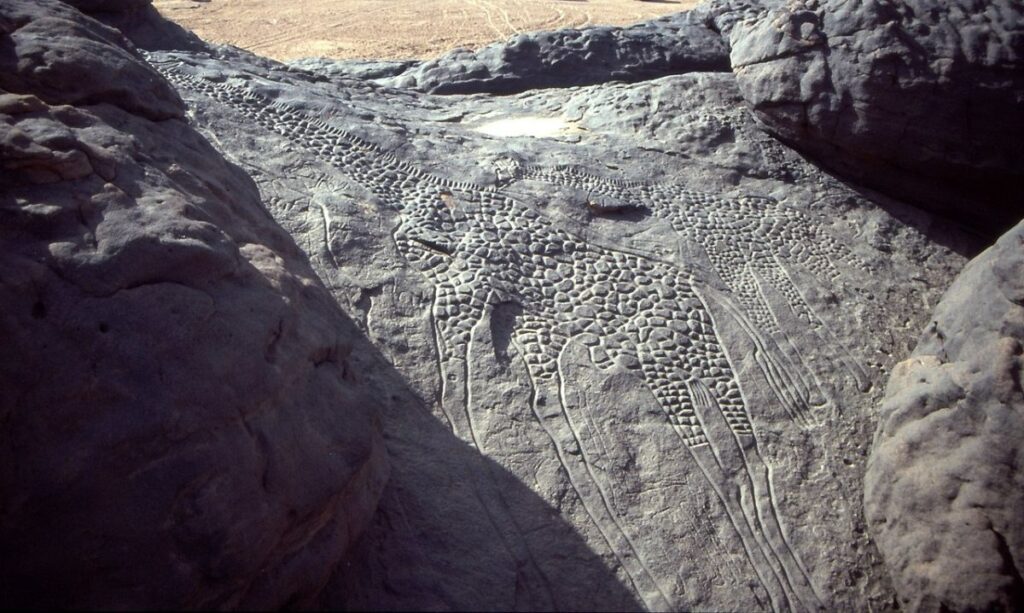
Situated on the western side of the Aïr Mountains, approximately 70 miles (110 km) north of Agadez and a short distance from the Trans-Saharan Highway, the Dabous Giraffes emerge as masterpieces of ancient rock art. Crafted around 7,000 years ago, during a period when the Sahara transformed into a verdant savannah teeming with wildlife, these monumental carvings stand as silent witnesses to a vastly different landscape.
The larger of the two giraffes commands attention, towering over 18 feet (5.5 m) in height, while the smaller, a female counterpart, complements the scene. Executed with remarkable realism and intricate detail, the carvings showcase the distinctive features of giraffes, including spots, horns, eyes, and even eyelashes. The artistry employed in their creation involves various techniques such as scraping, smoothing, and deep engraving, all contributing to the lasting allure of these ancient depictions.
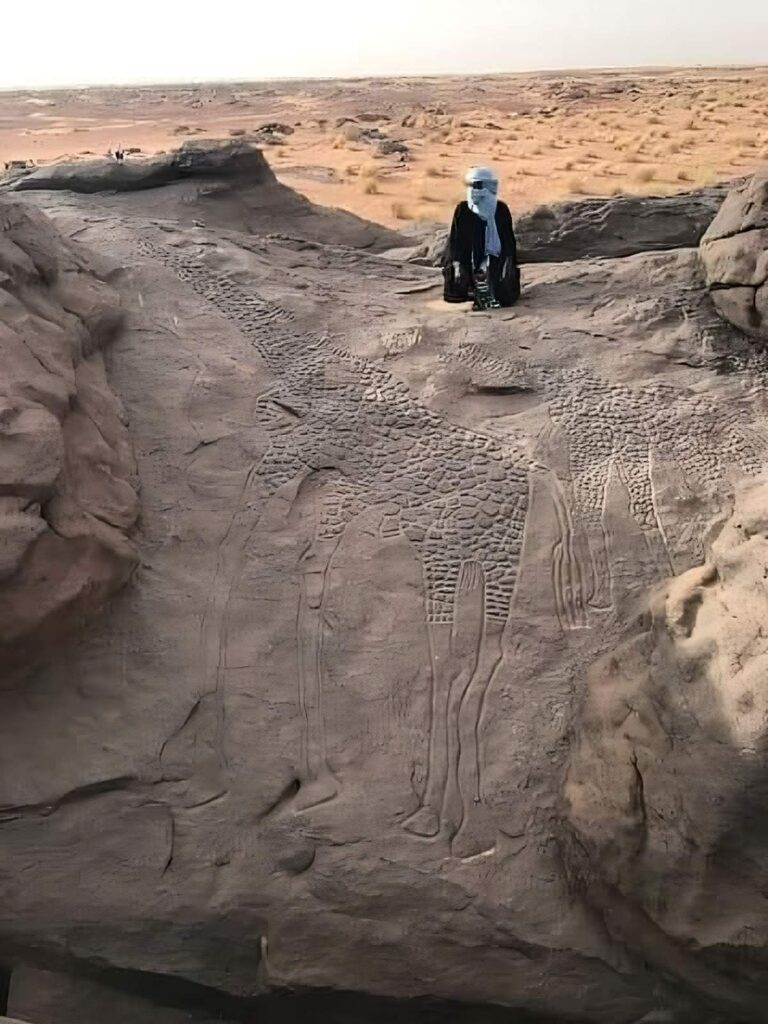
Remarkably, extending from each giraffe’s mouth is a line culminating in a human figure. Interpreted by some scholars as a symbol of communication or a mystical connection between humans and animals, this adds a layer of intrigue to the already captivating scene.
The Dabous Giraffes do not stand alone in their rocky sanctuary; in close proximity, 828 images adorn the stones. Among them, 704 portray a diverse array of animals, including cattle, ostriches, antelopes, lions, rhinoceros, and camels. Another 61 depict human figures, while 17 feature inscriptions in Tifinâgh, an ancient script. Evidence of petrified wood in the vicinity further enriches the archaeological tapestry.
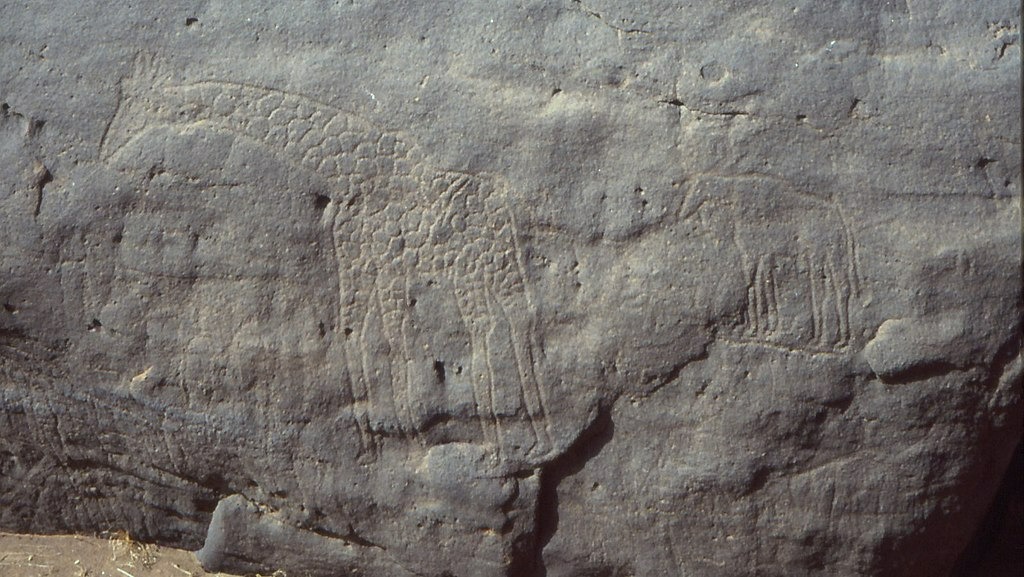
Attributed to pastoralists who thrived in the region between 6,000 and 8,000 years ago, a period coinciding with the African humid era, the petroglyphs narrate a tale of a Sahara transformed into a sprawling savannah. Despite their historical significance, the identity of the artists remains veiled in mystery.
French archaeologist Christian Dupuy first documented the Dabous Giraffes in 1987, with further exploration undertaken by David Coulson in 1997. Since their discovery, these majestic carvings have become a focal point for tourists, researchers, and art enthusiasts alike. Unfortunately, the passage of time has not been entirely benevolent; the site has faced threats from vandalism, erosion, and theft.
In a bid to safeguard and preserve this cultural treasure, the Bradshaw Foundation orchestrated a comprehensive project. This initiative involved creating a mold of the carvings and producing a limited edition of aluminum casts. One of these casts now finds its home at the Agadez airport. The project extended beyond conservation efforts, encompassing the sinking of a water well for a nearby Tuareg community, instating guardians for the site.
The Dabous Giraffes, beyond their status as an impressive testament to ancient art, serve as a living record of the Sahara’s diverse history. They beckon us to reflect on the intricate relationship between humans and nature, emphasizing the importance of respecting and preserving our cultural heritage. As silent sentinels of time, the Dabous Giraffes invite us to connect with a world long past, reminding us of the profound beauty that once graced the Sahara.
Leave a Reply