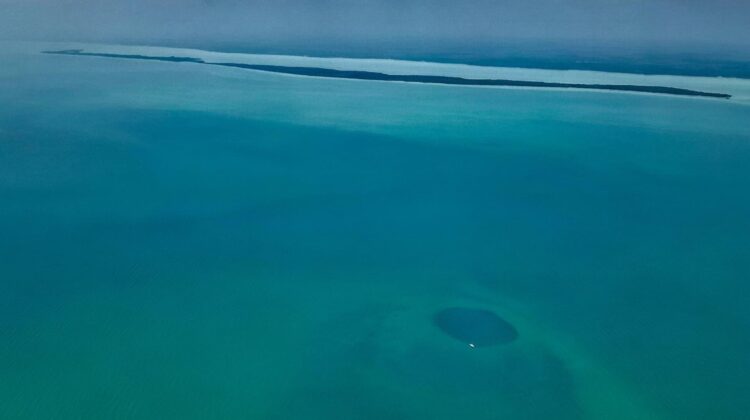
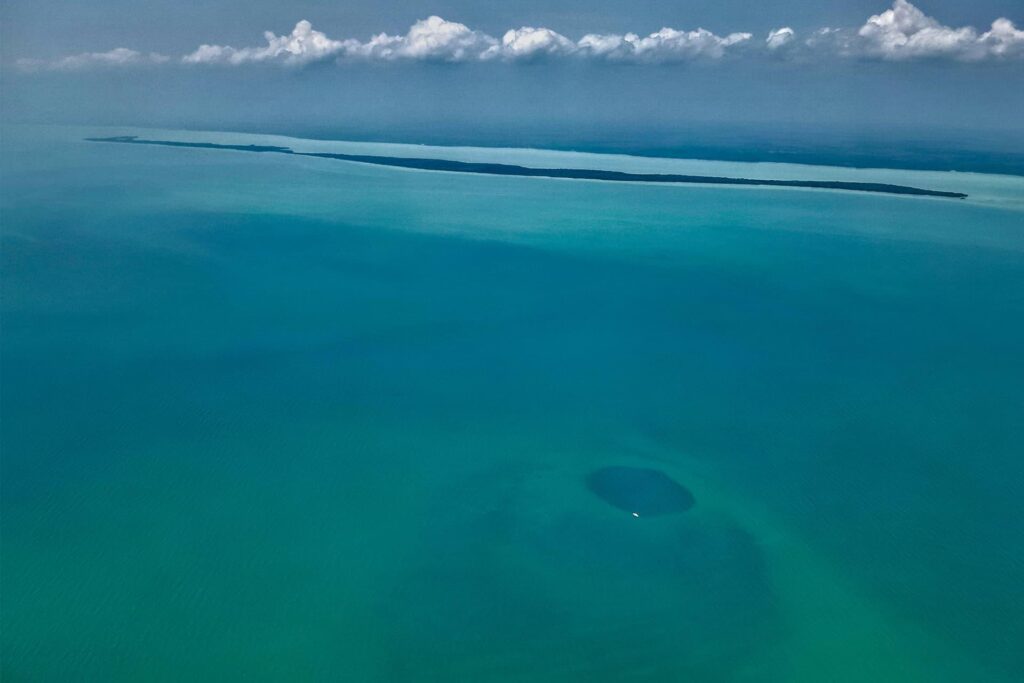
Scientists say they have identified what could be the deepest blue hole ever recorded, located off the coast of the Yucatán Peninsula.
The underwater sinkhole, known as the Taam Ja’ Blue Hole, has been measured to a depth of at least 1,380 feet (420 metres), according to a study published in Frontiers in Marine Science.
Researchers say the true depth remains unknown, as current measuring instruments have been unable to reach the bottom.
A diving expedition carried out in December 2023 aimed to better understand the environmental conditions within the formation. Data collected revealed distinct layers in the water column, with deeper sections showing temperature and salinity levels similar to those of the surrounding Caribbean Sea.
This has led scientists to suggest that the blue hole may be connected to the ocean through a network of underwater tunnels and caves.
Blue holes are large vertical caverns typically formed in soluble rock such as limestone, gypsum, or marble. They are found in coastal regions around the world and are often of significant scientific interest due to their unique ecosystems.
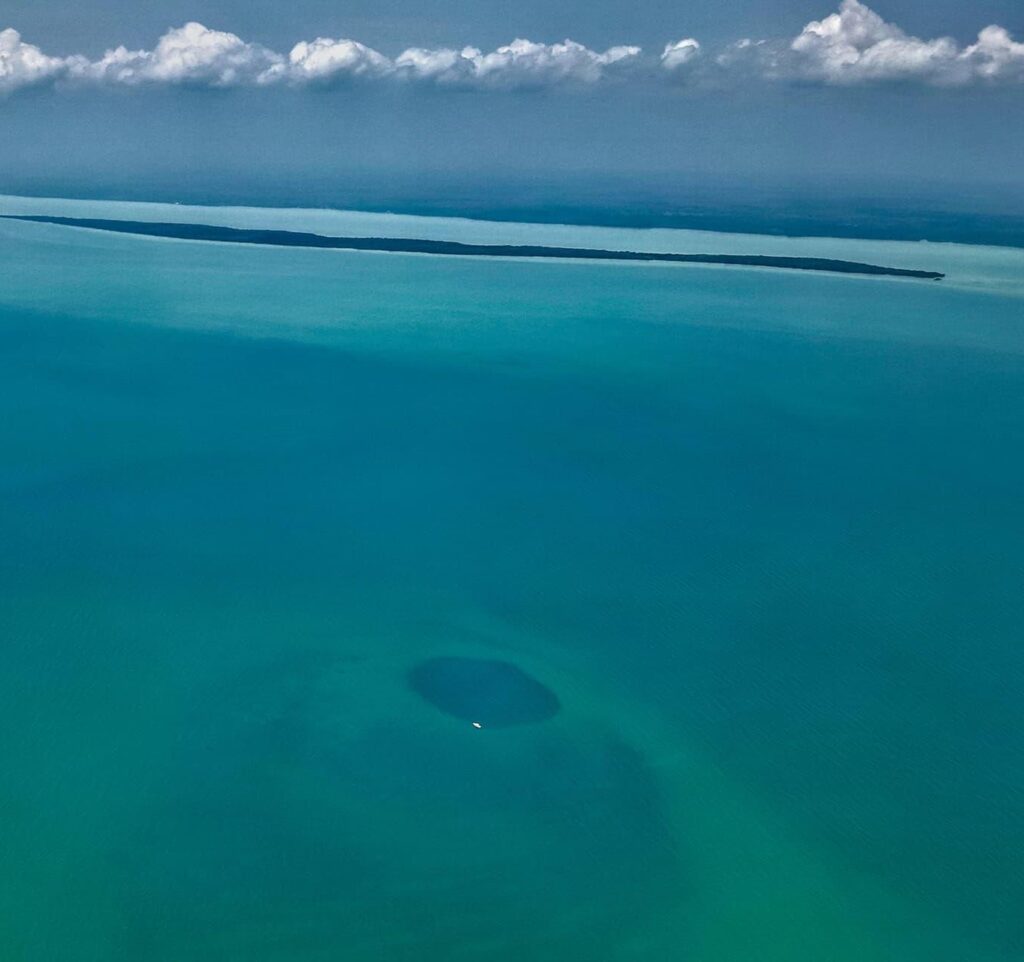
The Taam Ja’ Blue Hole exceeds the depth of the previously recognised record-holder, the Dragon Hole, which measures approximately 990 feet (301 metres).
Other well-known examples include Dean’s Blue Hole, Dahab Blue Hole, and Great Blue Hole.
Researchers say further exploration will be needed to determine the full depth of the Taam Ja’ formation and to assess whether it may host previously undiscovered forms of marine life.
Rising global interest in ocean discoveries is increasing demand for marine research programs, deep-sea exploration technology, underwater drones, environmental monitoring systems, and scientific innovation funding, as institutions and private investors continue to support advanced solutions for exploring and protecting the world’s oceans.
Leave a Reply