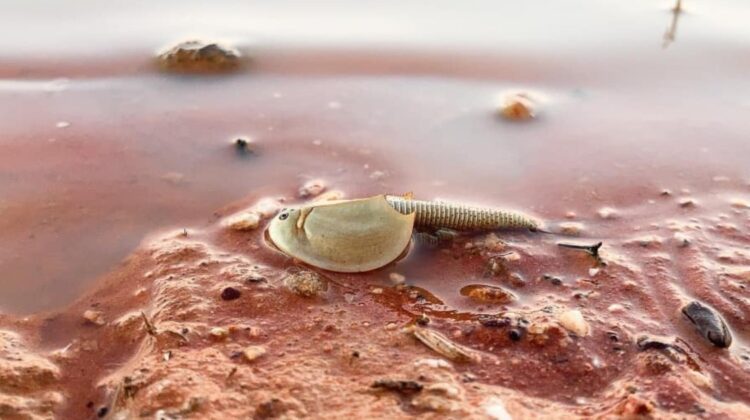
At first glance, Triops may look like tiny alien creatures gliding through shallow water. With their shield-like bodies, multiple legs, and long tail filaments, they seem almost prehistoric — and in many ways, they truly are.
Often called “living fossils,” Triops are among the oldest surviving animal species on Earth, with a lineage stretching back more than 220 million years, meaning their ancestors existed long before many dinosaurs even appeared.
These extraordinary crustaceans are not just biological curiosities — they are powerful reminders of nature’s resilience, adaptability, and ancient design.
Older than dinosaurs
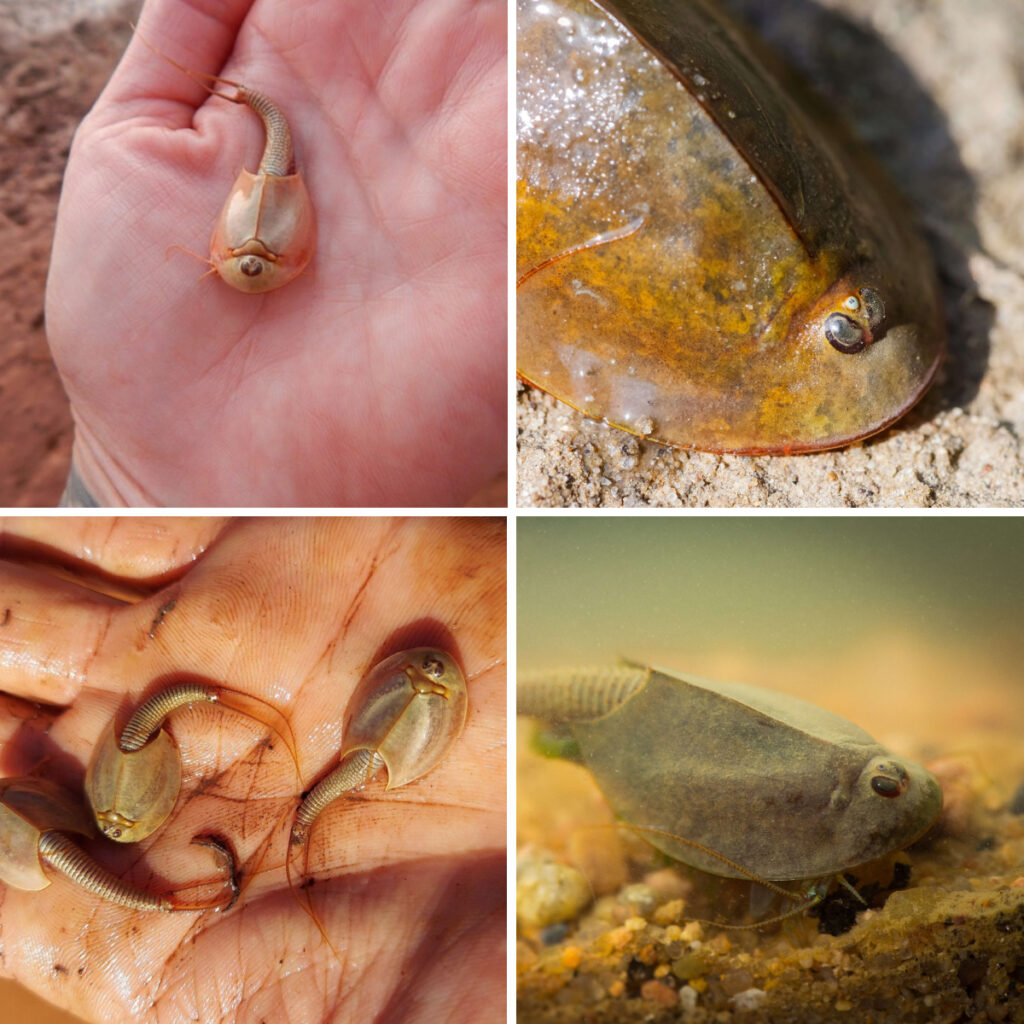
Triops belong to a group of small freshwater crustaceans whose body structure has changed remarkably little over hundreds of millions of years.
Because their basic form has remained so consistent, scientists often describe them as living fossils — modern creatures that closely resemble their distant prehistoric ancestors.
While the world transformed through mass extinctions, shifting continents, and catastrophic climate changes, Triops endured.
Masters of survival
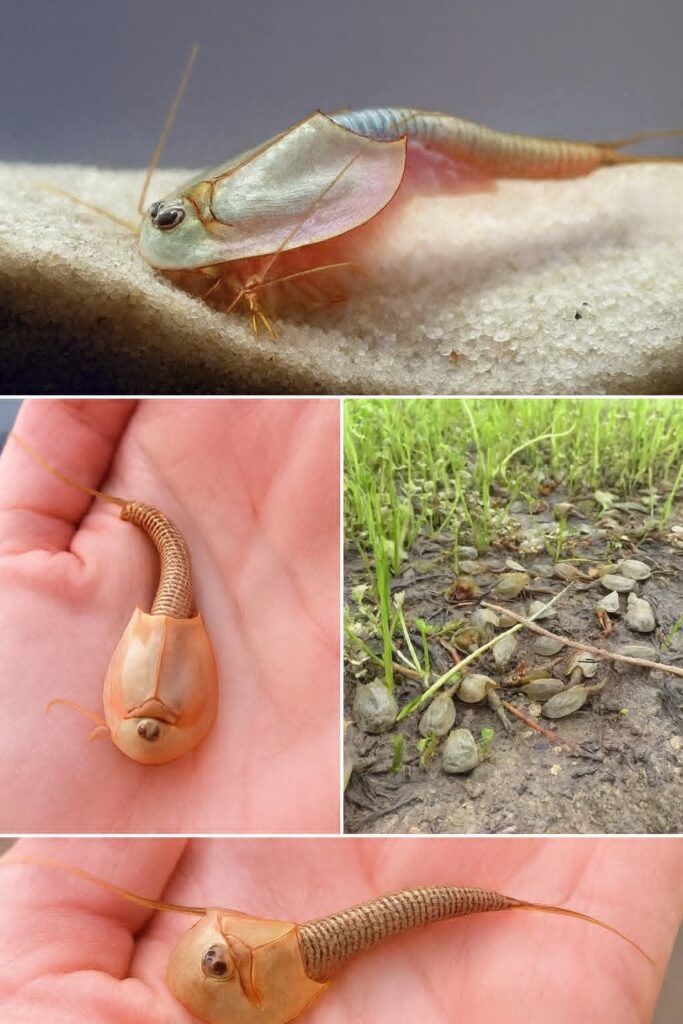
One of the most remarkable secrets behind Triops’ survival lies in their eggs.
Triops often live in temporary pools or seasonal ponds that may dry out completely. When conditions become harsh, their eggs can enter a dormant state known as diapause, allowing them to survive extreme heat, drought, and even freezing conditions for years.
Once water returns, the eggs hatch rapidly — sometimes within days — bringing ancient life back from apparent lifelessness.
This strategy has allowed Triops to persist across geological ages.
Built for speed and adaptation
Triops grow quickly because their habitats are often temporary. In just a short time, they hatch, mature, reproduce, and lay eggs before their watery homes disappear.
They are omnivorous scavengers, feeding on plant matter, small organisms, detritus, and even each other when necessary.
This opportunistic lifestyle has made them highly adaptable survivors.
Nature’s miniature time machine
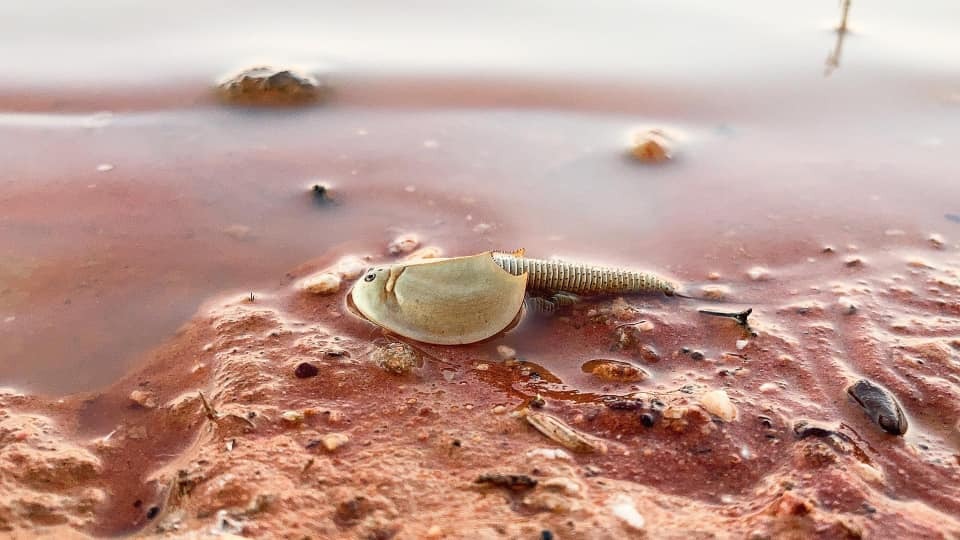
Holding a Triops can feel like holding a direct link to Earth’s distant past.
Their appearance offers a glimpse into evolutionary history, showing how some life forms become so effective that major redesign is unnecessary.
In a world where countless species vanished, Triops represent a rare example of biological endurance.
More than a curiosity
Triops are also used in educational kits, allowing children and adults to hatch and observe them at home. Watching these ancient creatures emerge from dormant eggs can provide a fascinating lesson in biology, evolution, and environmental adaptation.
Why Triops still matter today
Studying Triops helps scientists better understand evolutionary stability, dormancy strategies, and how species survive extreme environmental shifts — knowledge that may even offer insights into resilience under modern climate pressures.
In the tiny, fast-moving body of a Triops lies one of nature’s greatest survival stories — a creature that has outlived mass extinctions, ancient predators, and planetary upheaval while remaining almost unchanged. More than just a strange aquatic oddity, Triops are living proof that sometimes survival is not about becoming the biggest or strongest, but about mastering endurance across the ages.
Leave a Reply