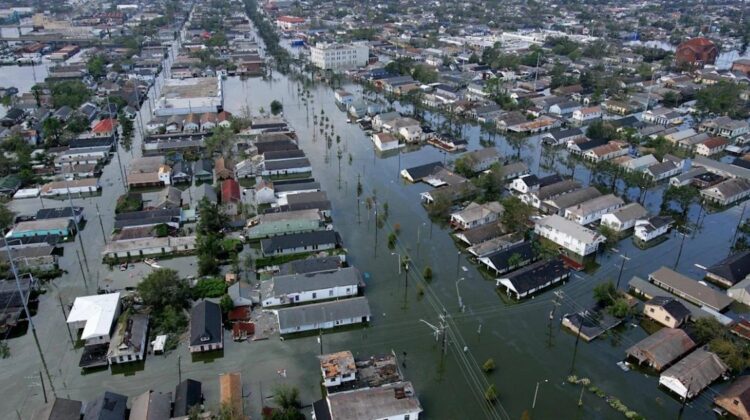
New research is painting a stark future for New Orleans, warning that one of America’s most culturally iconic cities may eventually face an unavoidable retreat as rising seas, sinking land, and disappearing wetlands steadily erode the foundations beneath it.
A perspectives paper published in Nature Sustainability argues that coastal Louisiana has effectively crossed a “point of no return,” with sea-level rise, land subsidence, and wetland collapse combining to create what researchers describe as one of the most physically vulnerable coastal regions on Earth. While New Orleans is not expected to vanish overnight, scientists warn that within decades—not centuries—the city could become increasingly isolated by surrounding water, making long-term habitation and protection dramatically harder.
The threat comes from several forces converging at once. Global heating is driving sea levels higher, while southern Louisiana’s coastline is also sinking due to natural subsidence and decades of industrial disruption from oil and gas canals. At the same time, the wetlands that once acted as natural storm buffers are vanishing at an alarming pace. Since the 1930s, Louisiana has lost roughly 2,000 square miles of coastal land—an area about the size of Delaware—and more could disappear in coming decades.
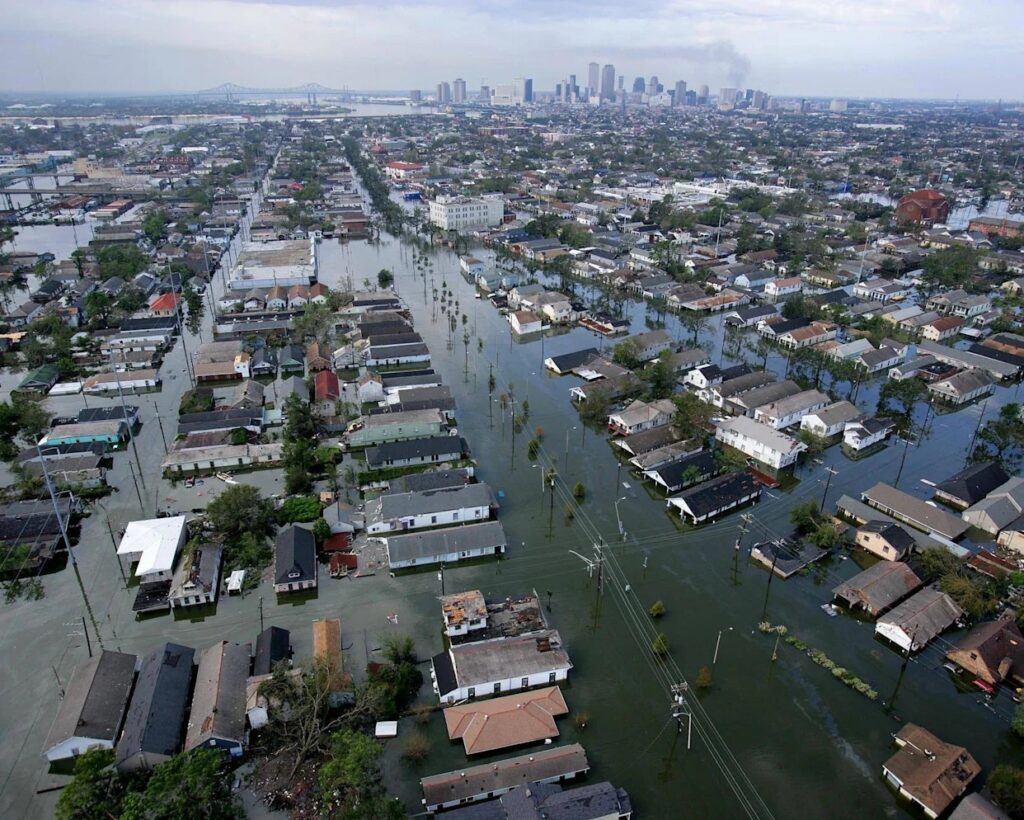
For New Orleans, a city already largely below sea level, this creates an escalating crisis. Billions of dollars were invested in levees, pumps, and floodgates after Hurricane Katrina devastated the region in 2005. Those defenses remain essential, but researchers warn they may only buy time rather than offer a permanent solution. As seas continue to rise and land continues to sink, even advanced engineering may eventually be overwhelmed.
Tulane University climate adaptation expert Jesse Keenan, one of the study’s co-authors, argues that policymakers should begin planning now for a managed, long-term relocation strategy—starting with the most vulnerable communities outside major levee systems. Rather than waiting for repeated disasters or insurance collapse to force chaotic migration, the paper suggests building infrastructure in safer inland areas while gradually supporting population movement.
The idea is politically explosive. New Orleans is not just a city; it is a globally recognized center of music, food, history, and identity. For many residents, relocation discussions feel almost unthinkable. Yet researchers argue that avoiding the conversation may ultimately worsen human and economic suffering.
Recent political decisions have added urgency. Louisiana’s cancellation of major coastal restoration projects, including sediment diversion efforts designed to rebuild wetlands using the Mississippi River’s natural sediment flow, has alarmed scientists who see such programs as critical for slowing land loss. Without aggressive restoration, the timeline for severe regional transformation could accelerate.
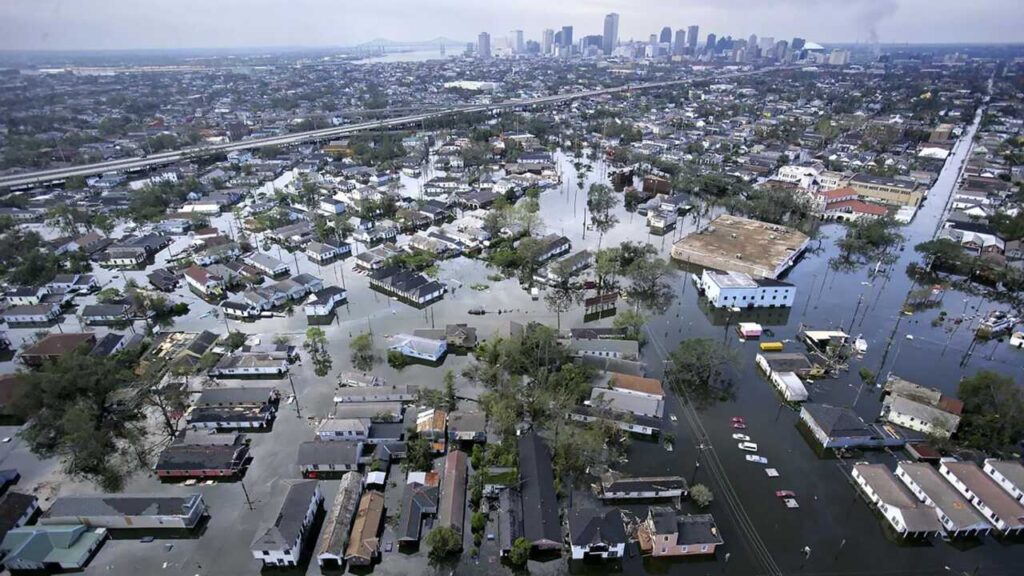
Importantly, experts stress that New Orleans is not expected to disappear in the immediate future. The city’s fate will depend heavily on climate mitigation, restoration efforts, infrastructure investment, and policy decisions made now. But the warning is increasingly clear: preserving New Orleans in its current form indefinitely may not be physically possible.
For now, the city remains vibrant, resilient, and inhabited by communities deeply connected to its history. But beneath the jazz, architecture, and celebrations, New Orleans may also be becoming one of the world’s clearest examples of how climate change can force societies to confront difficult questions not just about protection—but about when, and how, to retreat.
New Orleans has long been defined by survival against the odds, but scientists say the next chapter may depend less on resisting nature forever and more on whether leaders are willing to prepare for an unprecedented transformation before crisis leaves them no choice.
For generations, New Orleans has stood as one of America’s most iconic cultural capitals — a city shaped by jazz, resilience, cuisine, and history. But mounting scientific warnings suggest its greatest battle may not be against the next storm, but against geography itself. As seas rise, wetlands vanish, and protective land disappears, the question may no longer be whether New Orleans can be preserved forever, but how long humanity can delay the inevitable. The city’s future could depend on decisions made now: whether leaders choose denial, adaptation, or an unprecedented managed retreat. What happens in Louisiana may soon become a global warning for coastal cities everywhere.
Leave a Reply