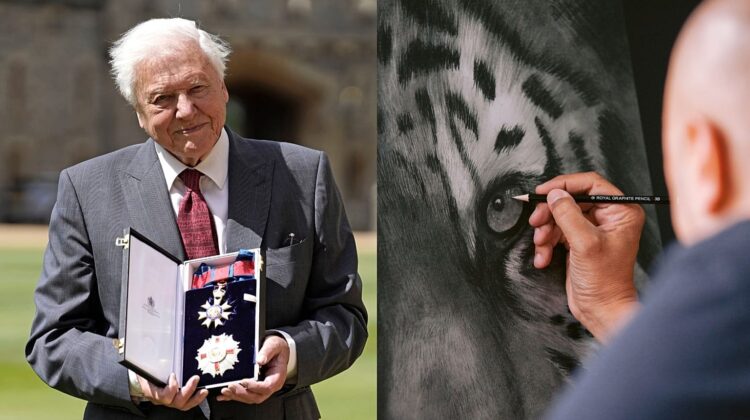
For more than seven decades, Sir David Attenborough has done far more than narrate the natural world — he has transformed how millions of people see it.
As the legendary broadcaster reaches his 100th year, his influence extends well beyond television screens. Through groundbreaking documentaries, urgent environmental warnings, and an unmatched passion for life on Earth, Attenborough has inspired artists, scientists, educators, and activists across generations.
His extraordinary legacy has become so powerful that it now has a name: the “David Attenborough Effect.”
More than a voice — a global force for change
Since beginning his BBC career in 1952, Attenborough has become one of the most recognisable voices in broadcasting history, bringing viewers face-to-face with the beauty, fragility, and complexity of life on Earth.
From Planet Earth to Blue Planet and Frozen Planet, his work has consistently turned wonder into awareness — and awareness into action.
Research has shown that his documentaries can directly influence public behaviour. Following his powerful focus on plastic pollution, searches related to recycling surged, while many viewers reported reducing their use of single-use plastics.
This is storytelling with measurable environmental consequences.
Inspiring artists through nature
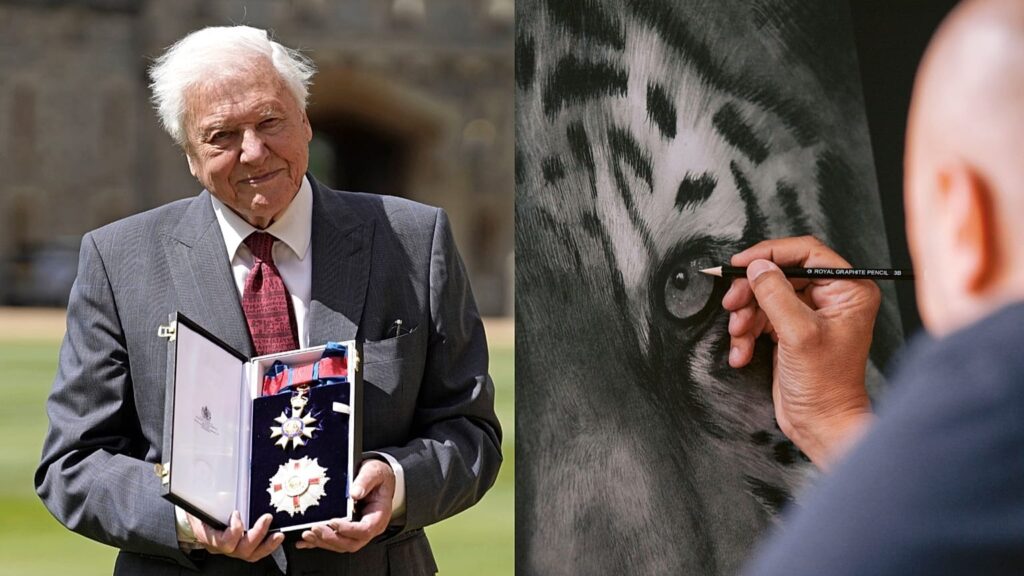
For countless wildlife artists, Attenborough’s films have served as both creative spark and educational foundation.
His detailed exploration of species, ecosystems, and animal behaviour has helped many artists develop not only visual inspiration, but emotional connection to the subjects they create.
For some, his documentaries became the catalyst for entire careers dedicated to wildlife art, conservation education, and family learning.

Connecting children to the natural world
Attenborough’s influence may be especially powerful among younger generations.
Studies suggest that children exposed to wildlife education — whether through outdoor experiences, books, or nature documentaries — often develop stronger empathy for animals and greater interest in conservation.
By making distant ecosystems feel personal, Attenborough has helped bridge the gap between curiosity and responsibility.
Changing policy as well as people
The “David Attenborough Effect” is not limited to households.

Footage highlighting destructive practices such as deep-sea trawling has also contributed to wider political and environmental conversations, placing pressure on institutions to confront ecological damage.
This rare ability to influence both individual behaviour and public policy sets Attenborough apart from traditional broadcasters.
Why his legacy matters
Attenborough’s work has arrived during a defining period in human history — one where biodiversity loss, habitat destruction, and climate change increasingly threaten the natural systems he spent a lifetime documenting.
His greatest contribution may not simply be showing the beauty of nature, but persuading humanity that it is worth protecting.
Few voices in history have shaped humanity’s relationship with nature as profoundly as David Attenborough’s. Through awe, truth, and urgency, he transformed wildlife from distant spectacle into shared responsibility. His documentaries did not merely show the planet’s wonders — they inspired millions to care whether those wonders survive. In an age of environmental crisis, the “David Attenborough Effect” may ultimately prove that one voice, used wisely, can help change the fate of the Earth itself.
Leave a Reply