
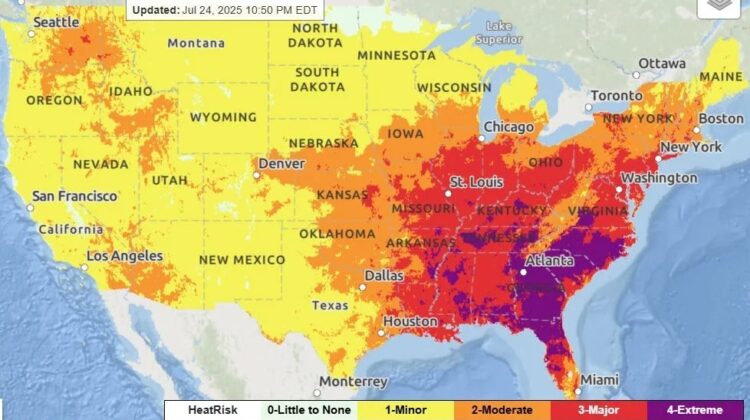
As July comes to a close, a relentless and dangerous heat wave is tightening its grip on the eastern half of the United States—threatening millions with conditions ripe for heat stroke, dehydration, and other life-threatening illnesses. This is not your grandmother’s heat wave. It’s longer, hotter, and far more dangerous.
A Long, Oppressive Forecast
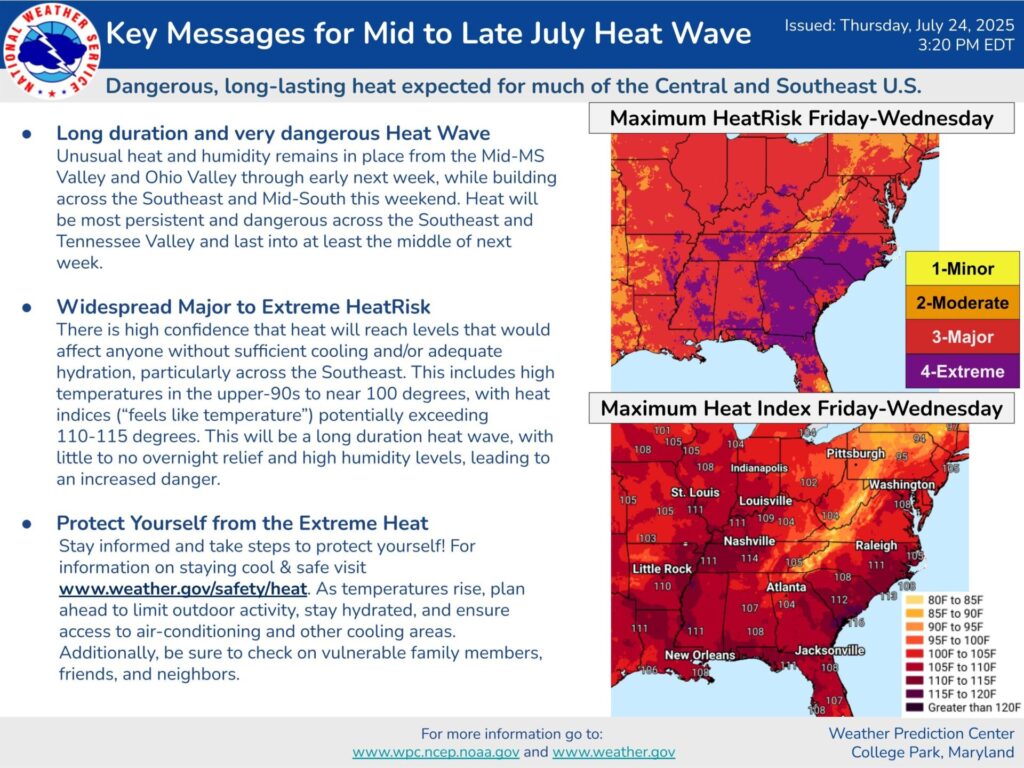
According to the National Weather Service Weather Prediction Center, a powerful dome of high pressure is settling over the region, locking in heat and humidity with little to no overnight relief. Highs are expected to reach the upper 90s to near 100°F, with humidity pushing “feels like” temperatures to a staggering 110–115°F or higher.
“This will be a long-duration heat wave, with little to no overnight relief and high humidity levels, leading to an increased danger,” warned the Weather Prediction Center on July 24.
Who’s Most at Risk?
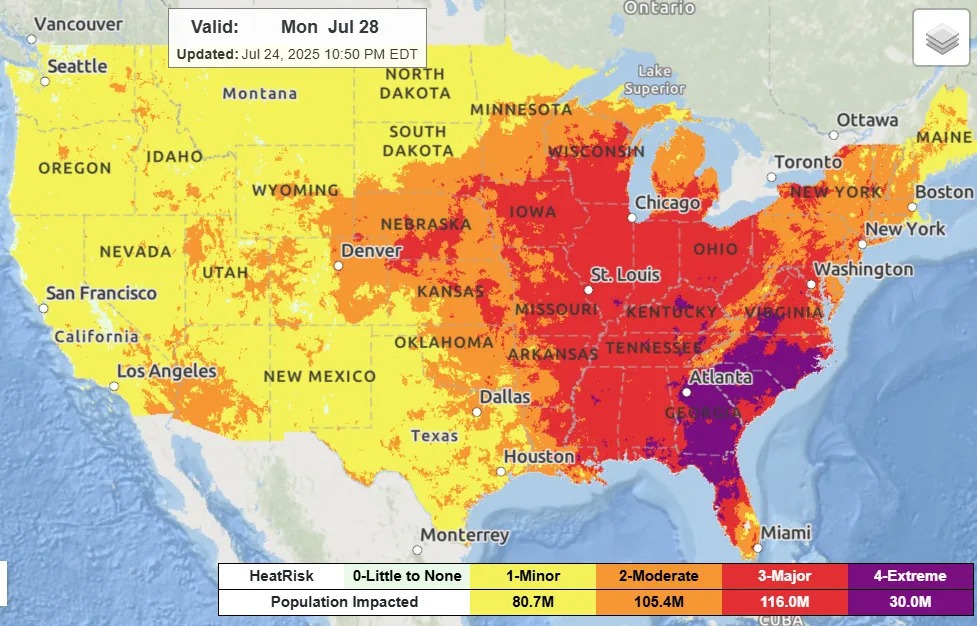
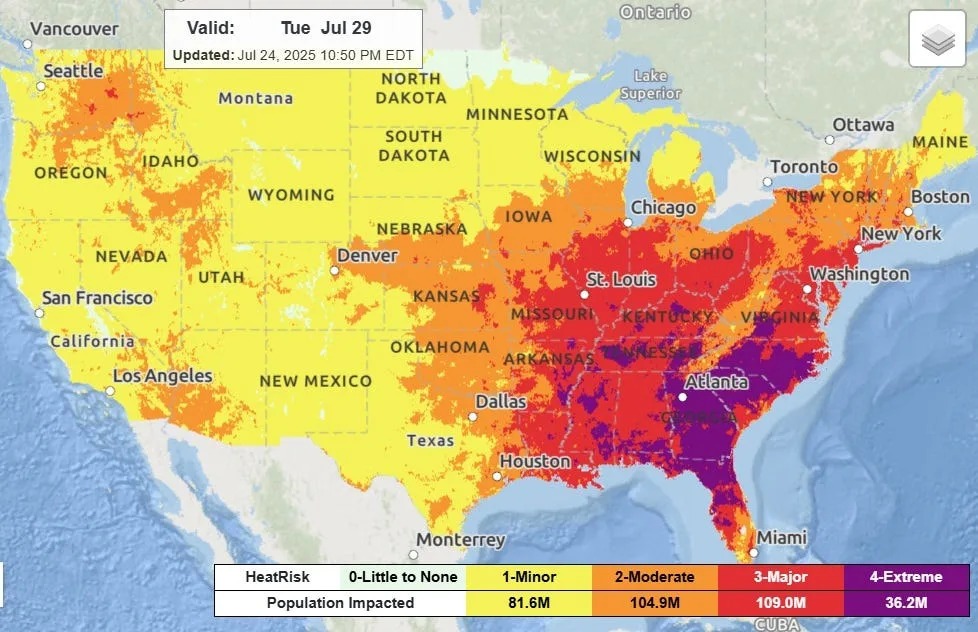
From the Tennessee Valley and the Southeast to the Carolinas, and stretching into the Midwest, Ohio Valley, and mid-Atlantic, this heat wave is expected to persist into July 30 or 31. Even morning lows in the 70s will fail to cool things down.
The American Red Cross urges everyone—especially older adults, young children, those with chronic illnesses, and people living alone—to stay alert and hydrated. Those who must be outdoors should drink water every 20 minutes, avoid sugary drinks, and dress in lightweight, loose-fitting clothes.
“This Is Exactly What We Expected”
“This is exactly what we expected to happen,” said Max Holmes, president and CEO of the Woodwell Climate Research Center. “As the earth gets warmer, we see more extremes, and it’s the extremes that get us. They kill us. They make us sick.”
Holmes emphasizes that these record-breaking conditions are becoming more frequent, intense, and deadly. The extreme heat, combined with violent thunderstorms around the perimeter of the heat dome, is a clear example of how climate change is intensifying weather patterns.
A Fevered Planet
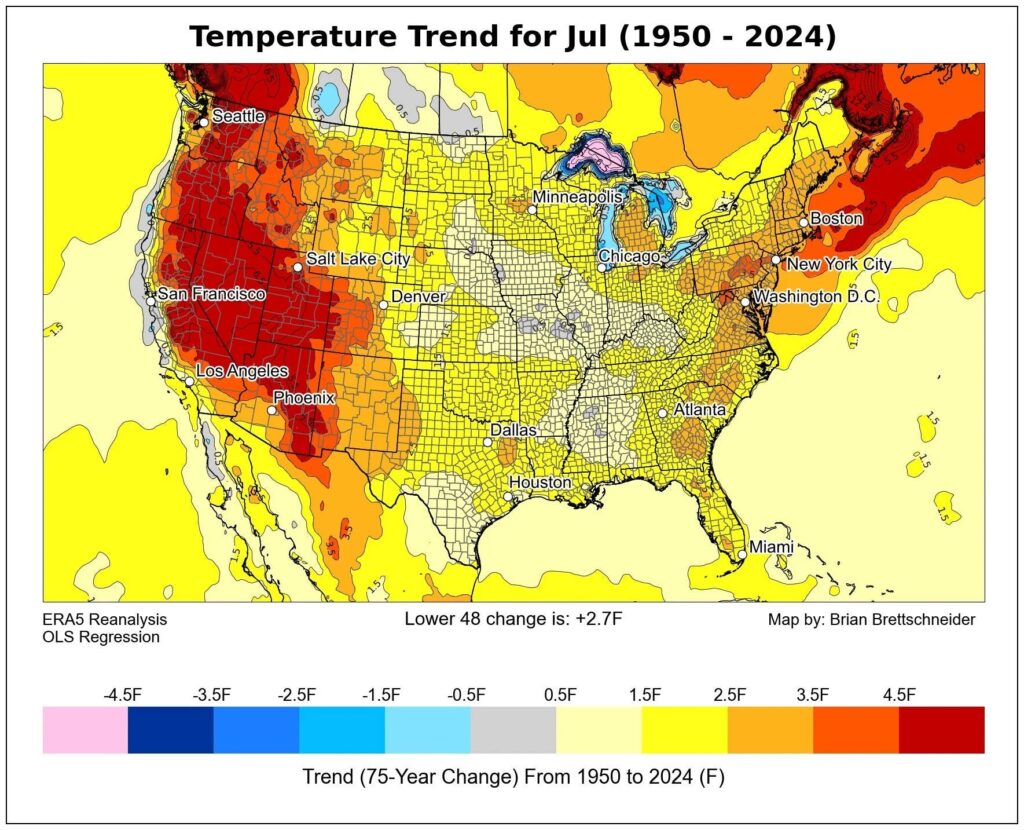
Data from the National Oceanic and Atmospheric Administration (NOAA) shows June 2025 was the seventh hottest June on record. During the first two weeks of July 2025, national temperatures averaged 1.5°F above the 30-year norm. Since 1950, July temperatures in the lower 48 states have risen by about 2.7°F.
“If your body temperature rose by 2.7 degrees, you’d have a fever,” scientists explain. “Nature reacts the same way.”
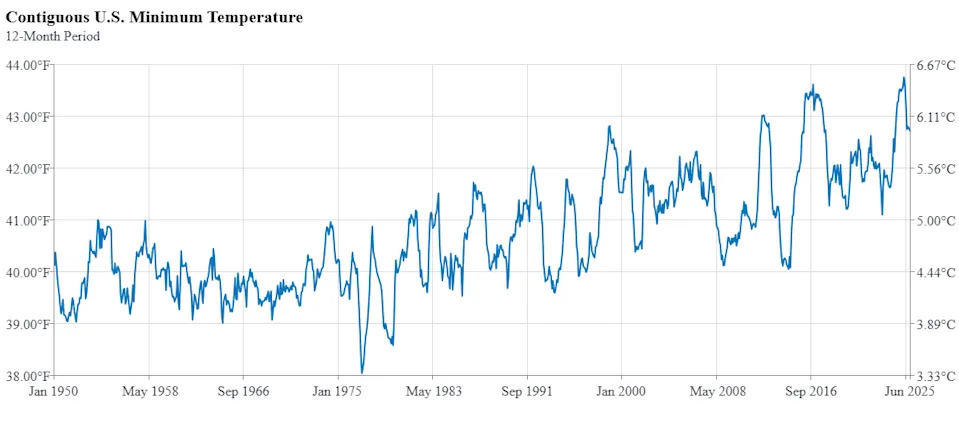
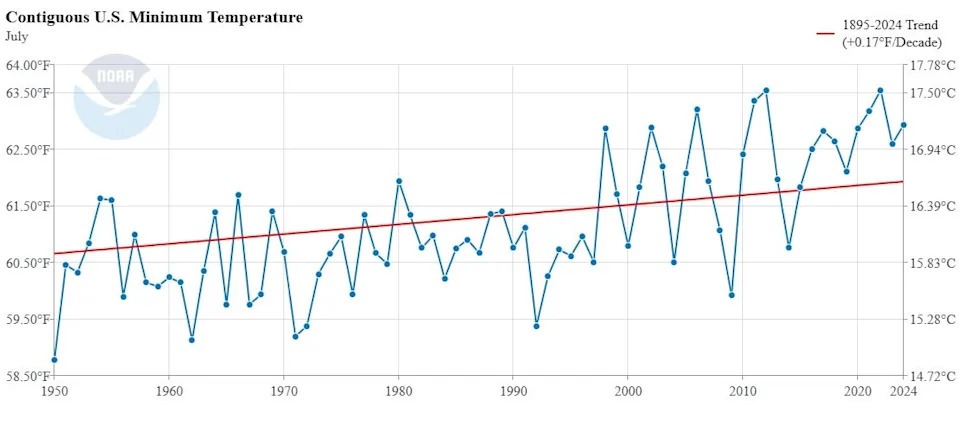
Worryingly, overnight temperatures have risen even more than daytime highs, meaning homes, trees, and roads don’t cool off—and instead trap heat, making each day feel worse than the last.
Urban Heat and Climate Suppression
Why is it so hot? One answer lies in urban heat islands, where concrete, metal, and glass amplify daytime heat and trap it overnight.
NASA reports that extreme levels of heat stress have more than doubled over the past 40 years, and the trend is expected to continue. A July 21 analysis by Climate Central found human-caused climate change made this excessive heat wave at least three times more likely for nearly half the U.S. population.
“This is not your grandmother’s heat wave,” said Kristina Dahl, vice president of science at Climate Central. “Climate change is making this heat wave significantly hotter—and therefore more dangerous—than heat waves of the past.”
How Hot is Too Hot?
Scientists now use a metric called wet bulb temperature to determine what levels of heat and humidity the body can survive. While earlier estimates placed the threshold at 95°F with 100% humidity, a 2022 Penn State study lowered the danger zone to 87°F with 100% humidity—even for healthy young people.
For vulnerable groups like the elderly and children, the threshold is likely even lower. Sweat can’t evaporate in these conditions, rendering the body’s main cooling method useless and leading to dangerous overheating.
What You Can Do
The Red Cross recommends:
- Know who’s at risk: Keep an eye on older adults, children, pregnant women, athletes, and people with chronic conditions.
- Stay hydrated: Drink water every 20 minutes, even if you’re not thirsty.
- Stay cool: Use air-conditioned spaces, and if power goes out, find shaded outdoor areas that may be cooler than your home.
- Act quickly: Watch for signs of heat illness like nausea, cramps, dizziness, or fainting. Use cold compresses, wet cloths, or a cool bath to reduce body temperature immediately.
A Dangerous Silence
While the heat grows more intense, public access to climate and heat risk data is shrinking. Several tools once maintained by the Centers for Disease Control and Prevention (CDC) and Climate.gov have gone offline or are no longer updated.
The Trump administration removed climate change from the EPA homepage, ended more than 350 climate-related grants, and cut funding to NOAA’s National Integrated Heat Health Information System.
“There are combinations of temperature and humidity the human body just can’t tolerate,” said Holmes. “Trying to hide the truth doesn’t help people. It’s not a partisan thing. It’s a fact thing.”
Final Word
Whether you live in a city, suburb, or rural area, this heat wave is not normal—and it’s not just weather. It’s a clear symptom of a warming planet. Stay safe, stay informed, and check on your neighbors.
This isn’t just another hot July.
This is climate danger in real time.
Leave a Reply