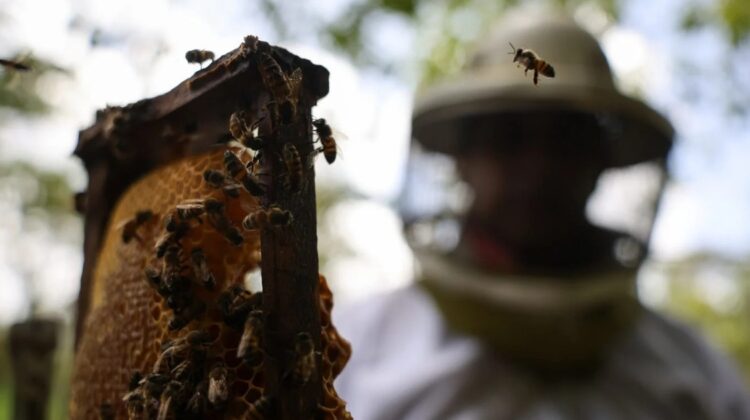
What began as an ambitious attempt to improve honey production ultimately led to one of the most infamous biological accidents in modern history.
In the 1950s, Brazilian scientists launched an experiment designed to create a stronger, more productive honey bee capable of surviving the harsh climate of the Amazon rainforest.
Instead, the project unintentionally helped create the aggressive hybrid insects now widely known as “killer bees.”
The species, officially called Africanized honey bees, emerged after South African honey bees escaped from an experimental apiary and interbred with European honey bees already living in Brazil.
The project was led by geneticist Warwick Estevam Kerr, who had been tasked by the Brazilian government with developing bees better suited to tropical environments.
European honey bees, which had originally been brought to the Americas centuries earlier, struggled in the heat and humidity of parts of South America.
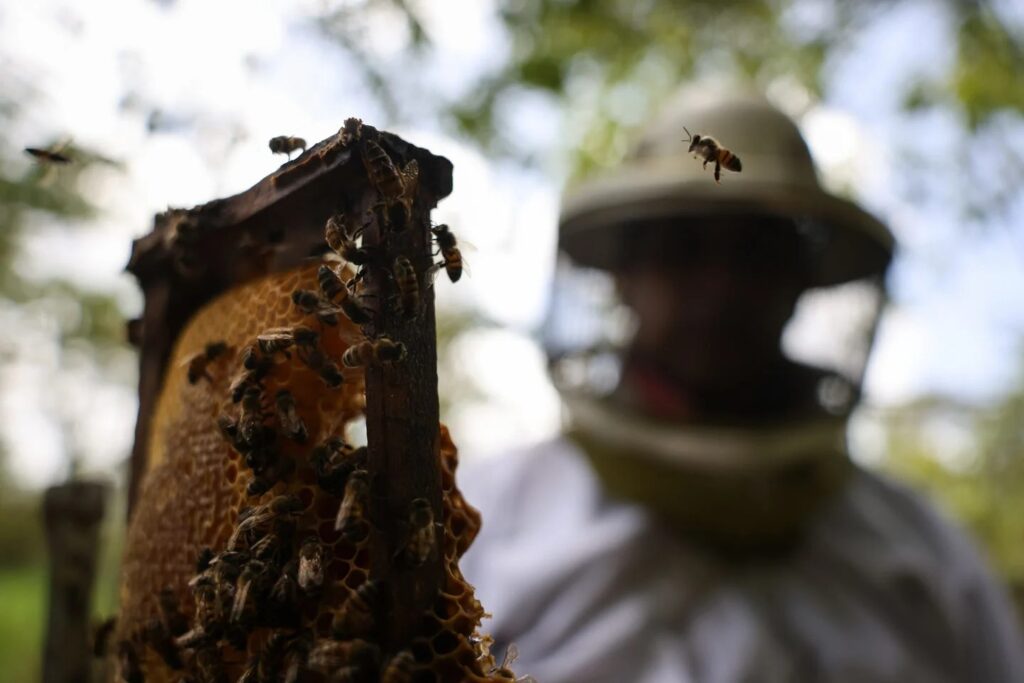
African honey bees, however, were known for exceptional honey production and resilience in difficult climates.
Kerr hoped that carefully crossbreeding the two populations would create a calmer hybrid with the productivity and survival abilities of African bees.
But the experiment went disastrously wrong after dozens of queen bees reportedly escaped confinement from the research facility in São Paulo state.
Once released, the African bees bred rapidly with local honey bees, spreading their highly defensive behavior throughout South and Central America.
Unlike typical European honey bees, Africanized honey bees respond to threats with much larger and more aggressive swarms.
Scientists say this behavior evolved as a survival adaptation against predators such as honey badgers, anteaters and army ants in Africa.
Although individual stings are not more venomous than ordinary honey bee stings, attacks become more dangerous because the bees pursue perceived threats in overwhelming numbers.
Over the following decades, Africanized honey bees spread northward at remarkable speed, eventually reaching parts of the southern United States.
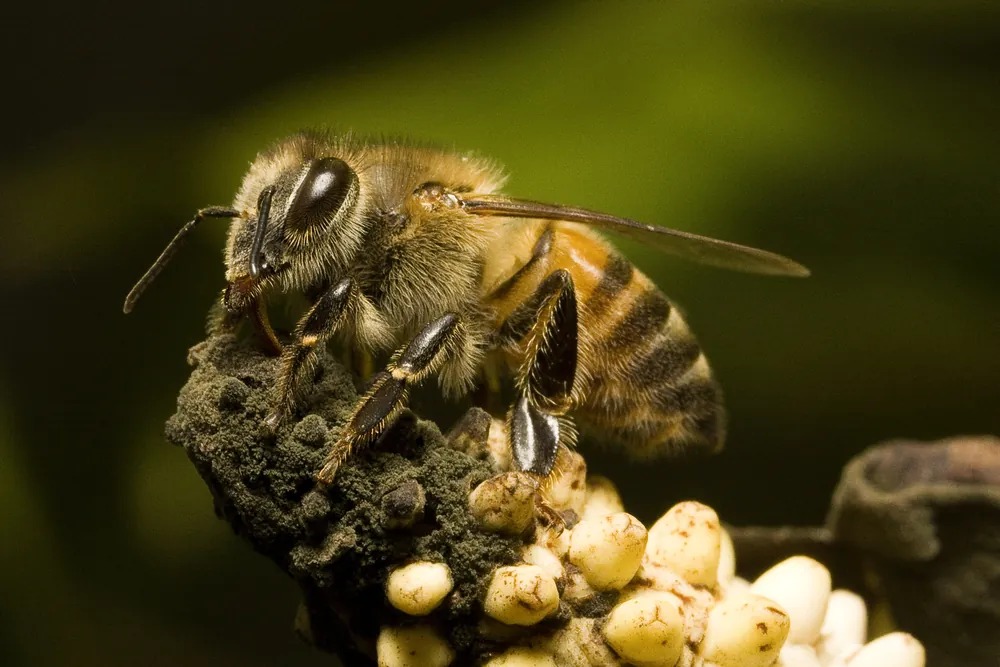
The insects became widely feared after several fatal swarm incidents in the 1990s led to sensational media coverage and the popular nickname “killer bees.”
According to reports cited by the Smithsonian Institution, Africanized bees have been linked to more than 1,000 deaths since first escaping in 1957.
Scientists warn climate change could allow the species to expand even farther north in coming decades as warming temperatures make new regions suitable for survival.
Beekeepers continue using methods such as selective breeding and “requeening” to reduce aggressive genetics within managed bee populations.
Despite their reputation, researchers emphasize that Africanized honey bees still play an important ecological role as pollinators, just like other honey bee species.
Honey bees remain essential for global agriculture, pollinating a significant portion of the world’s food crops.
Still, experts advise caution around wild swarms, especially in warmer climates where Africanized bee populations are established.
Why the story of “killer bees” still fascinates scientists today
The spread of Africanized honey bees is often studied as a warning about unintended ecological consequences. The incident highlights how even well-intentioned scientific experiments can permanently alter ecosystems when introduced species escape into the wild.
Leave a Reply