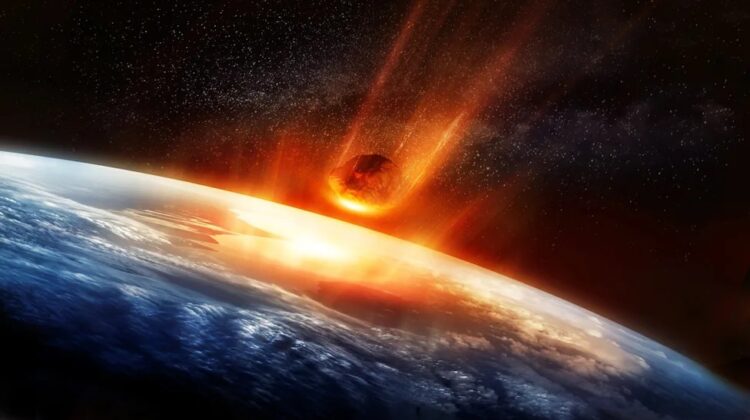
The asteroid that ended the age of dinosaurs left almost nothing of itself behind — it vaporized on impact. But a new study says scientists have finally pinned down what kind of object it was, and the answer complicates a decades-old assumption about how it killed.
Tracing an Object That No Longer Exists
The Chicxulub impactor struck what is now Mexico’s Yucatán Peninsula roughly 66 million years ago at an estimated 40,000 mph, carving out the Chicxulub crater and triggering the extinction event that killed off about 75% of Earth’s species, including all non-avian dinosaurs. Because the object itself was destroyed in the collision, researchers have had to reconstruct its identity from microscopic traces preserved in the thin clay layer it left worldwide, known as the K-Pg boundary.
An international team — including researchers from the University of British Columbia (UBC), Vrije Universiteit Brussel (VUB), and partner institutions in Paris and Vienna, led by Georgy Makhatadze — analyzed high-precision nickel isotopes from clay samples collected in Denmark, Spain and Italy. Their findings, published in Science Advances, point to a specific and unusually rare type of meteorite: a CO chondrite, part of the Ornans class of carbonaceous chondrites.
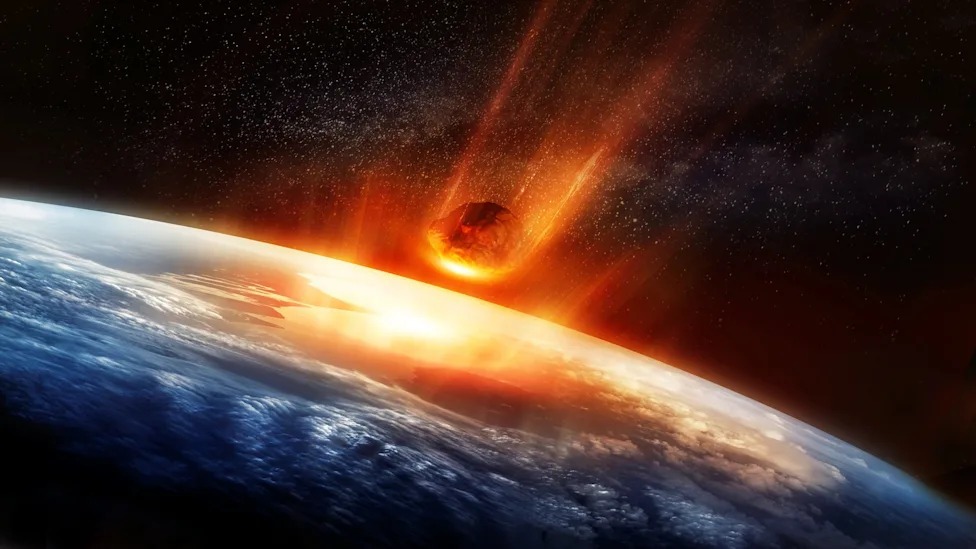
“This is challenging work,” said Philippe Claeys, a VUB faculty member and visiting professor at UBC who co-authored the study, “only a minute fraction of the projectile is preserved in the planet’s KT clay layer because the entire meteorite vaporized upon impact.”
Why “CO Chondrite” Matters
Carbonaceous chondrites make up only about 5% of meteorites recovered on Earth, and CO chondrites are a small slice even of that group — considered some of the most primitive, least-altered material left over from the solar system’s formation.
“Carbonaceous chondrites of the Ornans class are definitely not like the typical meteors you find in museum collections,” Claeys said.
The Real Twist: It Probably Wasn’t the Sulfur
The identification carries a consequence for how scientists think the extinction actually unfolded. CO chondrites contain markedly less of several volatile elements — carbon, zinc, water and, notably, sulfur, by some estimates roughly half as much as other meteorite classes carry.
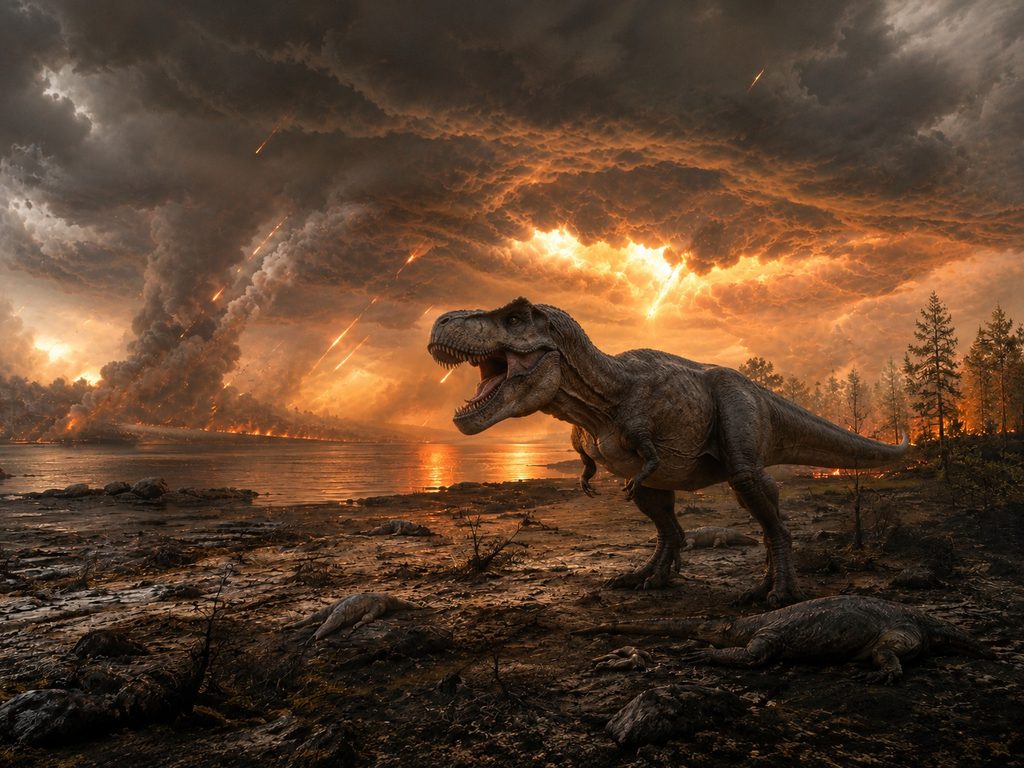
That matters because sulfur released by the impact has long been treated as a major driver of the sudden global cooling that followed, blocking sunlight and collapsing food chains. A CO chondrite composition makes that specific mechanism less likely to have been the dominant one.
“It doesn’t alter our theory of what caused the extinction event — but it makes it less likely that sulfur contained in the impactor was the smoking gun,” Claeys said. “The fine debris thrown into the atmosphere would have been the primary factor.”
In other words, the broad picture — a catastrophic impact winter that starved the planet of sunlight — still holds. What’s shifting is which byproduct of the impact did most of the damage: fine pulverized rock dust lofted into the atmosphere, rather than sulfur gas.
Where Did It Come From?
The nickel isotope signature also offers a clue to the impactor’s origin, pointing to dusty regions of the outer solar system or the outer reaches of the asteroid belt near Jupiter — areas that rarely send objects toward Earth.
“Being impacted by such a rare, distant projectile really underscores how unlucky the dinosaurs were,” Claeys said.
What This Kind of Detective Work Is For
None of this changes what happened 66 million years ago. But pinning down the impactor’s exact composition helps scientists refine models of how different classes of space rock affect climate and ecosystems after a major impact — knowledge relevant not just to reconstructing Earth’s past but to assessing what a future impact from a similar object might actually do.
Frequently Asked Questions
How can scientists identify a meteorite that no longer exists? The impactor vaporized on collision, but a small fraction of its material was preserved in the clay layer it deposited worldwide. Researchers extracted and measured nickel isotopes from that clay to determine which class of meteorite it most closely matches.
Does this mean sulfur played no role in the extinction? No. The study says a CO chondrite composition makes sulfur less likely to have been the dominant driver of the post-impact cooling, but it doesn’t remove sulfur from the picture entirely — it shifts emphasis toward fine atmospheric dust as the primary factor.
How rare is a CO chondrite compared to other meteorites? Carbonaceous chondrites overall make up only about 5% of meteorites recovered on Earth, and CO chondrites are a small fraction even within that group, making this one of the rarer meteorite classes identified in an impact event.
Sources: Science Advances; University of British Columbia; ScienceDaily; Phys.org; EurekAlert; Sci.News.
Leave a Reply