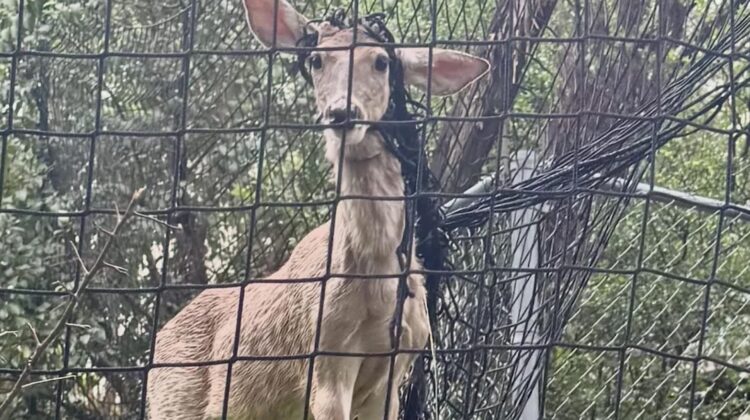
A routine drive to work turned into an unexpected wildlife rescue when a woman spotted a young deer struggling in a backyard soccer net near a wooded neighborhood. With the nylon cords tightening around its neck and no one responding to her calls for help, she decided to intervene herself.
Without a knife or anyone nearby to assist, she wrestled with the tangled netting, trying to free the frightened animal before it ran out of time.
A Desperate Rescue Along the Road
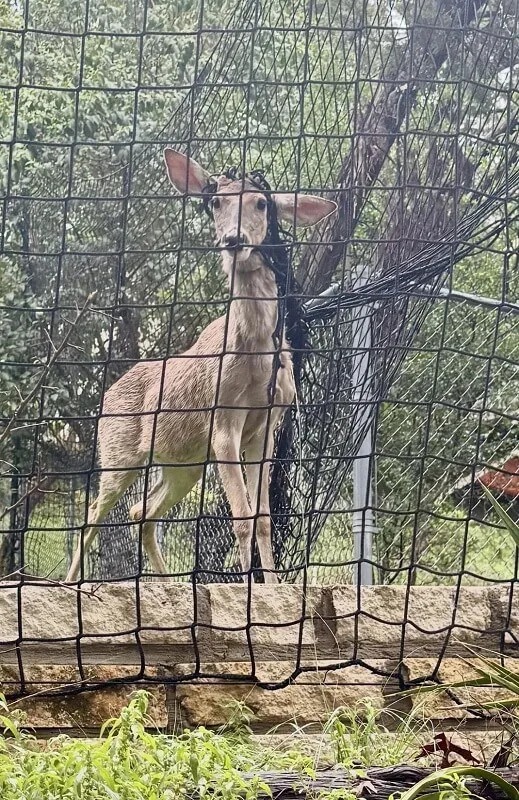
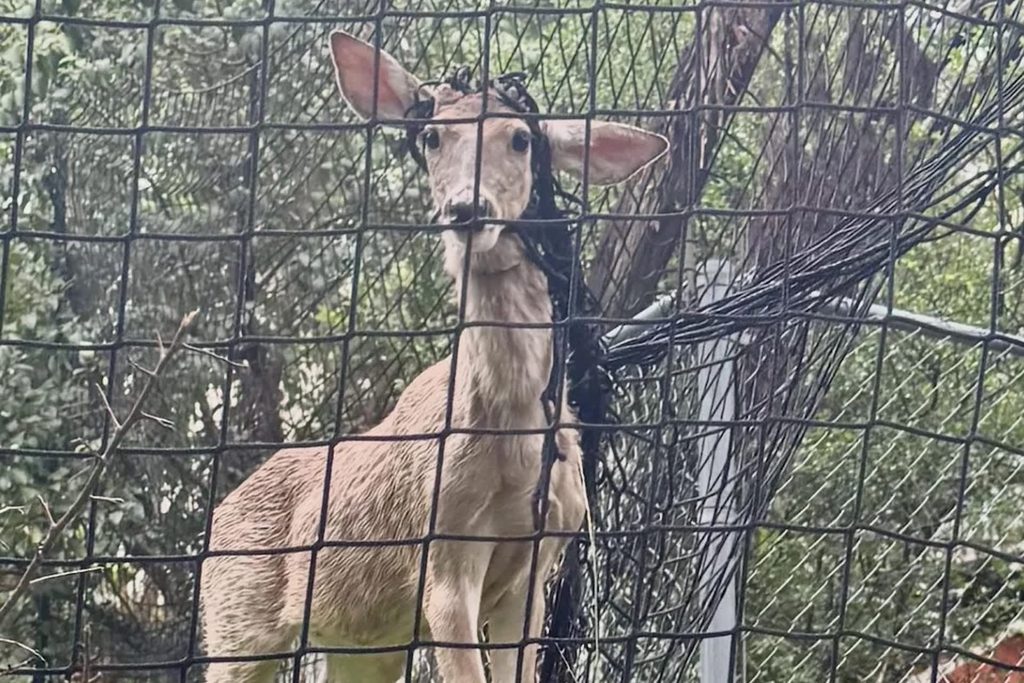
According to a post shared on Reddit’s r/AnimalRescue, the woman was on her way to work when she noticed the deer caught in nylon netting in a residential backyard.
She realized the situation was serious. The material had tightened around the animal’s neck, leaving her worried that it might suffocate before help arrived.
“I didn’t have a knife and I thought he was going to choke to death,” she wrote.
She tried calling out for assistance, but no one came. With the deer continuing to struggle, she began working on the tangled cords herself.
How She Freed the Trapped Deer
The woman described the tense moments as she tried to loosen the netting without a cutting tool.
“I wrestled with the tangle of cords for a couple minutes yelling ‘help!’ No one came. I was able to yank the super tangled nylon cords over his tiny horn nubs at the last minute as it looked like he was on his last breaths,” she wrote.
The rescue was not without danger. The frightened deer kicked her legs several times while she was trying to free it.
Despite the struggle, she reported that neither she nor the animal suffered major injuries.
Once the netting came loose, the deer ran straight back into the woods. The woman took its quick escape as an encouraging sign, writing that “he must’ve been mostly ok if he could move that fast.”
The experience left her covered in mud. She later explained that she had to borrow clothes after arriving at work.
Why Backyard Nets Can Become a Wildlife Hazard
Soccer nets, loose mesh, exposed cords, and damaged fencing can create hazards for wildlife, particularly in residential areas close to wooded habitats.
Animals moving through these spaces can become caught in materials left outdoors. Once trapped, a frightened animal may struggle violently, potentially tightening the material around its body or making the situation more difficult to resolve.
Deer can also pose a risk to anyone attempting a rescue. Their kicks and sudden movements can cause injuries, even when someone is trying to help.
The incident illustrates how an ordinary backyard object can become dangerous when wildlife encounters it.
A Simple Tool That Could Help in an Emergency
The Reddit post also prompted discussion about how people might prepare for similar situations.
One commenter praised the woman for helping the deer and suggested keeping a particular tool in the car:
“Good work! Get one of those seat belt cutters to keep in your car.”
Another Redditor praised her decision to stop and help. The woman herself reflected on the experience, writing, “It feels amazing knowing I saved a life.”
Although the rescue ended without major injuries, the encounter also highlights the risks involved in approaching frightened wildlife. People should avoid putting themselves in danger and seek assistance from trained wildlife rescuers when possible.
What Homeowners Can Do to Reduce Wildlife Risks
Preventing entanglements can begin with checking outdoor equipment and materials before leaving them unattended.
Loose soccer nets, decorative mesh, exposed cords, and damaged fencing may create avoidable hazards for animals passing through residential areas.
Homeowners can help reduce those risks by securing or removing unused netting, repairing damaged fencing, and checking outdoor spaces for materials that could trap wildlife.
These precautions are particularly relevant in neighborhoods where deer and other wild animals regularly move between wooded areas and residential properties.
Frequently Asked Questions
Why was the deer in danger?
According to the Reddit account, the young deer had become tangled in nylon soccer netting that had tightened around its neck, raising concerns that it could suffocate.
How did the woman free the deer without a knife?
She said she wrestled with the tangled cords for several minutes before managing to pull the netting over the deer’s small horn nubs.
Was anyone injured during the rescue?
The woman reported that the deer kicked her legs several times, but neither she nor the animal suffered major injuries, according to her account.
What happened after the deer was freed?
The animal ran back into the woods. The woman said its rapid movement made her think it was mostly okay, although that observation does not establish its full condition.
How can people help prevent similar incidents?
Securing unused soccer nets, removing loose mesh, and repairing damaged fencing can help reduce potential entanglement hazards. Anyone encountering a trapped wild animal should consider contacting trained wildlife rescuers rather than attempting a dangerous intervention.
Where to Learn More
The deer rescue is one example of how everyday human activities and objects can affect wildlife. Other stories explore how communities can reduce environmental hazards and protect the habitats animals depend on.
- In U.K. woodlands, volunteers discovered plastic waste trapping animals and causing injuries.
- In Tennessee, neighbors began a native-seed initiative to help restore habitat block by block.
- In Iceland, guides warned that stacking rocks along trails can damage fragile ground and affect the wildlife that uses it.
Together, these stories highlight how decisions made in backyards, neighborhoods, and natural areas can have consequences for wildlife. Removing potential hazards and taking care around animal habitats can help make shared spaces safer for the creatures that pass through them.
Source: Reddit’s r/AnimalRescue, as described in the supplied account.
Leave a Reply