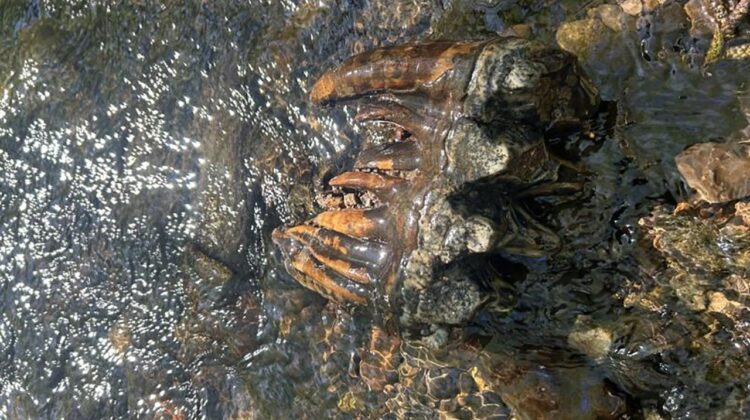
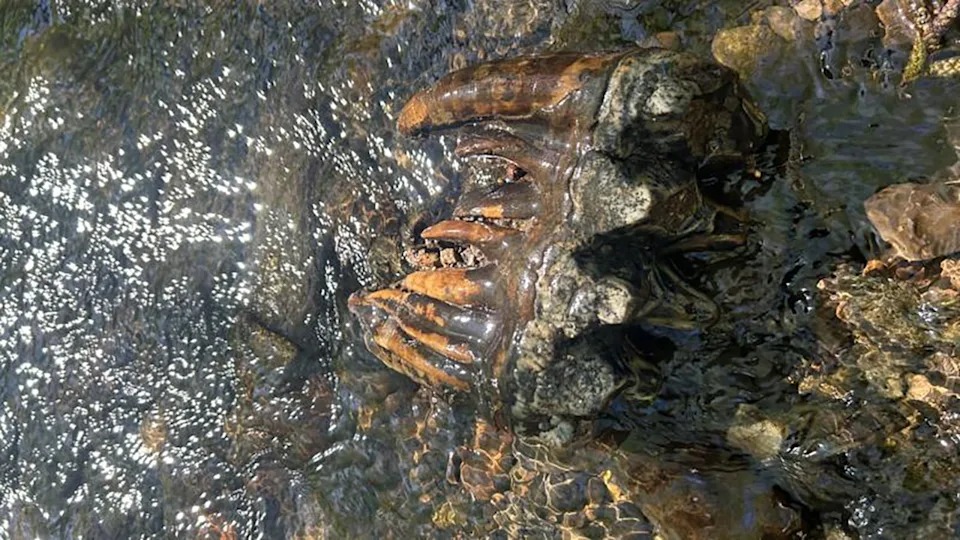
Brigid Lynch was surveying a creek for frog habitat when a lumpy, oddly textured object caught her eye. A few photos and a reverse image search later, it was identified as one of the best-preserved mastodon molars the Bay Area has produced.
A Frog Survey Turns Up a Mastodon
Lynch, a geomorphologist with Balance Hydrologics, was working in a Midpeninsula Regional Open Space District (Midpen) preserve in San Mateo County, as part of an effort to improve habitat for the threatened California red-legged frog. She first took the object for an oddly shaped rock. According to paleontologist Wayne Thompson, a reverse Google image search suggested it might be an Ice Age mastodon molar.
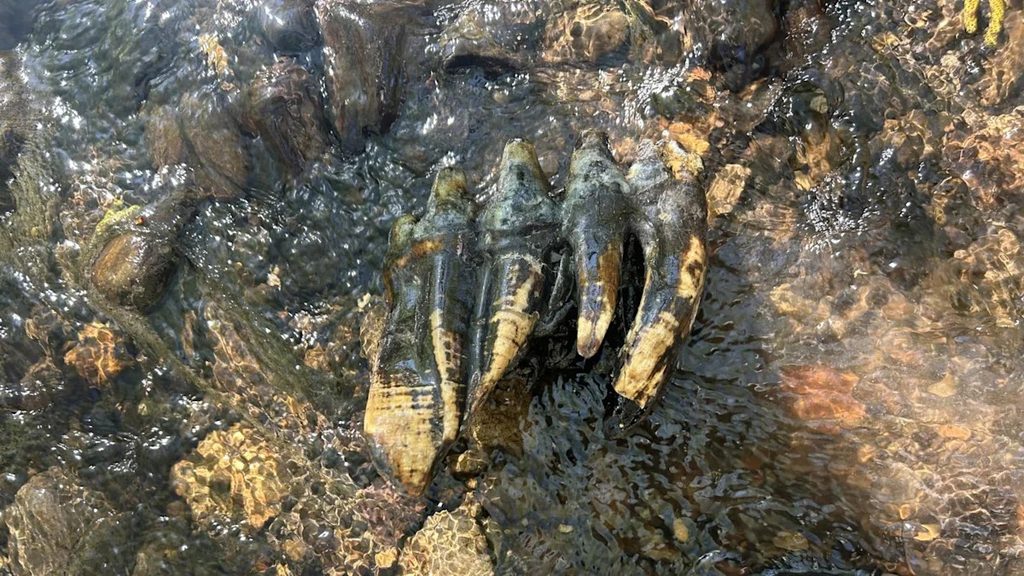
Paleontologists confirmed it. It is an upper left molar from an adult Pacific mastodon. Midpen puts its size at about 8.5 inches long, 7 inches deep and 3 inches wide.
“The Most Complete Mastodon Molar From Our Area”
That was Thompson’s verdict. He owns Pacific Paleontology and added that it was the most spectacular mastodon molar he had ever seen.
Part of the reason is the roots. Mastodon tooth roots are extremely fragile, and this molar still had most of them, which suggests it wasn’t tumbled around in the stream. Lynch, meanwhile, has spent years in the field. She said she’d seen plenty of things there, but “nothing as exciting as this.”
How Old Is It, Really?
Midpen’s estimate is around 10,000 years, and the tooth has been donated to Stanford University’s Doerr School of Sustainability, where researchers plan to use carbon dating to pin down its age. Thompson’s own range is far wider: he told Fox News it could be 50,000 to 100,000 years old, judging by where it was found. The Pleistocene epoch, when Pacific mastodons roamed, ended about 11,700 years ago. Until Stanford reports back, any single figure is an estimate.
A Species Scientists Only Recently Named
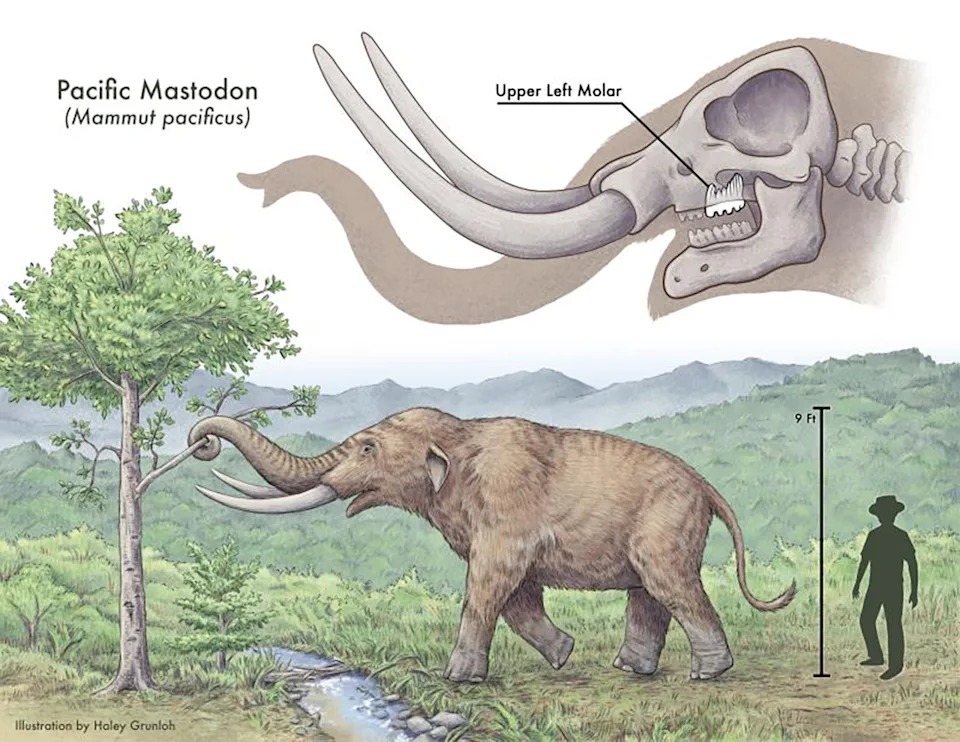
The animal itself is a relatively new entry in the record. Researchers formally described Mammut pacificus as its own species in 2019, distinguishing it from the American mastodon by narrower teeth, especially the third molars, and by the absence of lower tusks. Midpen says it roamed California, Oregon, other parts of the western United States and Mexico. A well-preserved molar is a useful addition to a species scientists have had less than a decade to study.
The Rest of the Animal May Still Be Out There
Thompson believes the tooth recently came out of a skull, and that the skull and other bones are probably still buried at the site. Don’t expect directions. Midpen is withholding the exact location so visitors don’t go looking for fossils of their own.
The find also has a conservation angle. Midpen biologist Matt Sharp Chaney said that mastodons living in the same landscape we see today shows why protecting species matters. A routine survey for a small frog ended with a reminder of how much a single creek bed can hold.
Frequently Asked Questions
How old is the tooth? Midpen estimates about 10,000 years, but Thompson has suggested 50,000 to 100,000. Carbon dating at Stanford should settle it.
Where was it found? In a creek in a Midpen preserve in San Mateo County, California. The exact spot is undisclosed.
What happens to the tooth now? Stanford will date it and produce a 3D scan that Midpen can use for education.
Sources: Midpeninsula Regional Open Space District; ABC News; Smithsonian Magazine; Live Science; Fox News; The Almanac; Palo Alto Online; PeerJ (Dooley et al., 2019).
Leave a Reply