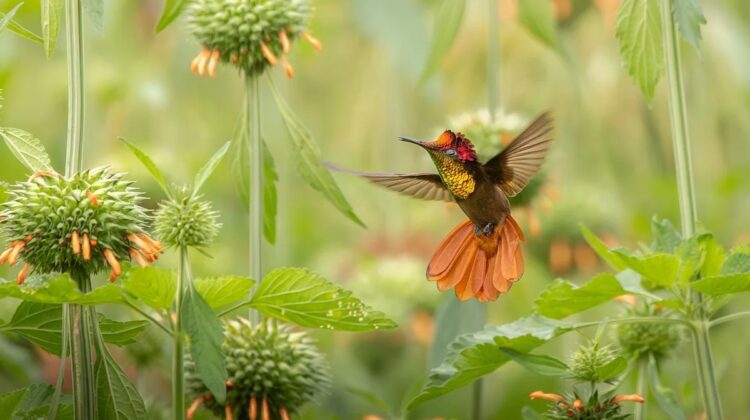
Camilo Sanabria Grajales was six years old when a Blue-gray Tanager perched near him at a park in Cali, Colombia, and changed the course of his life. Eight years later, the now 14-year-old has an Honorable Mention in the 2026 Audubon Photography Awards to show for that early fascination — this time for a photo of a species he’d been chasing for years: the Ruby-topaz Hummingbird.
A Bird That Changed How He Saw Everything
Camilo grew up in Cali, a city in southern Colombia, where he first spotted the tanager as a small child while out with borrowed binoculars near Ecoparque Las Garzas, a patch of dry forest and wetland on the city’s edge, according to Audubon. “From then on, I started to see them with different eyes, literally,” he later said of the moment. “And I began to delve deeper into this world.”
That early spark eventually turned into a serious practice behind the camera. In 2025, Camilo became the first-ever youth prize winner from South America in the Audubon Photography Awards, a competition that, since expanding to the region, evaluates entries from Chile and Colombia alongside the United States and Canada.
Years Of Trying For One Bird
The Ruby-topaz Hummingbird had eluded him for a long time before this year’s honored shot. “I searched for the Ruby-topaz Hummingbird for years,” Camilo said. Past attempts hadn’t gone smoothly — on one outing he dealt with an allergic reaction, and repeated trips to Colombia’s Uva National Park turned up no sign of the bird at all.
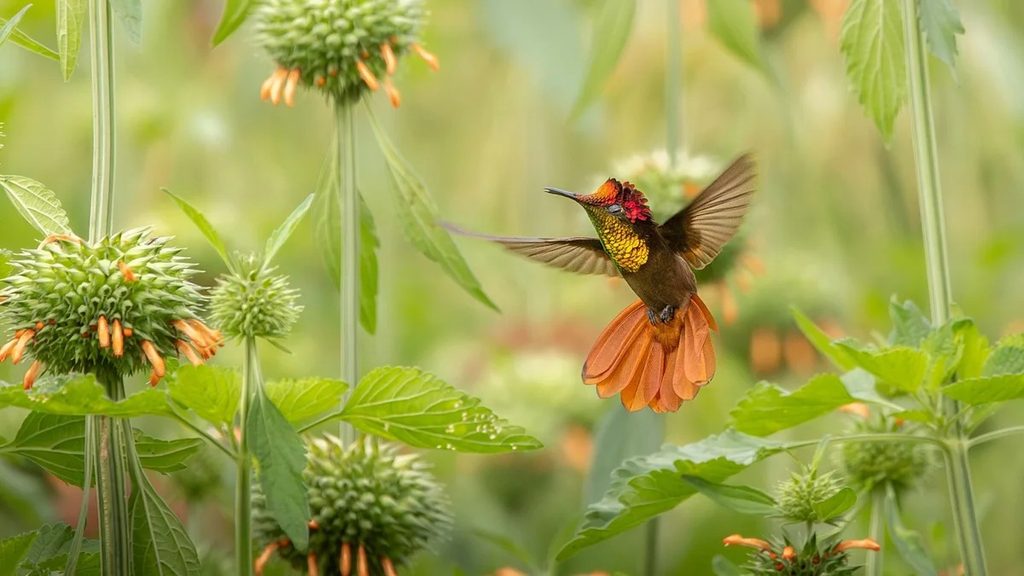
His breakthrough came at a flower-filled site in Guadalajara de Buga, in Colombia’s Valle del Cauca department, where he found not one but more than ten hummingbirds darting around, both males and females. “Then one approached me,” he said. “I focused on it just in time. As it was about to dart away, I got this unique photo that captures its sun-drenched colors.”
The image was captured at 1/2500 of a second, using a Canon EOS Rebel T7 paired with a Sigma 150-600mm lens at 546mm, at f/6.3 and ISO 3200 — settings built for freezing a bird whose wings can beat dozens of times per second.
Judges Praised Its Sense Of Stillness
Contest judge Jaír F. Coll singled out the composition for the way it balanced motion with calm. “The photographer captures the dynamic flight of this hummingbird and integrates it into a harmonious dreamlike setting where the flower’s orange hues play off those of the bird,” Coll wrote. He added that the bird’s expression, “as if absorbed in its surroundings, conveys a sense of peace, immersing the viewer in a natural trance where time seems to stand still.”
About The Bird In The Frame
The Ruby-topaz Hummingbird is a small, brilliantly colored species widespread across northern South America. It favors relatively open habitat — savannas, forest edges, and even city gardens — which is part of why a flower-heavy site like the one in Buga can draw in a crowd of them at once.
Female Ruby-topaz Hummingbirds build the nest and raise the young entirely on their own, and their plumage reflects that responsibility: they lack the male’s vivid coloring, relying instead on camouflage. In Camilo’s photo, the bird’s nictitating membrane — a translucent inner eyelid that protects a hummingbird’s eyes as it darts between flowers — is visible, partly closed.
A Competition Built Around Conservation
The Audubon Photography Awards, now in its 17th year, is run by the National Audubon Society to spotlight both the beauty of birds and the pressures they face, including habitat loss and climate change. Since expanding to Chile and Colombia, the contest has judged entries from the two regions separately, awarding nine prizes to Chile and Colombia residents and eight to entrants from the U.S. and Canada in the 2026 edition, Audubon and PetaPixel reported.
Frequently Asked Questions
Who is Camilo Sanabria Grajales?
A 14-year-old wildlife photographer from Cali, Colombia, who became the Audubon Photography Awards’ first youth-category winner from South America in 2025, and received an Honorable Mention in the 2026 competition for a photo of a Ruby-topaz Hummingbird.
Where was the award-winning photo taken?
At a flower-filled site in Guadalajara de Buga, in Colombia’s Valle del Cauca department, where Camilo encountered more than ten hummingbirds at once.
What camera gear did he use?
A Canon EOS Rebel T7 (2000D) paired with a Sigma 150-600mm f/5-6.3 DG OS HSM Contemporary lens, shooting at 1/2500 sec, f/6.3, and ISO 3200.
What is a nictitating membrane?
A translucent inner eyelid found in many birds, including hummingbirds, that helps protect the eye while the bird is in fast flight.
Where does the Ruby-topaz Hummingbird live?
It’s widespread across northern South America, favoring open habitats like savannas and forest edges, and it also visits gardens in urban areas.
What is the Audubon Photography Awards?
An annual competition run by the National Audubon Society that recognizes bird photography while highlighting conservation challenges facing bird species across Chile, Colombia, the United States, and Canada.
Sources: Audubon (National Audubon Society), PetaPixel (“The Majesty of Birds Celebrated in the 2026 Audubon Photography Awards”), and Forbes Argentina’s coverage of the 2026 Audubon Photography Awards winners.
Leave a Reply