• Skip to main content
  • Skip to primary sidebar
  • Skip to footer
  • Home
  • About Us
  • Copyright Report
  • Submit Content
  • Terms
  • Privacy Policy
  • Legal Disclaimer

Hasan Jasim

Hasan Jasim is a place where you may get entertainment, viral videos, trending material, and breaking news. For a social generation, we are the largest community on the planet.

A ‘De-Extinction’ Company Wants to Bring Back the Dodo after 300 Years And Release Into Wild

by Hasan Jasim Editorial Team Leave a Comment

ShareTweet

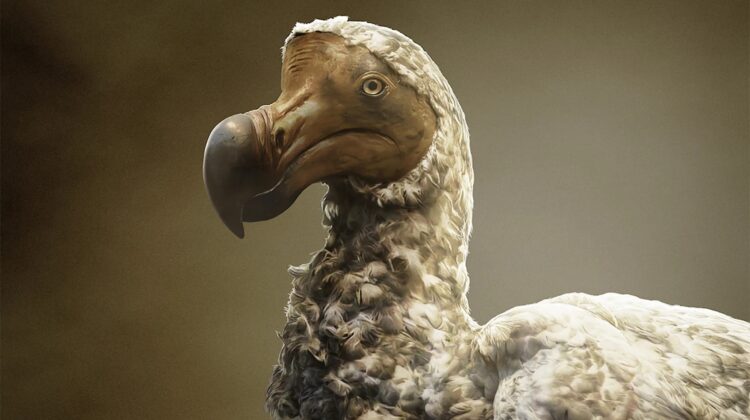
The dodo could once again roam the earth after a de-extinction company announced ambitious plans to bring the long-gone bird back to life 300 years after it was wiped out.

A de-extinction company has announced plans to bring back the dodo more than 300 years after the creature was wiped out.

Colossal Biosciences, who previously vowed to resurrect mammoths and Tasmanian tigers, revealed yesterday (January 31) that the flightless bird would join the roster of long-dead creatures being brought back to life.

“This announcement is really just the start of this project,” says Beth Shapiro, lead paleogeneticist and a scientific advisory board member at Colossal Biosciences who has been studying the dodo for decades.

It remains to be seen whether the re-creation of the dodo is an actual scientific possibility – however with an additional $150m in investments and a new Avian Genomics Group behind them, Colossal Biosciences is ready to give it a go.
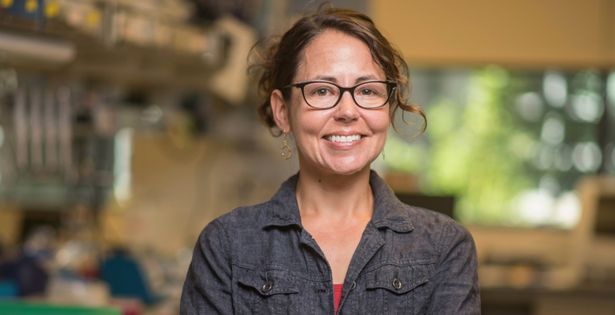
Beth Shapiro has high hopes for the new research (Image: Colossal Biosciences)

In 2002, Shapiro revealed she and her team had extracted a tiny piece of the bird’s DNA, revealing the dodo’s closest living relative – the Nicobar pigeon, native to the Andaman and Nicobar Islands in India.

Last year, after twenty years of research, she announced her team had managed to reconstruct the dodo’s entire genome – the entire set of DNA instructions found in a cell.

But despite these exciting developments, the proposal still throws up questions.

Re-creating the dodo will likely involve genetically engineering a close living relative’s genome so that it resembles the dodo.

The new genome would then be put into an egg cell of the close relative species and implanted into a surrogate mother.
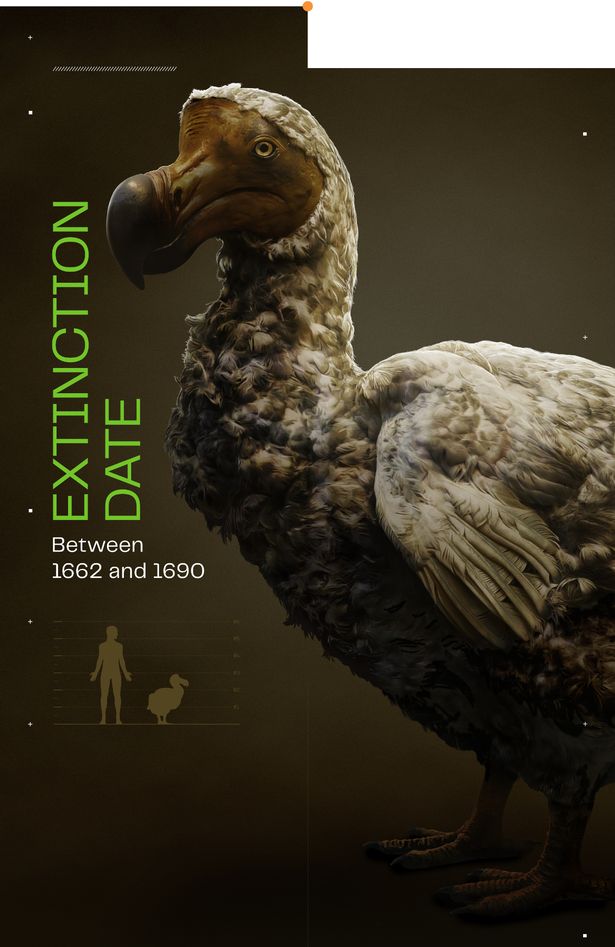
The proposal has brought up a load of questions (Image: Colossal Biosciences)

Once the creature is born, it would have to be brought up under very specific conditions, ensuring it has all the care and nutritious food it needs to thrive.

Shapiro explained: “The final version of the dodo will emerge from a pigeon that has been engineered to be the size of a dodo.”

This will be a lengthy process and Colossal Biosciences co-founder said the company is still “nowhere near ready to start implanting embryos into surrogates,” but the company is making headway on developing the necessary technology to make their ideas a reality.
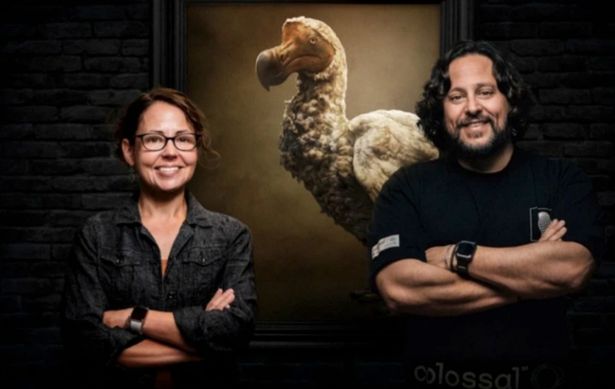
Colossal Biosciences are working hard to make their dodo dreams a reality (Image: Colossal Biosciences)

The company could hit another wall as Shapiro explained that, unlike mammals, “we can’t clone birds”.

“There is no access to a bird egg cell at the same developmental time as there is for a mammal,” she explained.

Once the creature is born, more questions arise.

The dodo, which was wiped out by humans in the late 1600s, has no natural habitat to speak of anymore and with no other dodos to learn its behaviour from, the creature won’t be able to learn its behaviour from its parents and peers the same way the original dodo would have.
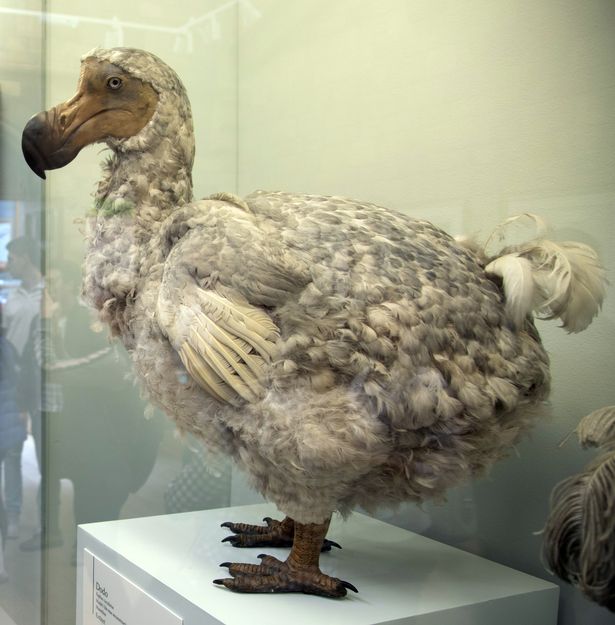
Nowadays, the dodo is ancient history (Image: In Pictures via Getty Images)

But Shapiro reckons the new-fangled dodo could thrive in Mauritius and the surrounding islands.

“A goal here is to create an animal that can be physically and psychologically well in the environment in which it lives,” Shapiro added.

“If we are going to bring back something that’s functionally equivalent to a dodo, then we will have to find, identify or create habitats in which they’re able to survive.”

Filed Under: Trends Worldwide Tagged With: animal cloning, animal cloning technology, Avian Genomics Group, Beth Shapiro research, biodiversity, Biodiversity Conservation, biodiversity preservation, Colossal Biosciences, Conservation, de-extinction, de-extinction technology, dodo, dodo extinction, dodo genome, dodo revival, ecological restoration solutions, endangered species, Extinct Animals, extinct species, genetic engineering, genetic engineering advancements, genetic engineering companies, investment in biotech startups, Mauritius, Mauritius habitat restoration, Nicobar pigeon, protect biodiversity, resurrect extinct animals, save endangered species

Reader Interactions

Leave a Reply Cancel reply

Your email address will not be published. Required fields are marked *

Primary Sidebar

More to See

A New Study Suggests That Dogs May Grieve When Other Dogs In Their Household Die

By Hasan Jasim Editorial Team

Woman Recognizes “Depressed” Ram at Zoo and Feels Compelled to Help

By Hasan Jasim Editorial Team

This Terrified Whale Was Trapped And Left To Die In A Net. The way she thanked her savior astounded me

By Hasan Jasim Editorial Team

Missing Texas giraffe found alive, but getting her home won’t be easy

By Hasan Jasim Editorial Team

Ivory Poaching in Mozambique Has Caused Female Elephants To Rapidly Evolve Into Tuskless Creatures

By Hasan Jasim Editorial Team

Bindi Irwin’s Daughter is Turning one, and The Irwin Family is Throwing a Party to Commemorate The Occasion

By Hasan Jasim Editorial Team

The Ardennes Draft Horse: A Powerful Legacy

By Hasan Jasim Editorial Team

Footer

ABOUT HASANJASIM.ONLINE

Hasanjasim.online is a digital platform dedicated to publishing well-researched articles about the animal kingdom, nature, and the environment. Our editorial team works to source stories from credible outlets, scientific research, and verified reports, aiming to inform as much as we entertain. From wildlife conservation and animal behavior to natural wonders and environmental science, we cover the topics that help readers better understand and appreciate the natural world. Whether you're a lifelong nature lover or simply curious about the planet we share, Hasanjasim.online aims to be a trustworthy destination for stories worth reading — and worth citing.

Recent

  • The Moment an Emu Wrestled a Man to the Ground — Then Turned the Tables
  • Why didn’t anyone tell me there’s an animal that smells exactly like hot, buttered popcorn?
  • I Never Liked the Caribbean—But This Island With Waterfalls, Hot Springs, and Rainforests Won Me Over
  • He Was a Magnificent 17-Point Buck — Now His Life Is Over
  • Man Rescues Lone Wolf Caught In A Trap — And What He Did Next Left The Internet In Awe
  • Why Lotus Seed Pods End Up Looking Like They’re Pulling Faces
  • Drilling Has Begun at Turkey’s ‘Noah’s Ark’ Formation. Here’s What’s Actually Been Found

Search