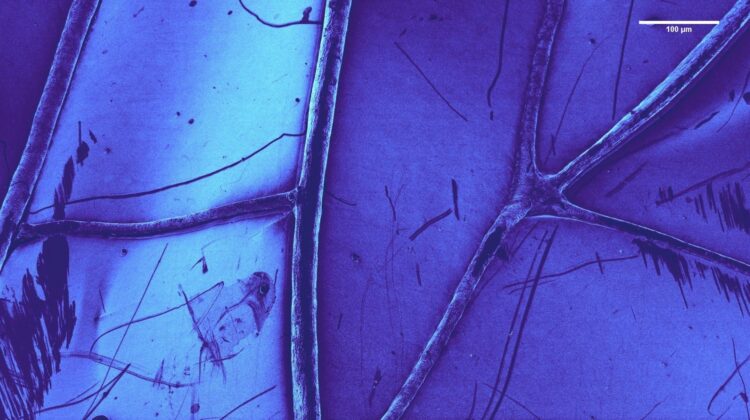
Among the many enigmatic traits of dragonflies, one stands out as a marvel of nature’s ingenuity—their wings possess the power to annihilate bacteria on contact. Unlocking the secret behind this remarkable phenomenon has eluded researchers for years, but now, a groundbreaking imaging technique has finally peeled back the layers of mystery, revealing the intricate mechanism that allows dragonflies to wield this antibacterial power.
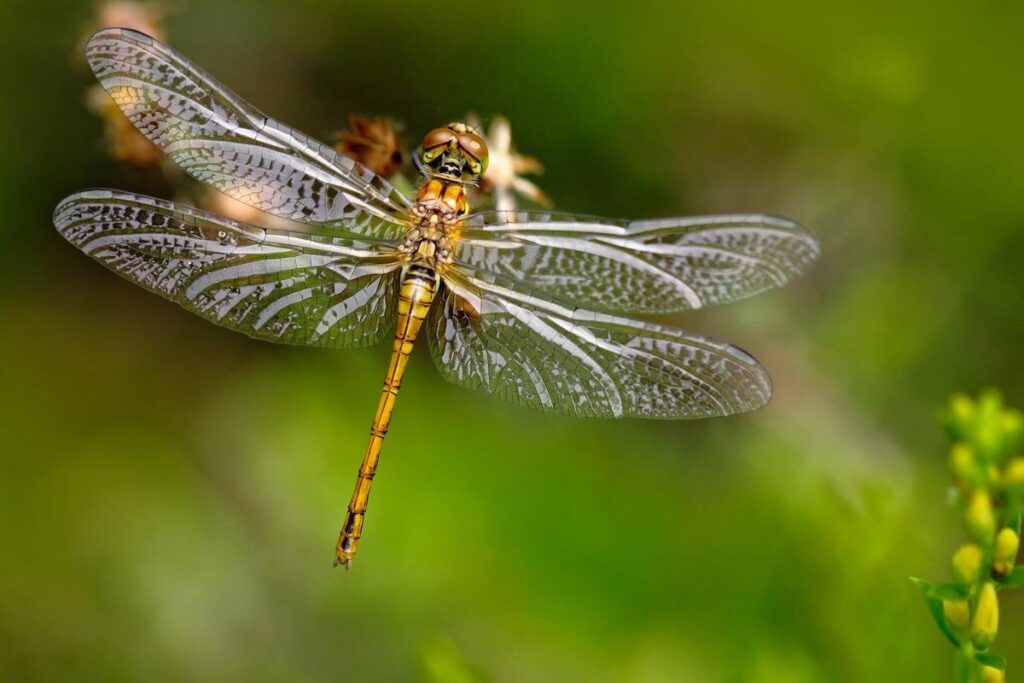
OndrejProsicky/Depositphotos
The antimicrobial properties of dragonfly wings have long intrigued scientists, yet their fragility has thwarted attempts to thoroughly investigate the mechanisms at play. Enter the researchers from Queensland University of Technology (QUT), who harnessed the potential of advanced ion and electron microscopes to unveil the mesmerizing world of dragonfly wing nanostructures. Their innovative approach granted them a detailed glimpse of the more than 10 billion minuscule “fingers” adorning the wing’s surface—a feat previously impossible due to the risk of damaging the delicate wings under powerful microscopes.
What the researchers discovered was nothing short of astonishing. The seemingly innocent “fingers” that embellish the wing’s exterior are potent bacterial traps. Their grip on bacteria is so tenacious that attempting escape becomes a self-destructive endeavor for the bacteria, causing them to rupture in the process. This revelation holds immense promise for medical applications, paving the way for surfaces that mimic the dragonfly’s natural nanostructures to combat bacteria.

Dr. Chaturanga Bandara, a QUT researcher, underscores the significance of their findings: “Seeing the natural nanostructure and its bacterial interaction in 3D is providing us with new clues on such new surface designs.” The implications of this discovery extend far beyond the dragonfly realm, drawing parallels to similar studies that have inspired novel medical tools. Dragonfly wings’ counterparts, like the Wandering Percher and cicada wings, have inspired the creation of antibacterial surfaces using cutting-edge materials and designs.
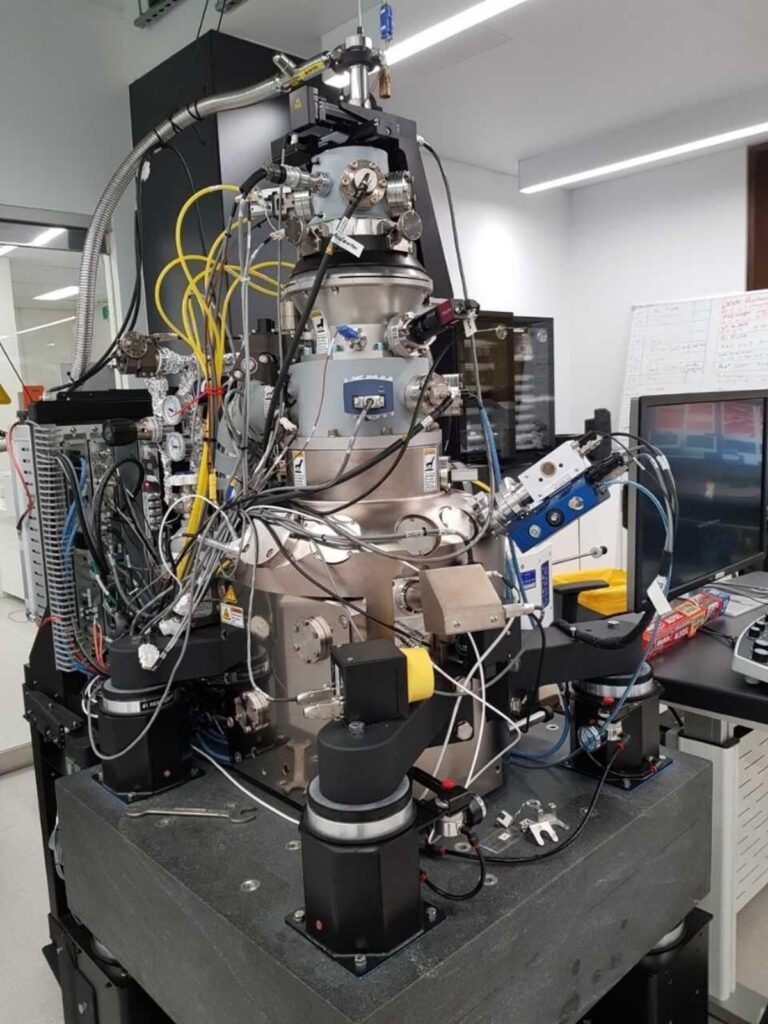
The path illuminated by these findings suggests the potential for antibacterial surfaces to be incorporated into surgical tools and hospital equipment. As Dr. Annalena Wolff, another QUT researcher, points out, “The huge microscopes we work with are two meters (6.5 ft) tall and two meters wide and can take images of almost anything.” This newfound ability to perceive the intricacies of nature’s smallest wonders in three dimensions promises to accelerate the development of tools and materials that combat bacterial threats.
Beyond its medical applications, the research sparks a broader conversation about the remarkable ingenuity nature has bestowed upon organisms. Dr. Wolff succinctly captures the essence of this revelation: “Nature has a lot of fantastic tricks up its sleeve, like the antibiotic features of dragonfly wings. Now we can see them, and understand why they work.” As our understanding of these natural wonders deepens, the possibilities for innovation and imitation become boundless. With the world of microscopy enabling us to not just observe, but also engineer, the line between imagination and reality blurs, allowing us to craft solutions inspired by nature’s elegant designs.
Leave a Reply