• Skip to main content
  • Skip to primary sidebar
  • Skip to footer
  • Home
  • About Us
  • Copyright Report
  • Submit Content
  • Terms
  • Privacy Policy
  • Legal Disclaimer

Hasan Jasim

Hasan Jasim is a place where you may get entertainment, viral videos, trending material, and breaking news. For a social generation, we are the largest community on the planet.

Electric Blue Inferno: The Mystical Fires of Kawah Ijen

by Hasan Jasim Editorial Team Leave a Comment

ShareTweet

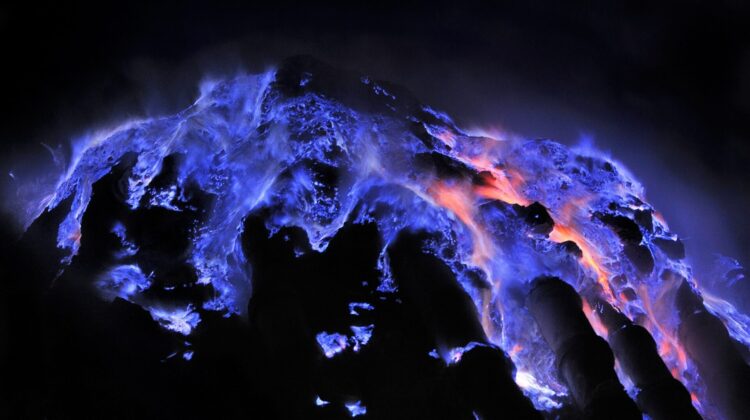
Imagine a volcano where rivers of electric blue fire cascade down its slopes at night, painting the landscape in an otherworldly glow. This mesmerizing spectacle is not a figment of imagination but a reality found at Indonesia’s Kawah Ijen volcano. In this article, we delve into the fascinating phenomenon of blue volcanic flames, exploring the science behind it and the unique experiences it offers to visitors.
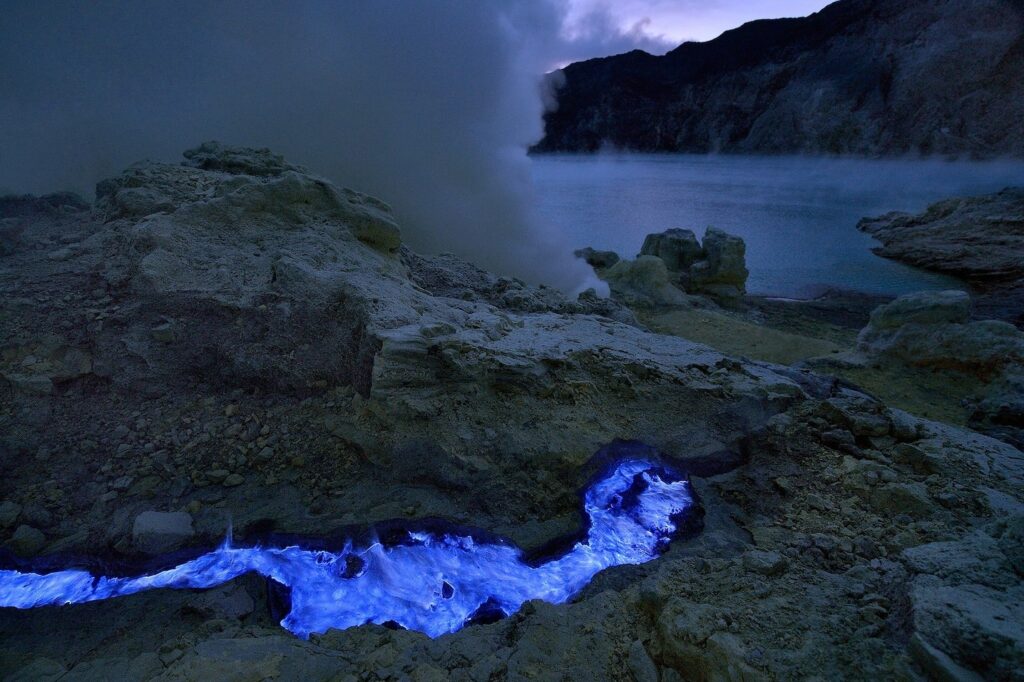
A river of sulfur flows near Kawah Ijen’s acid lake. Photograph by Olivier Grunewald

The Blue Flames of Kawah Ijen

Kawah Ijen, a stratovolcano located on the Indonesian island of Java, is renowned for its stunning crater lake and sulfuric deposits. However, it’s the unusual blue flames that emerge from its vents at night that have captivated the world.
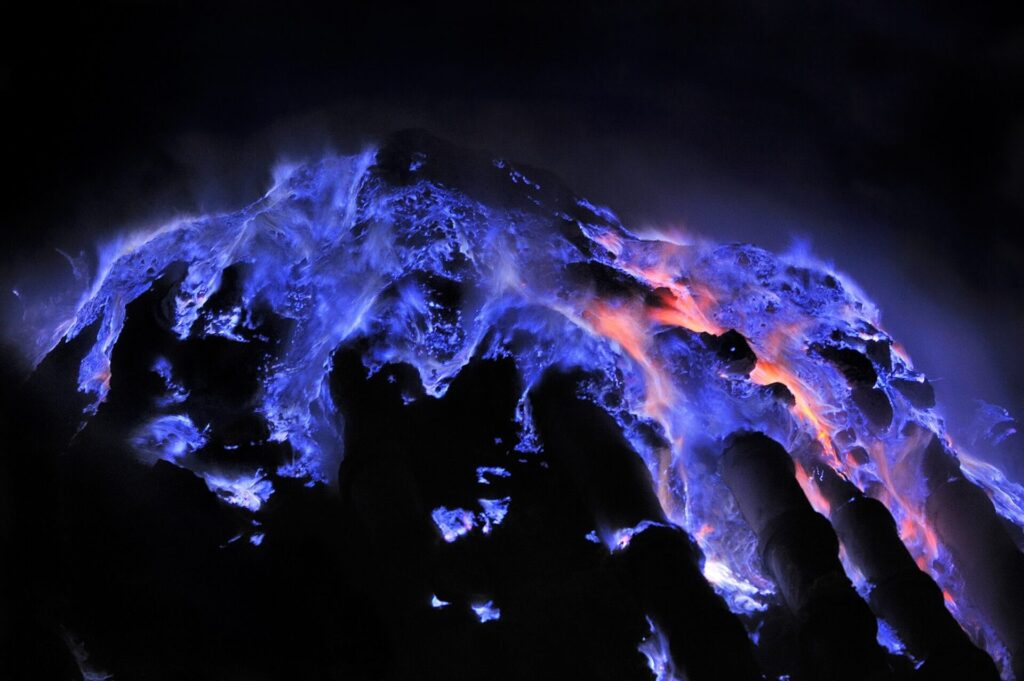
Sulfur combusts on contact with air to create stunning blue lava-like rivers of light in the Kawah Ijen crater on the island of Java. Photograph by Olivier Grunewald

Unlike the typical red-orange lava associated with volcanic eruptions, these blue flames are a result of the combustion of sulfuric gases. As these gases escape from the volcano under high pressure and temperature, they ignite upon contact with air, producing a striking blue glow. The intensity of the flames can reach up to 16 feet (5 meters) in height, creating a truly awe-inspiring sight.

The Science Behind the Blue Flames

The blue color of the flames is due to the specific wavelength of light emitted during the combustion of sulfur. When sulfur burns, it excites the electrons within its atoms, causing them to emit light in the blue spectrum. This unique phenomenon is not exclusive to Kawah Ijen but has also been observed in other volcanic regions, such as Mount Vesuvius and the island of Vulcano.
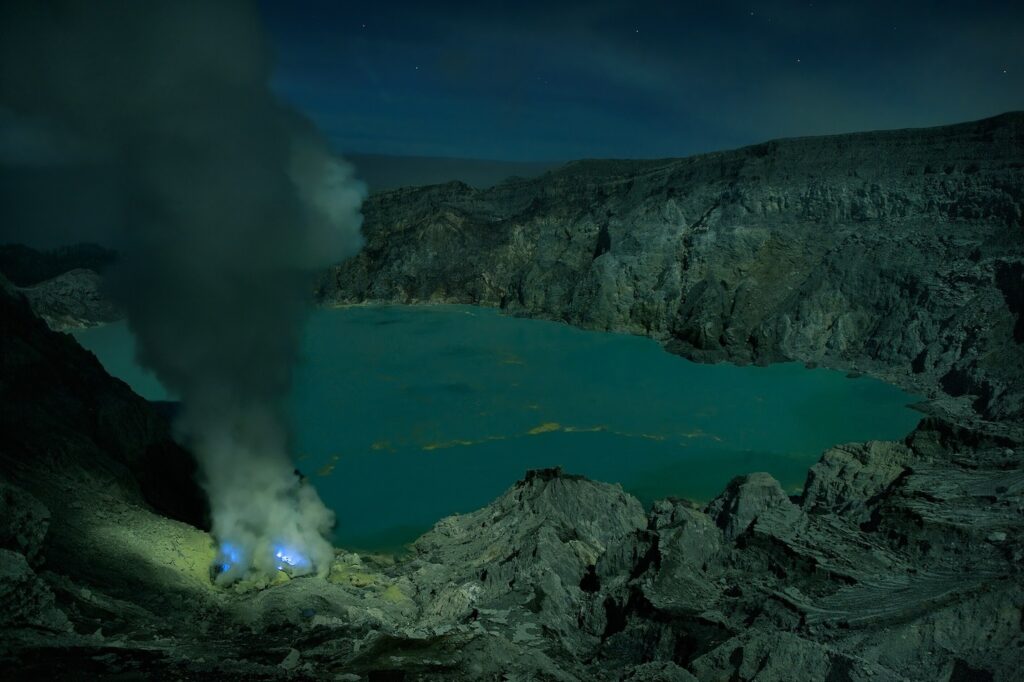
Kawah Ijen Crater Lake is green because of the hydrochloric acid in the water. Photograph by Olivier Grunewald

A Hardship for Miners

While the blue flames offer a spectacular visual treat for visitors, they also represent a harsh reality for the local miners who work tirelessly to extract sulfur from the volcano. These miners often work at night under the eerie blue light to avoid the scorching heat of the sun and to earn extra income. Despite the hazardous conditions, they endure the toxic fumes and arduous labor to provide for their families.
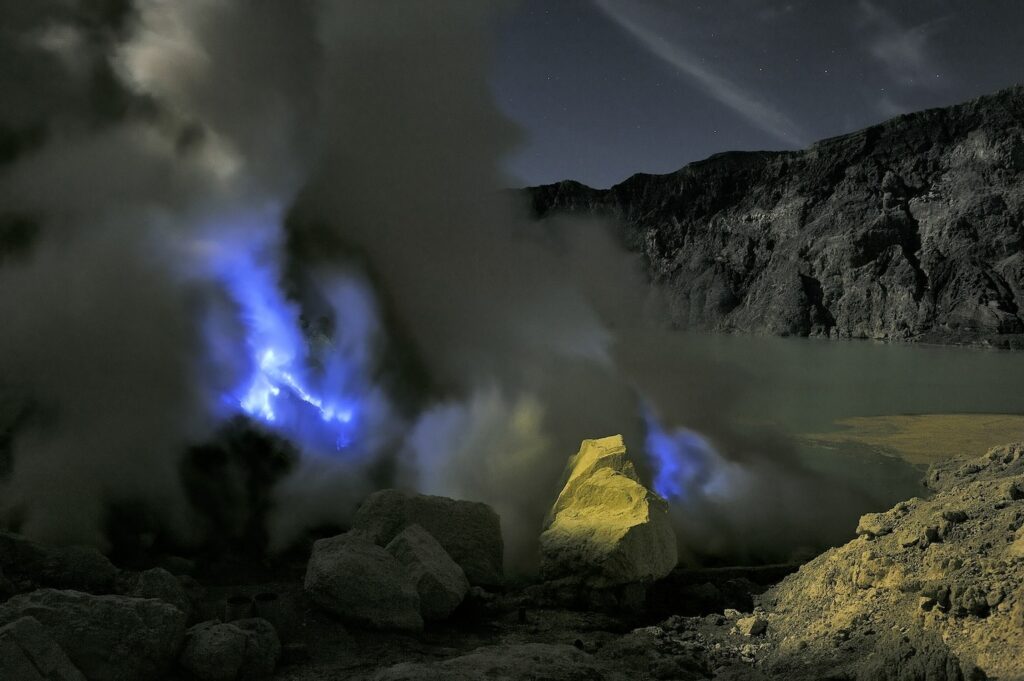
In the Kawah Ijen crater, sulfuric gases escaping from cracks ignite as they come in contact with the air.
Photograph by Olivier Grunewald

A Must-See Destination

Kawah Ijen’s blue flames are a testament to the power and beauty of nature. For those seeking a unique and unforgettable travel experience, visiting this volcanic wonder is highly recommended. However, it’s essential to take necessary precautions, such as wearing a gas mask to protect against toxic fumes and following safety guidelines provided by local authorities.
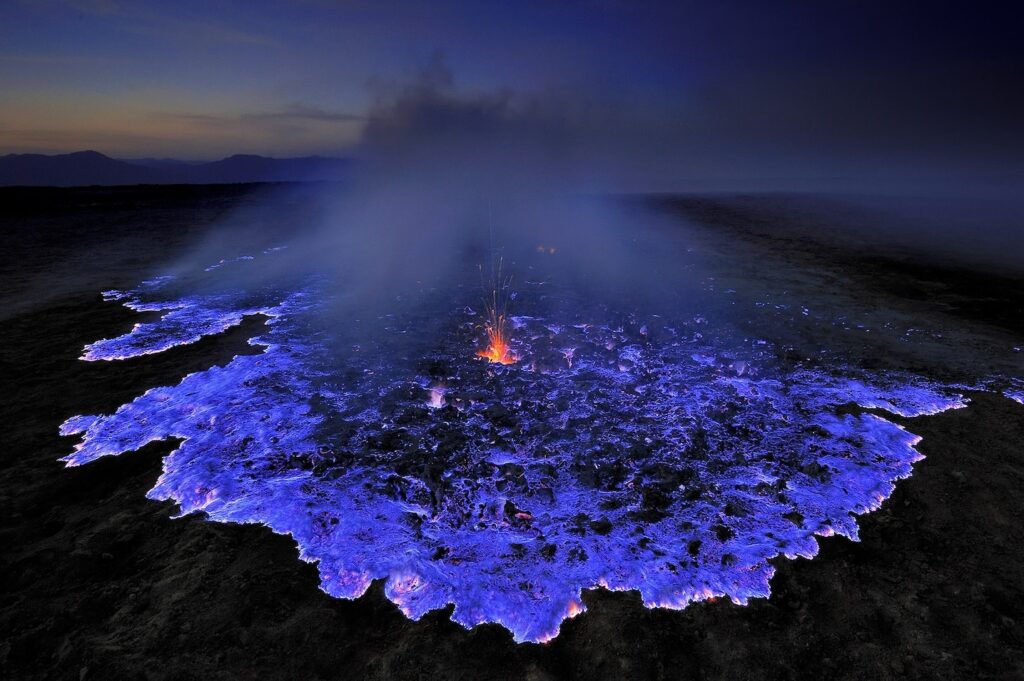
In Ethiopia’s Danakil Depression, the sulfur dust in the soil of a hydrothermal vent ignites to form blue flames.
Photograph by Olivier Grunewald

The electric blue flames of Kawah Ijen are a rare and extraordinary natural phenomenon that continues to fascinate scientists and travelers alike. From the scientific explanations to the human stories behind the mining operations, this volcanic spectacle offers a glimpse into the incredible forces that shape our planet.

Filed Under: Trends Worldwide Tagged With: blue flames, geological phenomenon, indonesia, Kawah Ijen volcano, natural wonder, stunning visuals, sulfur, Travel Destination, volcanic activity

Reader Interactions

Leave a Reply Cancel reply

Your email address will not be published. Required fields are marked *

Primary Sidebar

More to See

Mongolian ship’s anchor recovered from seabed off Nagasaki after 741 years

By Hasan Jasim Editorial Team

The Biggest Spider in the World (by Weight and by Leg Span)

By Hasan Jasim Editorial Team

Humans Spent 2 Million Years as the Top Predators as “Hypercarnivores”

By Hasan Jasim Editorial Team

Sportscaster Crashes On Air During Heartfelt Tribute To His Beloved Dog

By Hasan Jasim Editorial Team

Watch how a caring caretaker consoles an ill 1400lb bear

By Hasan Jasim Editorial Team

Eco-Friendly Revolution: Dutch Startup’s Mushroom Coffins Biodegrade in 45 Days

By Hasan Jasim Editorial Team

If you see this ‘googly-eyed’ creature in your backyard, here’s what it means

By Hasan Jasim Editorial Team

Footer

ABOUT HASANJASIM.ONLINE

Hasanjasim.online is a digital platform dedicated to publishing well-researched articles about the animal kingdom, nature, and the environment. Our editorial team works to source stories from credible outlets, scientific research, and verified reports, aiming to inform as much as we entertain. From wildlife conservation and animal behavior to natural wonders and environmental science, we cover the topics that help readers better understand and appreciate the natural world. Whether you're a lifelong nature lover or simply curious about the planet we share, Hasanjasim.online aims to be a trustworthy destination for stories worth reading — and worth citing.

Recent

  • Healthy Senior Dog Spared After Family Asked Veterinarians to Euthanize Her, Georgia Rescue Says
  • How People Around the World Write Laughter Online
  • The Disturbing Story Behind This Award-Winning Photojournalism Image
  • Massive Elephant Comes Face-to-Face With a Safari Guide, Why Doesn’t It Charge?
  • Huge Doberman Goes to the Groomer and Comes Home With the Most Unhinged Photo
  • Utah Moved 47 ‘Nuisance’ Beavers To A Desert River, And Only About A Quarter Stayed
  • A Grieving Elephant in Black and White Takes the Top Prize at Wildlife Photographer of the Year 2026 — and a 14-Year-Old Wins Big Too

Search