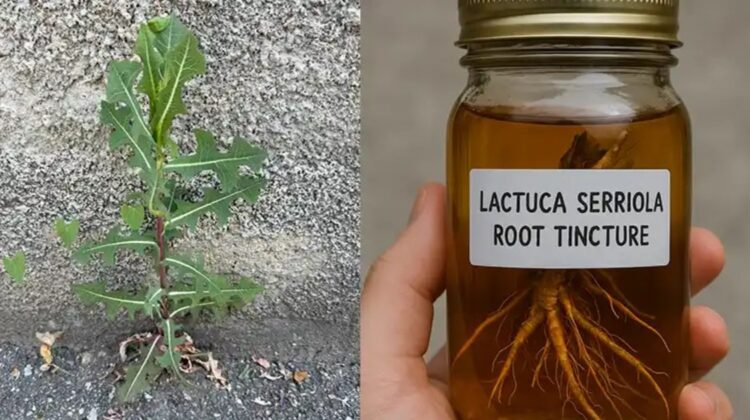
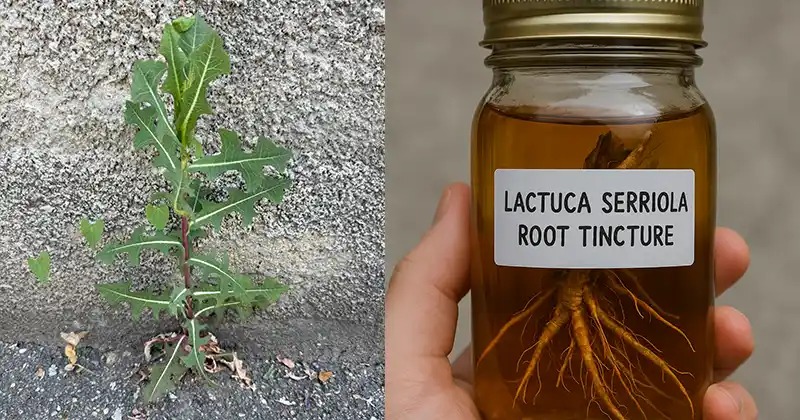
Deep beneath the ground lies one of the most overlooked parts of the wild lettuce plant — the root of Lactuca serriola, also known as prickly lettuce or wild lettuce. While the leaves and milky sap (lactucarium) are the plant’s best-known parts, the root has its own place in traditional herbal folklore across the Mediterranean, Middle East, and South Asia, where the plant has long been used in folk remedies for calming, digestive, and pain-related complaints.
Important note: The information below reflects traditional and folk herbal use, passed down through generations of herbalists — not modern clinical medicine. As one pharmacological review of Lactuca serriola published in the National Center for Biotechnology Information (NCBI) points out, while the plant has long been used traditionally to manage intestinal, respiratory, and vascular complaints, rigorous scientific research confirming these uses in humans remains limited. Nothing here should be treated as a verified medical claim or a substitute for professional care.
Source: Pharmacological evaluation of Lactuca serriola — PMC, National Institutes of Health
What’s Inside the Root
The root of Lactuca serriola contains bitter compounds — including lactucin and lactucopicrin, related to the lactucarium found in the plant’s sap — which give it its characteristic flavor and are believed by traditional herbalists to be behind its calming and bitter-tonic reputation. Unlike the leaves, which change with the seasons, the root is often harvested and dried for longer-term use in folk preparations.
⚠️ Disclaimer: Lactuca serriola root is a potent traditional herb, and folk use does not mean it is risk-free. Excessive use has been associated with nausea, dizziness, or drowsiness. Pregnant or breastfeeding women, and anyone taking sedative medication, should avoid it unless specifically advised by a qualified healthcare professional. This article is for educational and informational purposes only and is not intended to diagnose, treat, cure, or prevent any disease. Always consult a healthcare professional before using any herbal preparation.
Traditional Folk Uses Associated With the Root
The following are uses traditionally attributed to the root in folk and herbal practice — not confirmed medical benefits. They are presented here as cultural and historical context, not as recommendations.
- Traditionally used as a mild relaxant — folk herbalists have used root preparations at bedtime, associating them with a calmer, more settled feeling before sleep.
- Used in folk pain remedies — root infusions have traditionally been applied for minor aches such as tension headaches or muscle soreness.
- Associated with stress relief in folk practice — some herbal traditions describe the root’s bitterness as part of a broader “calming tonic” ritual.
- Included in traditional anti-inflammatory folk mixtures — alongside other bitter herbs, though this use has not been scientifically validated in humans.
- Used as a folk liver and kidney “tonic” — boiled root water has a long history in folk detox rituals, distinct from any verified detoxifying effect.
- Traditionally taken as a bitter digestive aid — bitter compounds are a well-known category in herbal medicine for stimulating appetite and digestion before or after meals.
- Used in old respiratory folk remedies — root and leaf infusions appear in historical texts for coughs and chest complaints.
- Believed in folklore to support circulation — largely as part of the plant’s broader “purifying” reputation rather than any documented vascular effect.
- Associated with general wellness in traditional practice — bitter tonics across many herbal traditions are linked to overall vitality rather than a specific immune mechanism.
- Used traditionally for muscle tension — warm root preparations have historically been applied externally to tense or cramping muscles.
Traditional Preparation Methods
These are historical and folk preparation methods, described here for cultural and educational interest. Given the potency of this plant and its sedative reputation, none of these should be taken as a recommended dosage — consult a qualified herbalist or healthcare provider before preparing or using any part of this plant.
1. Root Tincture
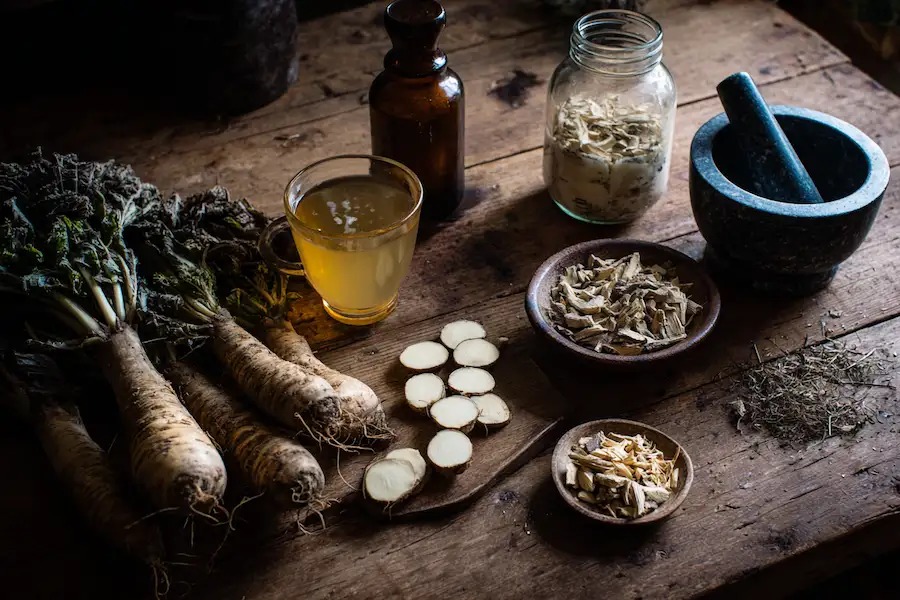
Traditionally made by steeping washed, chopped roots in strong alcohol (such as vodka) in a sealed jar for three to four weeks, shaking occasionally, then straining into a dark glass bottle. Folk use has generally involved small amounts diluted in water or tea — but because tinctures concentrate the plant’s active compounds, this is also the preparation with the highest risk of overuse, and specific dosing should only be determined with professional guidance.
2. Boiled Root Tea
A milder preparation: small pieces of root simmered in water for 15–20 minutes, strained, and sipped. This is generally considered the gentlest traditional form, often associated with evening or bedtime use.
3. Root Powder
Dried root ground into a fine powder, sometimes mixed into warm water, honey, or other herbal teas for a bitter, calming flavor profile in folk practice.
4. Root Compress
A warm compress made by soaking a cloth in boiled root water, then applying it to sore muscles or joints — a topical folk method distinct from internal use.
Storage Notes
- Dried roots are traditionally stored in airtight containers away from sunlight, where herbalists say they keep their potency for up to a year.
- Alcohol-based tinctures generally remain stable for longer periods thanks to the alcohol content.
- Always label homemade preparations clearly, including the date they were made.

A Root With a Long Herbal History
The root of Lactuca serriola is a reminder that plants often carry history and folklore in parts we rarely think about. While its traditional reputation as a calming, bitter root spans centuries of herbal practice, modern science has yet to fully confirm most of these effects — which is exactly why any interest in this plant should be paired with caution, moderation, and a conversation with a healthcare professional.
Frequently Asked Questions (FAQ)
1. Is Lactuca serriola root scientifically proven to relieve pain or anxiety? Not conclusively. It has a long history of traditional and folk use for these purposes, but rigorous clinical research in humans confirming these effects is still limited, according to pharmacological reviews of the plant.
2. Is wild lettuce root safe to use at home? It should be used with caution. Overuse has been linked to nausea, dizziness, and excessive drowsiness, and it should be avoided by pregnant or breastfeeding women and anyone on sedative medication without medical advice.
3. What’s the difference between the root and the plant’s milky sap (lactucarium)? The sap, or lactucarium, found in the leaves and stems is the plant’s most historically documented sedative part. The root contains related bitter compounds and has its own folk reputation, though it is less studied than the sap.
4. Can I just make a tincture and take it like an over-the-counter supplement? This isn’t recommended without guidance. Homemade tinctures concentrate the plant’s compounds, and there’s no standardized, medically verified dosage — consult a healthcare professional or qualified herbalist first.
5. Is Lactuca serriola the same as opium lettuce? It’s closely related. Lactuca virosa is the species most associated with the historical term “opium lettuce,” though Lactuca serriola shares similar compounds and is sometimes referred to informally by the same nickname.
Leave a Reply