• Skip to main content
  • Skip to primary sidebar
  • Skip to footer
  • Home
  • About Us
  • Copyright Report
  • Submit Content
  • Terms
  • Privacy Policy
  • Legal Disclaimer

Hasan Jasim

Hasan Jasim is a place where you may get entertainment, viral videos, trending material, and breaking news. For a social generation, we are the largest community on the planet.

Eyes on the Prize: How African Farmers Outsmart Lions with a Brilliant (and Bizarre) Trick

by Hasan Jasim Editorial Team Leave a Comment

ShareTweet

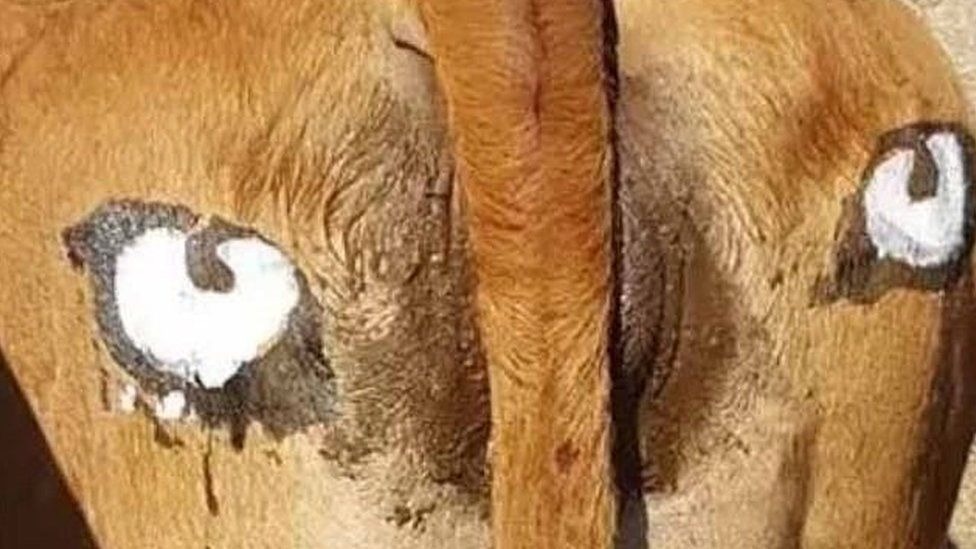
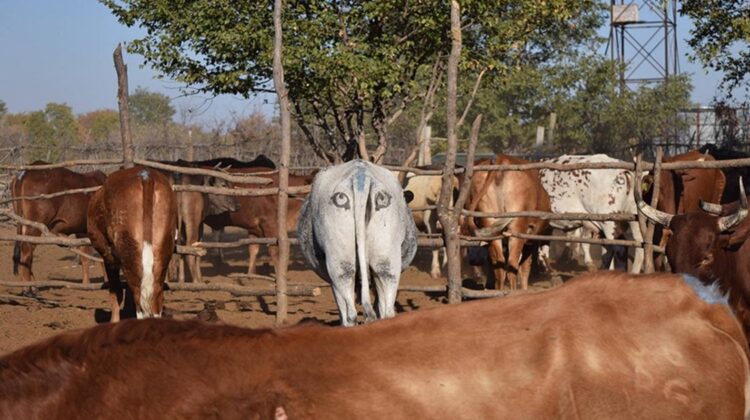
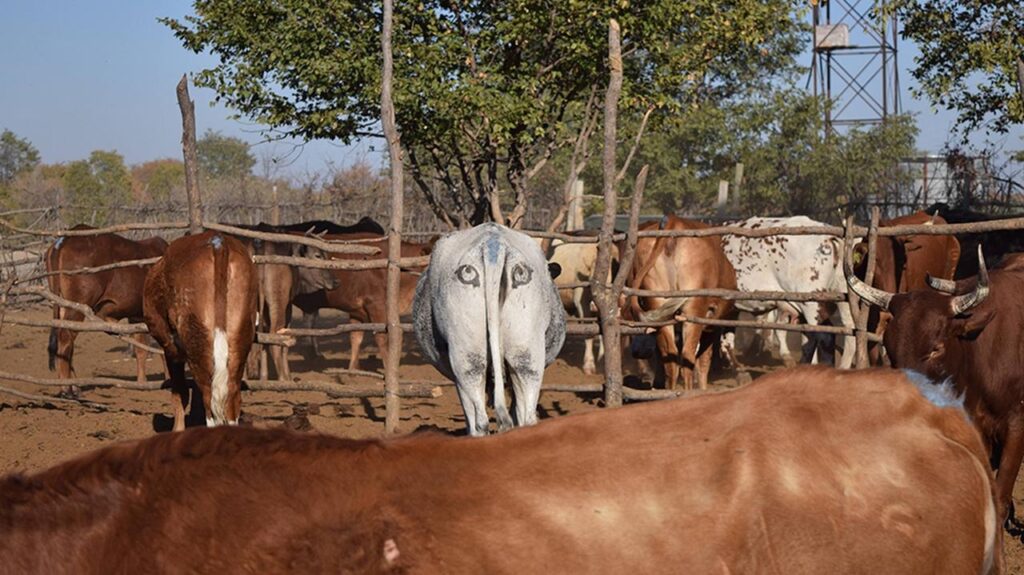
In a remarkable display of ingenuity, farmers in Africa have discovered a surprisingly simple yet effective method to protect their livestock from lion attacks: painting eyes on the backsides of their cows! This unconventional approach, inspired by nature’s own defense mechanisms, has proven surprisingly successful, reducing predation rates significantly.

The Science Behind the Eyes:
This eye catching solution protects livestock, lions and livelihoods. Photo: UNSW/BEN YEXLEY

This innovative technique, detailed in a study published in Communications Biology, leverages a fundamental principle of predator-prey interactions. Lions, as ambush predators, rely heavily on the element of surprise. By painting large eyes on the cows’ rumps, farmers effectively disrupt this element, making the cows appear “seen” to the approaching lion.

The Experiment:

The study involved 14 herds in Botswana, Africa, where lion attacks were frequent. Cows within each herd were divided into three groups:

  1. Eye-painted: Cows with large eye designs painted on their rumps.
  2. Cross-marked: Cows with simple cross markings.
  3. Unmarked: Cows without any markings.
Are you looking at me? Photo: UNSW/BEN YEXLEY

The Results:

The results were astonishing. No eye-painted cows were killed by lions during the four-year study, while a significant number of unpainted and cross-marked cows fell victim to predation. This suggests that the “eyes” effectively deterred lions, likely by making them feel exposed.

Beyond Eyes: The Power of Conspicuousness:

Interestingly, the study also revealed that cows with simple cross markings experienced a higher survival rate compared to unmarked cows. This unexpected finding highlights the importance of any form of conspicuousness in deterring predators.
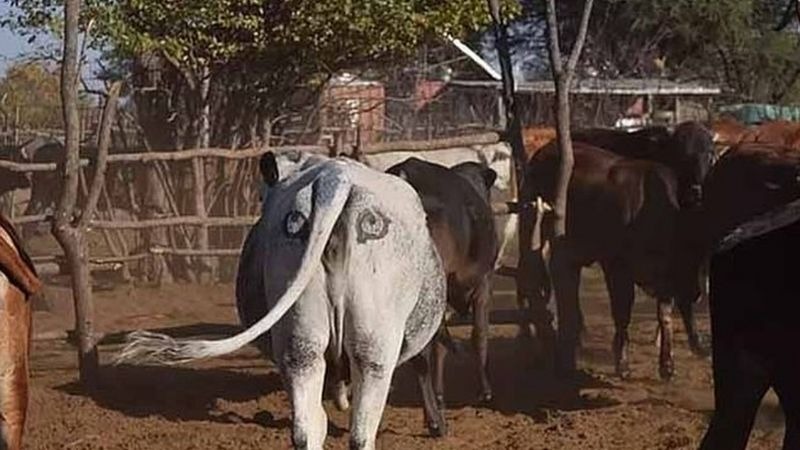
Photo: UNSW/BEN YEXLEY

Inspiration from Nature:

The concept of using “eyespots” as a defense mechanism is not new. Many animals in nature, from butterflies to fish, possess eye-like markings to confuse and scare off predators. However, this is the first known instance of successfully applying this principle to deter large mammalian predators.

Implications:

This innovative approach offers a more humane and eco-friendly alternative to traditional methods of livestock protection, such as lethal control or costly fencing. Furthermore, the findings have broader implications, suggesting that the principle of “conspicuousness” could be applied to various contexts, from preventing human-wildlife conflicts to reducing crime rates.

Some of the cows were painted with crosses, which scientists said was better than having no paint at all. Photo: UNSW/BEN YEXLEY

The African farmers’ ingenious use of “eyes” on their cows demonstrates the power of observation, creativity, and a deep understanding of animal behavior. This simple yet effective solution provides a valuable lesson in sustainable coexistence between humans and wildlife.

Filed Under: Trends Worldwide Tagged With: African farming solutions, Botswana predator conservation, cattle safety, eco-friendly solutions, ecological solutions, eye-painting cattle, Farmers in Africa, human-wildlife conflict, innovative farming solutions, lion attacks, livestock protection, livestock survival, predator deterrents, predator protection, sustainable farming, sustainable wildlife management, Taronga Conservation Society, UNSW Sydney, wildlife conservation

Reader Interactions

Leave a Reply Cancel reply

Your email address will not be published. Required fields are marked *

Primary Sidebar

More to See

In a jar, a man scoops up pond water and records his own growing ecosystem

By Hasan Jasim Editorial Team

Why animal eyes have different sized and shaped pupils

By Hasan Jasim Editorial Team

A Moment Captured in Time: Newborn Lamb’s Stunning Debut

By Hasan Jasim Editorial Team

PHOTOS: A ‘Rainbow Cloud’ Was Sighted Over Loudoun County, Virginia

By Hasan Jasim Editorial Team

The Otherworldly Río Tinto: A River of Fire

By Hasan Jasim Editorial Team

Biologist’s Cactus Planter Switches To “Bathing Lady” Role, Sprouting Blossoming Penis

By Hasan Jasim Editorial Team

Northern California’s Redwood Forest Has Been Returned to Indigenous Ownership

By Hasan Jasim Editorial Team

Footer

ABOUT HASANJASIM.ONLINE

Hasanjasim.online is a digital platform dedicated to publishing well-researched articles about the animal kingdom, nature, and the environment. Our editorial team works to source stories from credible outlets, scientific research, and verified reports, aiming to inform as much as we entertain. From wildlife conservation and animal behavior to natural wonders and environmental science, we cover the topics that help readers better understand and appreciate the natural world. Whether you're a lifelong nature lover or simply curious about the planet we share, Hasanjasim.online aims to be a trustworthy destination for stories worth reading — and worth citing.

Recent

  • Euphorbia Hirta (“Asthma-Plant”): What Traditional Use and Real Research Actually Show
  • A Mystery Animal Has Been Randomly Attacking People in New Hampshire — Here’s What We Know
  • A Woman Was Filmed Sharing Her Ice Cream With Her Dog — Here’s What Vets Actually Say About It
  • Dolphin Calf Incident in Ceuta Sparks Outrage After Disturbing Beach Footage Emerges
  • Lactuca Serriola Root: Traditional Uses of Prickly Lettuce (Wild Lettuce) Root
  • The Puppy a Firefighter Couldn’t Leave Behind — and the Story Didn’t End There
  • A Mother Dog Dove Into Floodwater Again and Again — Until All 7 of Her Puppies Were Safe

Search