
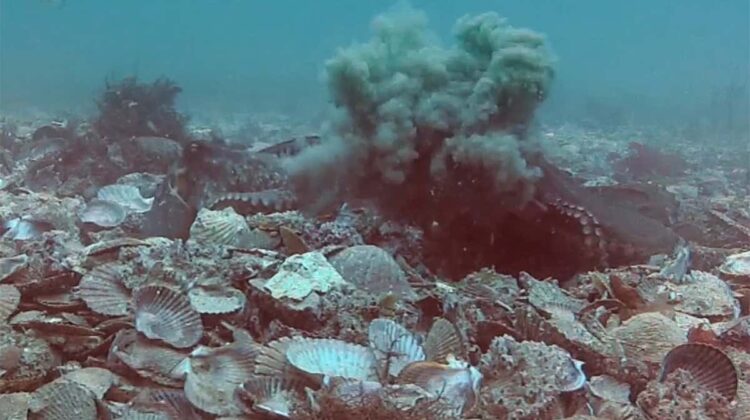
Female Octopus have been observed throwing objects at males in what scientists describe as a targeted response to unwanted attention.
Researchers studying octopuses off the coast of Jervis Bay recorded multiple instances of individuals gathering materials such as shells and silt before propelling them through the water using a jet from their siphon.
The behaviour, previously linked to den maintenance, appears in some cases to be directed at other octopuses.
Observations in the wild
The study, led by scientists including Peter Godfrey-Smith from the University of Sydney, documented more than 100 such throws during fieldwork.
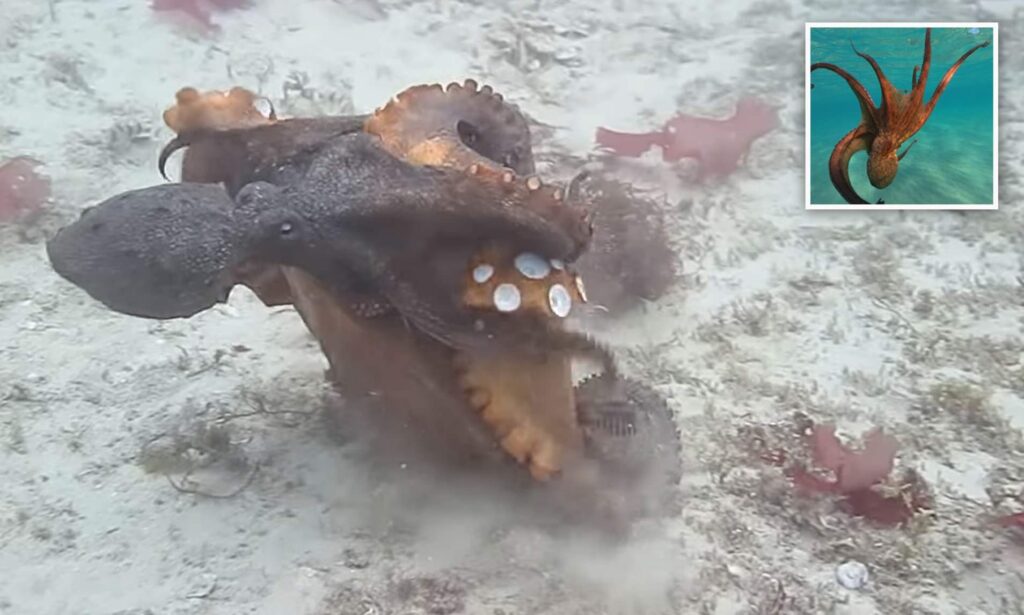
Most were carried out by females, often when approached by males attempting to mate.
In one recorded sequence, a female repeatedly launched silt at a nearby male, striking him several times. The male was seen attempting to avoid the projectiles, with mixed success.
Researchers noted that when targeting another octopus, the throwing angle differed from routine den-clearing behaviour, suggesting a level of control and intent.
A rare form of interaction
Object-throwing among animals is considered relatively uncommon, particularly when directed at members of the same species.
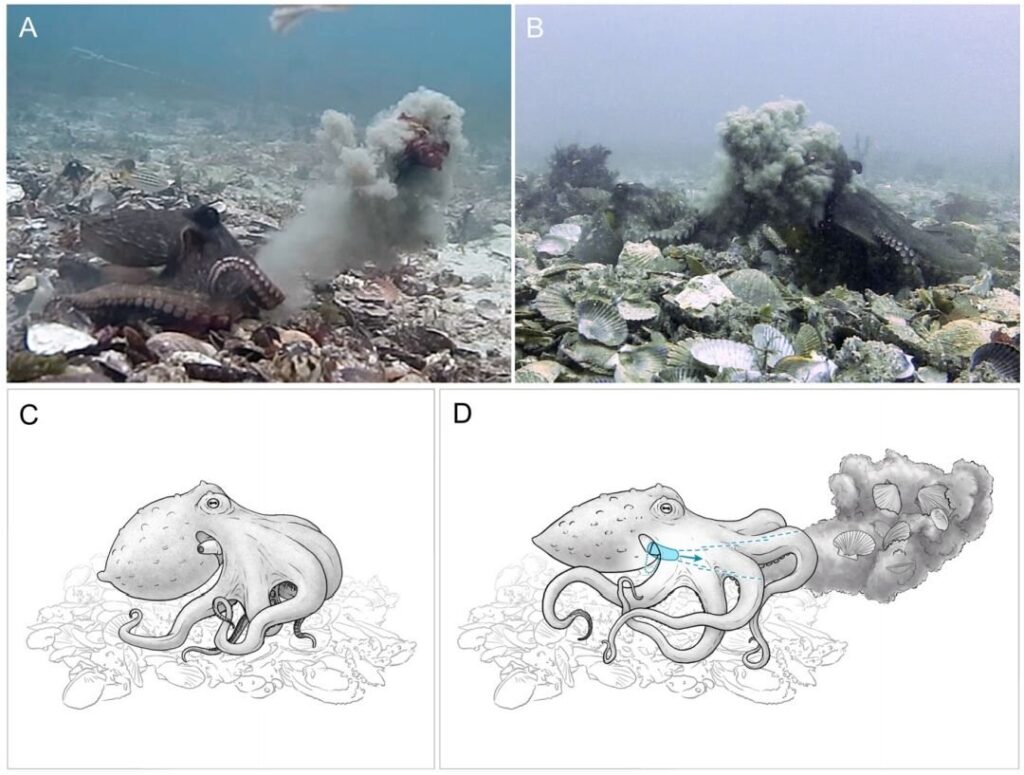
Scientists say this behaviour places octopuses among a small number of animals known to use objects in social interactions.
While the findings are based on observational data and require further study, they add to growing evidence of complex behaviour in cephalopods.
Ongoing research
The study has been published as a preprint and has not yet undergone peer review.
Researchers say further work is needed to understand how widespread the behaviour is, and whether it serves a consistent social function.
The findings offer a glimpse into a largely hidden world beneath the ocean’s surface, where behaviour can be both subtle and complex. As research continues, scientists hope to better understand how animals like octopuses interact with one another — and what these interactions reveal about intelligence, communication and adaptation in the wild.
Leave a Reply