
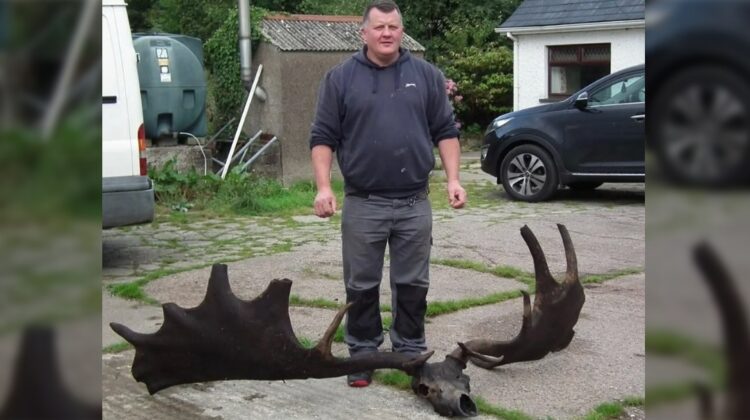
What began as an ordinary day on the waters of Lough Neagh, Northern Ireland’s largest lake, turned into an unforgettable encounter with prehistory. Two local fishermen, while casting their nets, felt an unusual weight tugging from the depths below. Believing they had snagged a piece of driftwood, they began to haul it up — but what emerged from the water left them speechless.
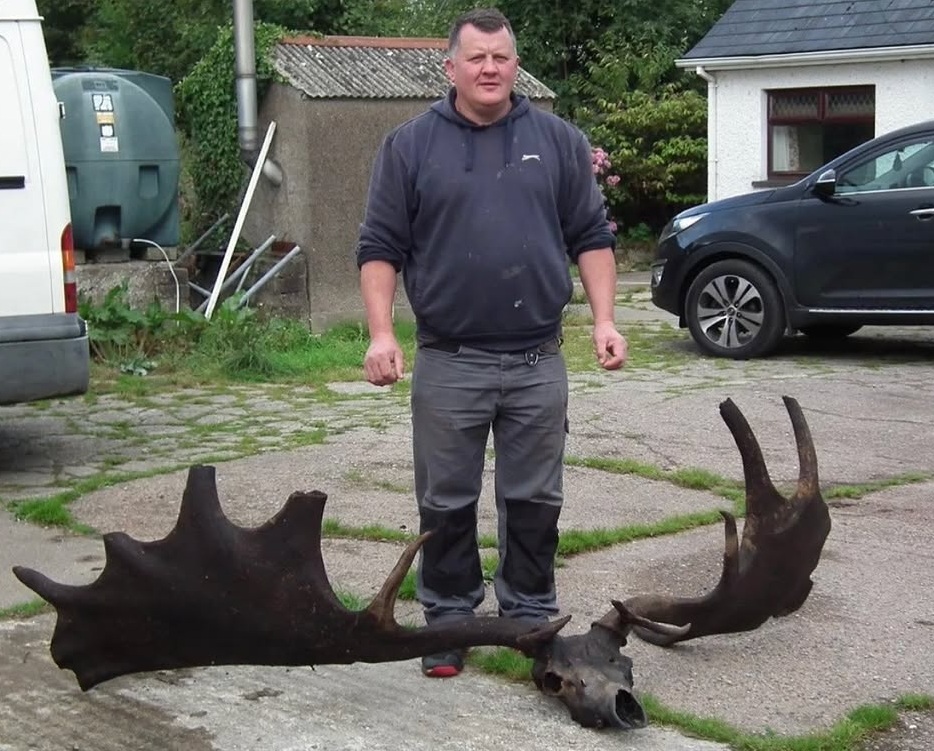
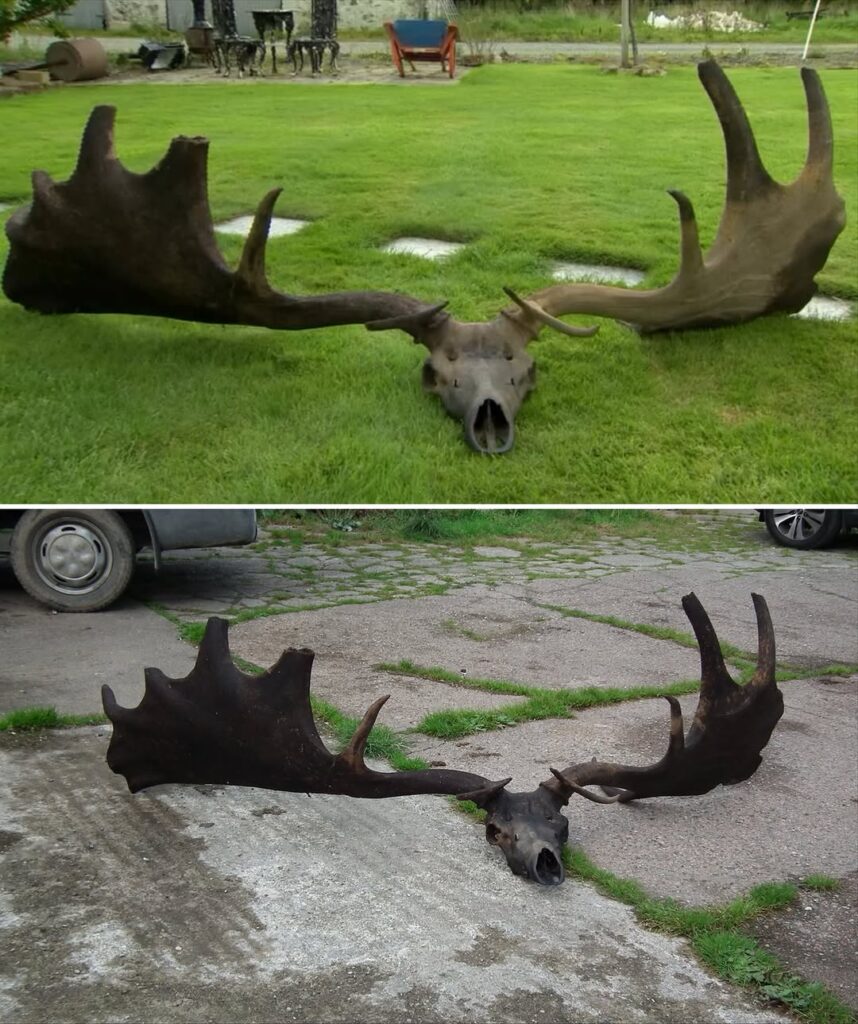
It wasn’t wood at all, but an enormous elk skull with antlers spanning nearly six feet across. The find was so well-preserved that it looked almost sculptural, its grand structure hinting at a creature of immense size and strength.
A Relic of a Lost Giant
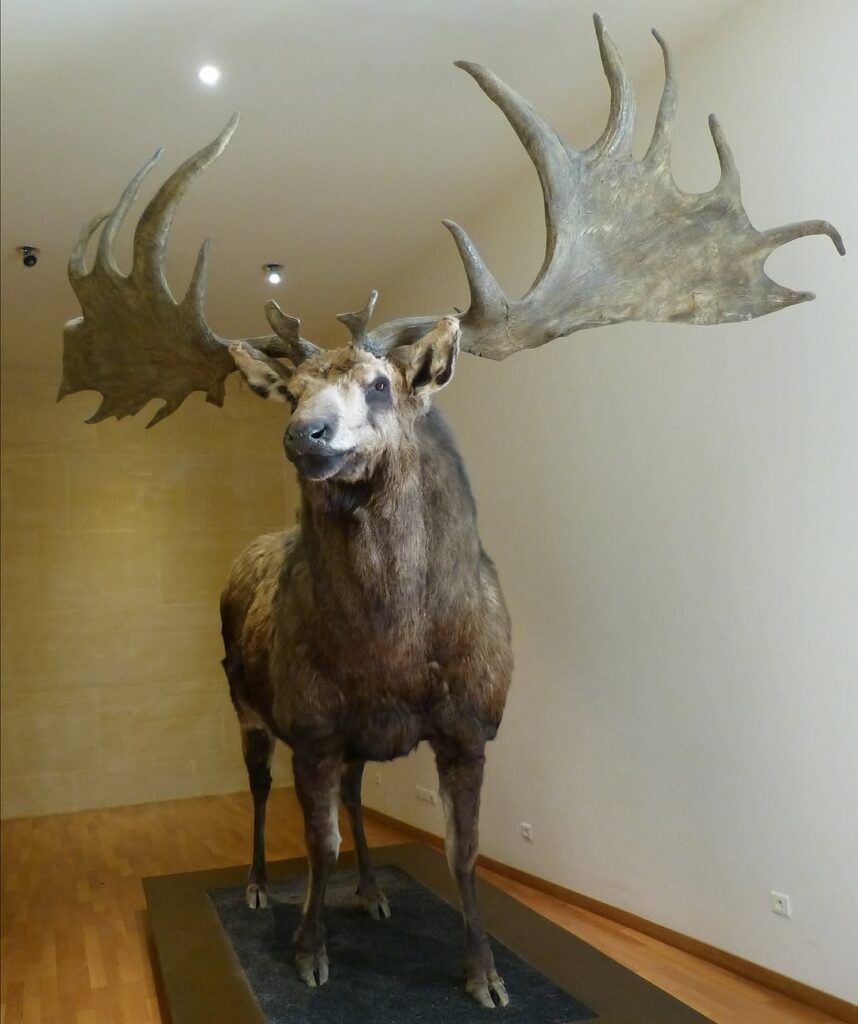
Experts who examined the discovery later confirmed it belonged to the Irish Elk, scientifically known as Megaloceros giganteus — a species of giant deer that vanished from the Earth more than 10,000 years ago.
Despite its name, the Irish Elk was not a true elk but rather the largest deer species ever known. These majestic animals once roamed vast stretches of Europe and Asia, including the plains of prehistoric Ireland. Towering up to 7 feet tall at the shoulder, males carried immense antlers that could grow as wide as 12 feet and weigh over 90 pounds — impressive displays likely used in mating rituals and territorial battles.
The fishermen’s find offers a remarkable look into the Ice Age environment that once covered Ireland, when mammoths, woolly rhinoceroses, and giant deer shared the land before sudden shifts in climate and vegetation led to their extinction.
Preserved by Time and Water
Scientists believe the cold, sediment-rich waters of Lough Neagh helped preserve the skull for thousands of years. The oxygen-poor environment at the lake’s bottom slowed decay, keeping the antlers largely intact. Radiocarbon dating will help pinpoint its exact age, but early estimates suggest it could be over 11,000 years old, dating back to the final stages of the last Ice Age.
These rare discoveries provide valuable insight into how ancient ecosystems functioned and how species responded to climate shifts. As Ireland transitioned from open tundra to dense forests, the Irish Elk — with its massive antlers — likely struggled to adapt to the changing landscape and dwindling food supply.
A Rare Glimpse Into the Past
For researchers and locals alike, the find is a reminder of Ireland’s deep natural history — a time when giants roamed freely across its fields and valleys. Each discovery like this helps paleontologists piece together the story of evolution, extinction, and survival that shaped the modern world.
“Finding something so ancient, so perfectly preserved, connects us directly to the distant past,” one of the fishermen said. “It’s a powerful feeling — to realize this creature lived here long before people ever did.”
The skull is now under expert care, being cleaned and stabilized for conservation. It may soon be displayed in a museum, where visitors can witness firsthand the scale and beauty of one of Earth’s most magnificent Ice Age creatures.
Leave a Reply