
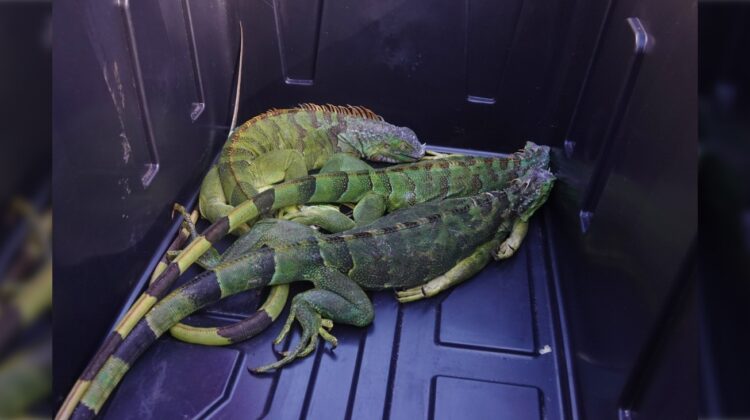
South Floridians woke up to an unsettling and surreal sight: green iguanas scattered across yards, sidewalks, driveways, and even roadways, motionless as if frozen in place. The rare cold snap that swept across the region pushed temperatures to record lows, stunning the invasive reptiles and leaving them temporarily incapacitated.
By 8:50 a.m. Sunday—just minutes before the Florida Fish and Wildlife Conservation Commission (FWC) opened its Sunrise drop-off site—John Bridgman and his wife, Lindsey, were already waiting with a trash bag containing nearly two dozen cold-stunned iguanas.
A Rare Opportunity for Removal
In response to the extreme weather, the FWC opened five designated drop-off locations across South and Southwest Florida on Sunday and Monday. For a limited time, residents were allowed to collect live, cold-stunned green iguanas from the wild without a permit, an exception made possible by an executive order tied to the cold event.
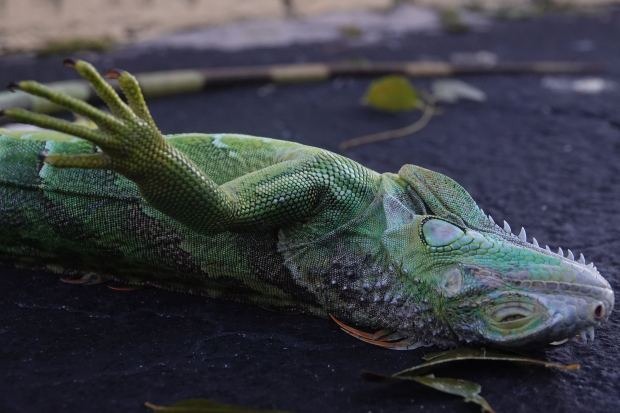
According to the FWC, when temperatures fall to near-freezing or below for sustained periods, reptiles and amphibians—including nonnative green iguanas—enter a biological state known as torpor. In this condition, they temporarily lose muscle control and appear frozen, though they are not dead.
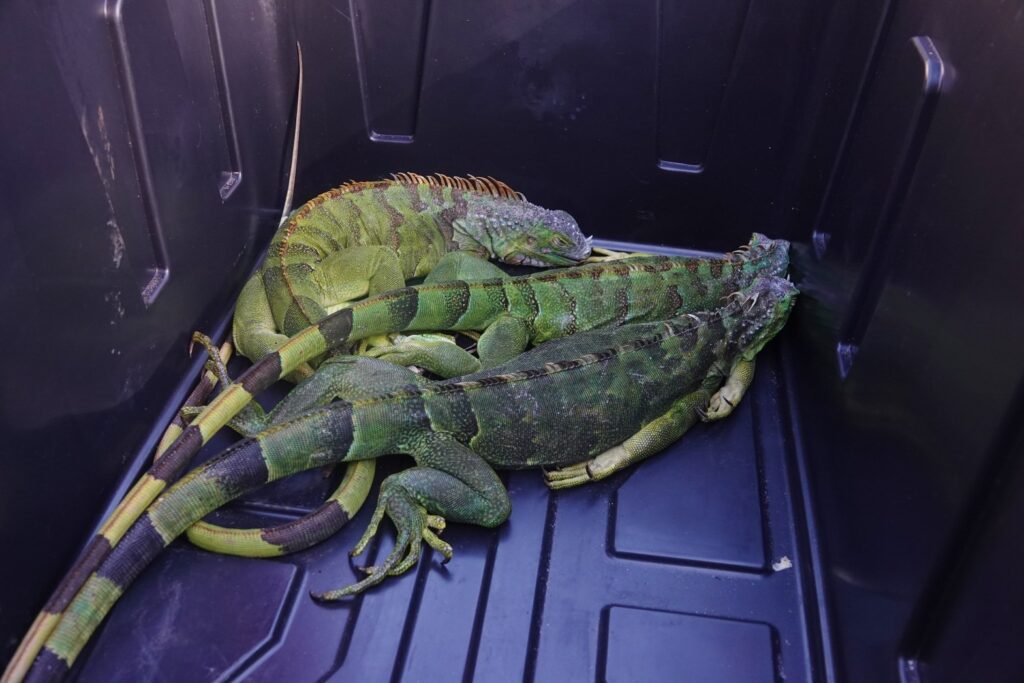
“We got a few babies—one was pretty big,” Bridgman said. “We walked around our yard, and others had just fallen into the road or onto sidewalks in our community.”
Residents Step In as Iguanas Fall From Trees
Bridgman, a native New Yorker who has lived in Florida for 24 years, said he typically places cold-stunned iguanas in the sun to warm up. This year, however, the official FWC notice changed his approach.
“Our HOA usually hires someone to catch them because of the damage they cause—especially around the pool,” he explained. “I’m an outdoorsman, and this felt like a way to help the state.”
He wasn’t alone. Throughout Sunday, hundreds of residents arrived at drop-off locations carrying iguanas in trash bags, plastic bins, garbage cans, and storage tubs.
The cold snap created a rare window for safely capturing green iguanas, which have aggressively invaded South Florida neighborhoods. The reptiles are known for destroying landscaping, undermining seawalls, and contaminating swimming pools.
Managing an Invasive Species
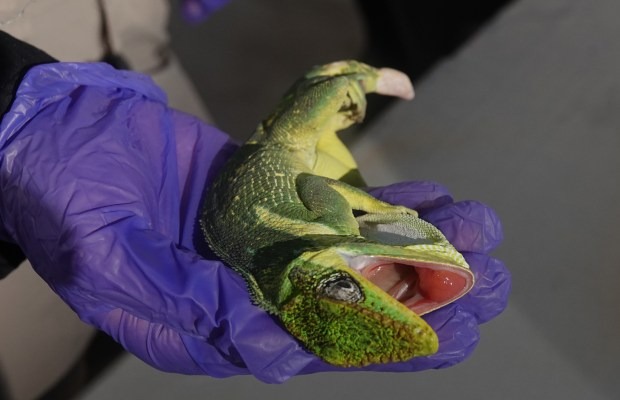
The FWC’s emergency order allowed residents to bring captured iguanas to designated locations for humane killing or, in some cases, transfer to licensed permit holders for live-animal sales.
Tyler Dawson, originally from Canada, arrived at the Sunrise site with five iguanas packed into a milk crate. He had collected them along Orange Drive in Davie, a corridor where the reptiles are commonly seen darting across bike paths.
FWC staff, including Brayden Carr, carefully transferred the animals into cloth sacks for processing.
Across the tri-county area, social media quickly filled with photos and videos showing frozen iguanas draped over fences, sprawled across lawns, and scattered along streets—some having fallen directly from trees. Several clips showed puzzled dogs cautiously approaching the immobile reptiles.
A Stark Reminder of Florida’s Fragile Balance
While the scenes were startling, wildlife officials emphasized that cold snaps like this offer a rare and effective moment to address Florida’s invasive species problem. Green iguanas thrive in warm climates, and sudden freezes expose how vulnerable—and widespread—the population has become.
As temperatures rise, surviving iguanas will regain mobility, returning to trees, canals, and neighborhoods. But for a brief moment, nature provided a pause—and a reminder of the delicate balance between Florida’s ecosystem, human development, and invasive wildlife.
The frozen iguanas scattered across Florida’s streets weren’t just a strange weather anomaly. They were a visible signal of how deeply nonnative species have embedded themselves into the landscape—and how quickly the environment can shift the rules of survival.
Leave a Reply