
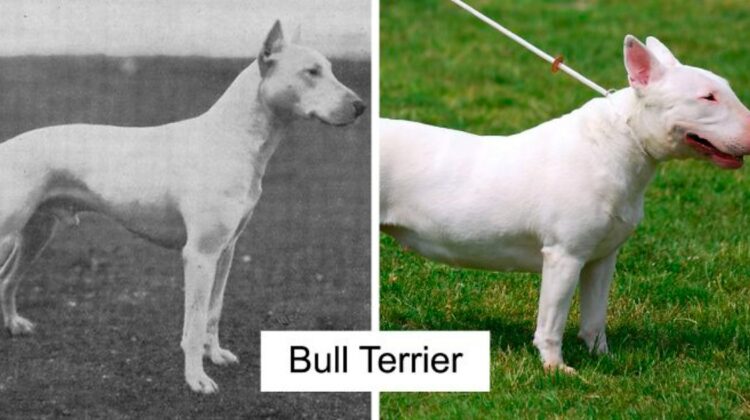
The Bull Terrier is one of the most recognizable dog breeds today, known for its distinctive egg-shaped head, muscular build, and playful personality. However, the dogs we see in modern show rings and homes look very different from their early 20th-century ancestors. Over the past 100 years, human intervention through selective breeding has profoundly reshaped the breed, creating a transformation that is both striking and instructive for dog enthusiasts.
Early Bull Terriers were leaner, with longer muzzles, slimmer bodies, and an athletic, agile appearance. These dogs were bred for functionality, including guarding and dog fighting, which required endurance, speed, and strength. Their physical structure reflected this working heritage, with longer legs and a more proportional head that allowed for optimal performance.
As dog shows gained popularity in the 1900s, breeders began to emphasize appearance over function. The focus shifted toward a more distinctive look, favoring a curved, egg-shaped head, a broader chest, heavier musculature, and shorter legs. This slow, deliberate shift created the modern Bull Terrier silhouette—a dog that is visually striking and easily recognizable, but quite different from the lean, athletic dogs of a century ago.
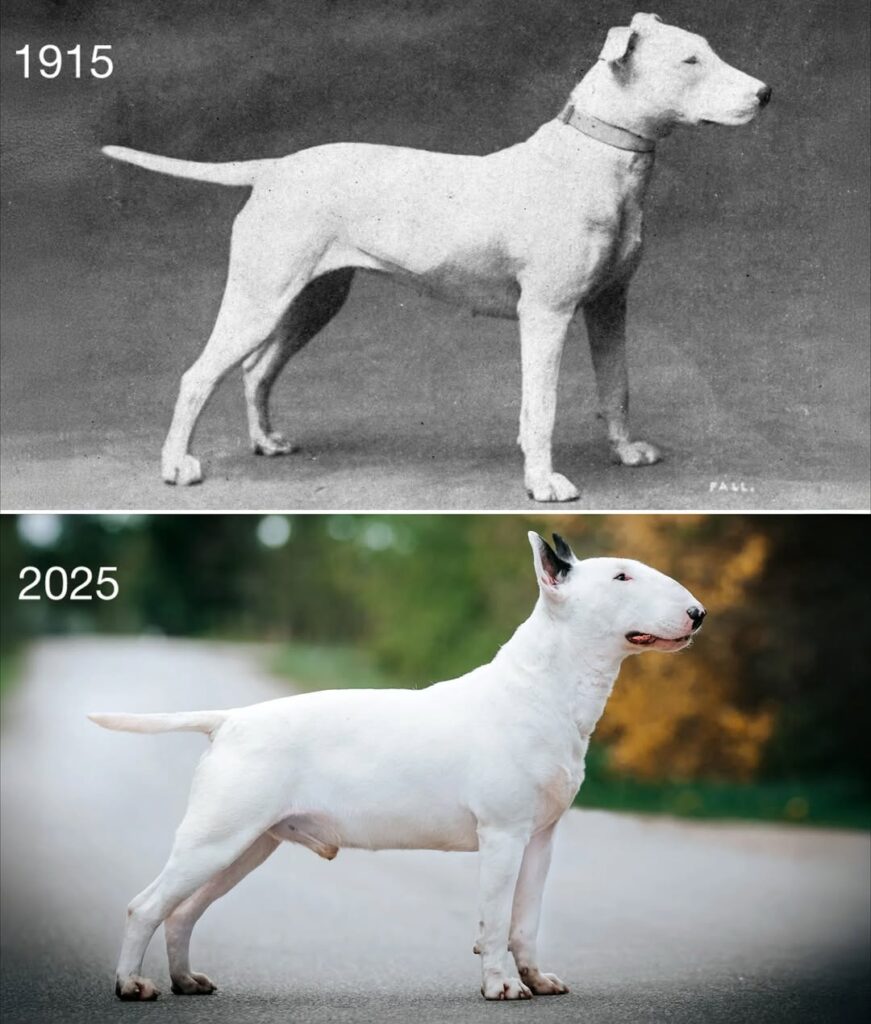
The evolution of the Bull Terrier illustrates the power of selective breeding, human preferences, and show standards in shaping dog breeds. While some purists lament the loss of the original athletic build, others celebrate the unique personality and charm of the modern breed. Today’s Bull Terriers are often described as playful, affectionate, and courageous, traits that have been carefully preserved even as physical characteristics changed.
Studying this transformation provides valuable insights into canine genetics, breed standards, and the ethics of selective breeding. It also highlights the delicate balance breeders must strike between aesthetic goals, health considerations, and the natural abilities of the dogs. Understanding the history of the Bull Terrier allows enthusiasts, trainers, and prospective owners to appreciate both the beauty and the complexity of this iconic breed.
From a historical perspective, the century-long transformation of the Bull Terrier is more than just a change in appearance; it reflects broader trends in dog breeding, human influence on animal genetics, and cultural preferences in companion animals. By comparing early photographs with modern examples, one can clearly see how intentional breeding choices have created a breed that is visually unique while still retaining elements of its original strength and character.
Leave a Reply