
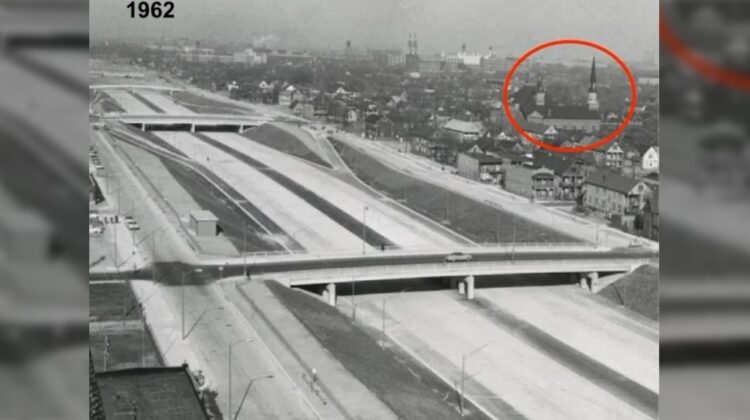
Sometimes, a single image is enough to expose decades of urban damage.
A recent throwback post on Reddit has reignited public anger over one of the most controversial chapters in American city planning: the destruction of walkable neighborhoods to make way for massive highway systems.
A Tale of Two Photos — and a Lost Community
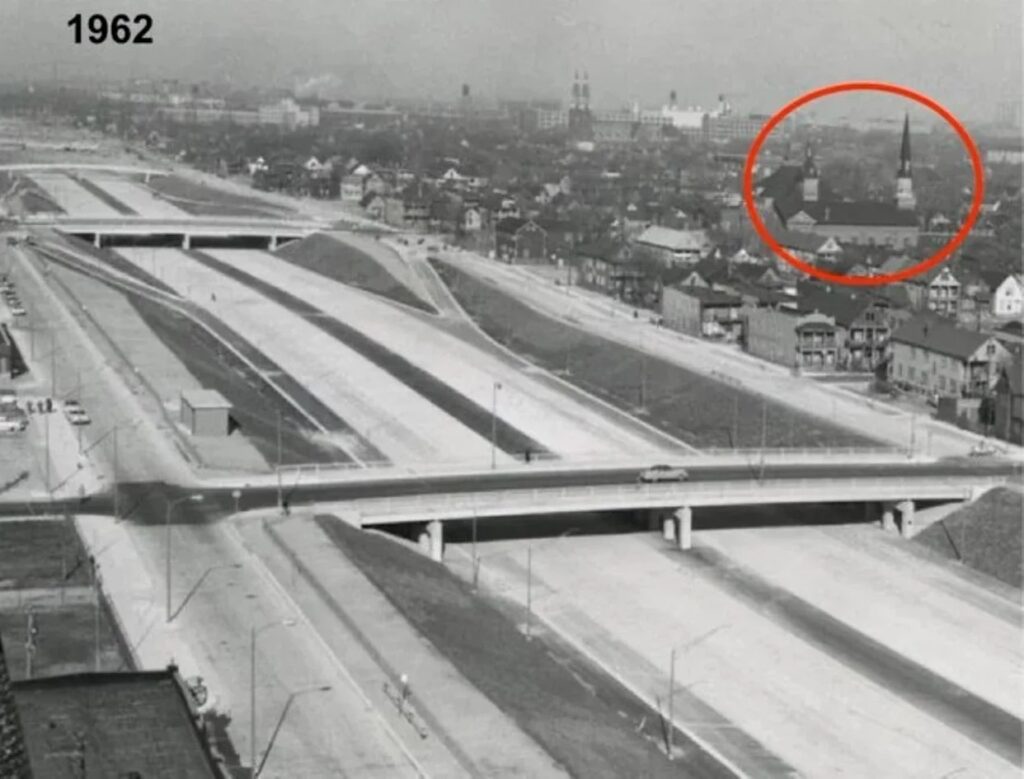
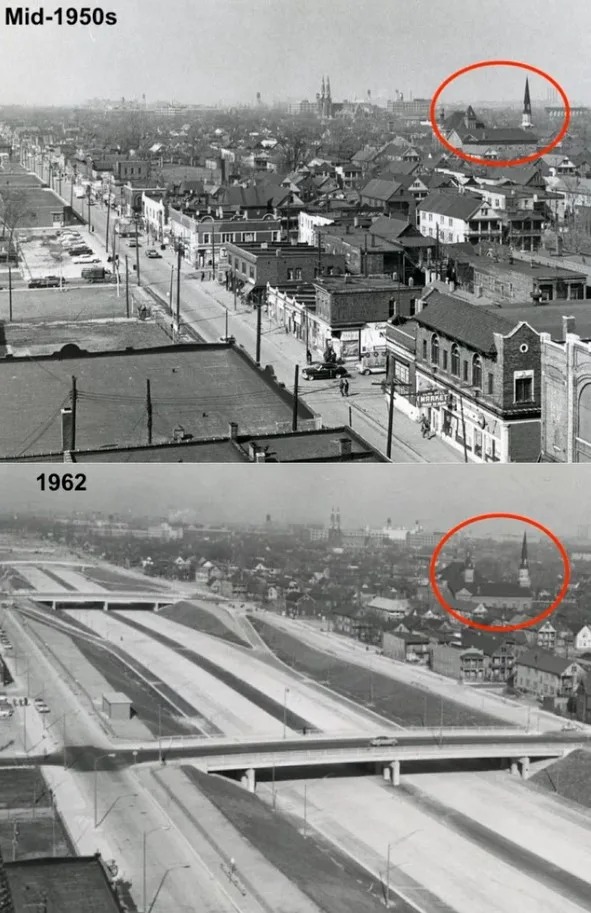
Shared on r/UrbanHell, a subreddit dedicated to highlighting urban design failures, the post compares two images of the same Detroit neighborhood — one from the mid-1950s and another from 1962.
In the earlier photo, the neighborhood appears alive and human-scaled. People walk along a wide sidewalk, buildings line the street, and the area feels connected and livable.
The second image tells a very different story. By 1962, the neighborhood has been consumed by an enormous highway system. The sidewalk is gone. The people are gone. What remains is concrete, asphalt, and an unmistakable sense of loss.
Above the images, a stark headline reads:
“The Destruction of American Cities — Detroit Edition.”
A Nationwide Pattern of Displacement
This transformation wasn’t unique to Detroit.
According to History.com, the U.S. Department of Transportation estimates that more than 475,000 households — representing over one million people — were displaced due to federal highway construction programs, primarily between 1950 and 1970.
These projects were often pushed through under the banner of progress, but their long-term consequences continue to ripple through American cities today.
How Highways Harm Communities
Large highway systems fundamentally alter urban life.
From a community perspective, they:
- Disrupt walkable, pedestrian-friendly landscapes
- Inflate property values in some areas while devastating others
- Eliminate small, locally owned businesses
- Disproportionately impact already marginalized communities
Cities designed for walking allow residents to save money, stay healthier, and remain socially connected. When highways replace neighborhoods, people are forced into car dependency — even if they never needed a vehicle before.
Data shows that owning a car costs the average American nearly $10,000 per year, a financial burden many families are pushed into by infrastructure choices made decades ago.
Environmental Damage That Still Adds Up
The environmental cost is just as severe.
Highways bring:
- More cars
- Fewer trees
- Increased air and noise pollution
According to the U.S. Environmental Protection Agency, transportation is responsible for 29% of total greenhouse gas emissions, making it the largest contributing sector. Nearly 60% of those emissions come from the same passenger vehicles millions of Americans rely on daily.
Highway expansion also devastates wildlife, causing habitat loss, fragmentation, and fatal vehicle collisions, further destabilizing local ecosystems.
Public Reaction: Anger, Sarcasm, and Grief
The Reddit comments captured the emotional weight of the images.
“This is such a shame,” one user wrote. “That street looks so much more inviting and alive.”
Another added sarcastically:
“Of course you have to destroy those ugly buildings. Where else are you gonna build these beautiful highways?”
One commenter summed it up bluntly:
“Nothing more American than bulldozing existing neighborhoods for a highway.”
A Lesson Cities Are Still Learning
These images serve as a reminder that infrastructure decisions shape not just traffic flow — but health, equity, the environment, and the soul of a city. As modern urban planners push for walkable neighborhoods, public transit, and green spaces, the mistakes of the past stand as powerful warnings.
Why Sustainable Urban Planning Is Becoming a High-Stakes Investment
As cities confront rising emissions, housing costs, and public health challenges, smart urban design has become a critical economic and environmental priority. Investments in public transportation, green infrastructure, walkable communities, and climate-resilient development are now essential tools for reducing long-term costs, improving quality of life, and creating sustainable urban economies.
Leave a Reply