
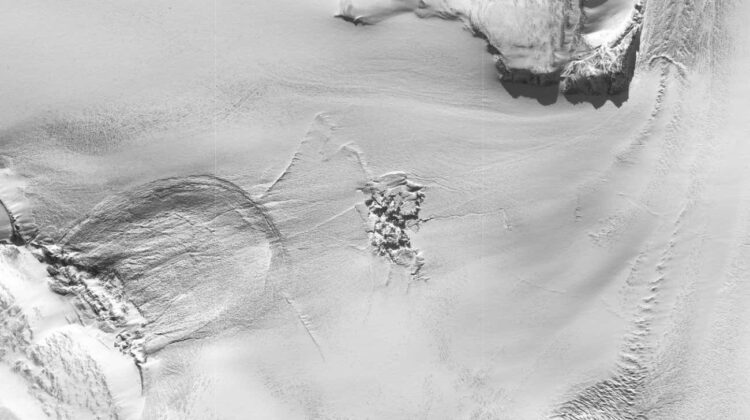
Satellite images have revealed a remarkable and unprecedented event: a subglacial lake erupting through the surface of the Greenland ice sheet — a phenomenon never witnessed before and possibly linked to rising global temperatures.
Under normal circumstances, as Greenland’s glaciers melt, the water drains down to the bedrock and then flows outward toward the ocean. But something entirely different happened in 2014. A massive torrent of meltwater from beneath the ice didn’t follow the usual path — instead, it exploded upward through the surface, leaving behind dramatic damage: 25-metre-high mounds of ice and deep, jagged crevasses carved into the landscape.
“We haven’t observed anything like this before,” said Malcolm McMillan of Lancaster University in the UK. “We know that lakes beneath Greenland drain. But what we’ve never seen before is this fracturing and the water actually erupting through the surface of the ice sheet.”
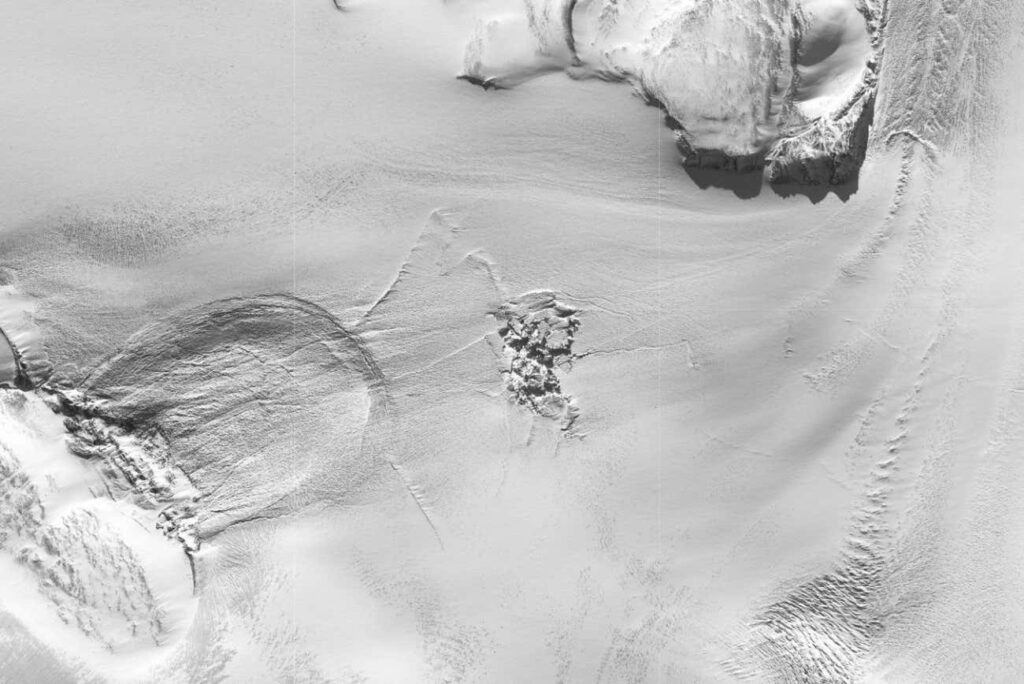
The eruption first caught scientists’ attention when satellite data from August 2014 showed a sudden appearance of a massive crater — 85 metres deep — in the ice. Curious about this bizarre formation, McMillan and his colleagues used satellite imagery and advanced modeling to reconstruct what had occurred.
Their findings revealed that the crater formed after the subglacial lake rapidly drained over a span of just 10 days in July and August 2014. Roughly 1 kilometre downstream, the team spotted a violent disturbance in the ice, marking the area where the trapped water had finally broken free.
According to their research, immense pressure had built up in the subglacial lake, likely due to the surrounding ice being frozen solid to the underlying bedrock. This created a kind of pressure cooker effect, eventually forcing the meltwater to fracture upward through the ice and erupt at the surface — a previously unseen event that left behind towering ice formations and massive crevasses.
“What seems to have happened here is that when you put water into a situation where the ice was kind of frozen in the surrounding region, you could actually build up a lot more pressure, and you could cause this unexpected effect,” McMillan explained.
Now, McMillan and his team are working to determine whether this type of eruption has occurred elsewhere by analyzing more satellite data — and whether such events are becoming more likely due to the accelerated melting of the ice sheet as global temperatures rise.
“This is a first view of a new phenomenon that we didn’t know existed before,” said McMillan. “And the challenge now is to understand the implications and the processes of that.”
This discovery marks a significant step in understanding the dynamic and increasingly unstable behavior of Greenland’s ice — and may offer a stark warning about what’s to come as the planet continues to warm.
Leave a Reply