
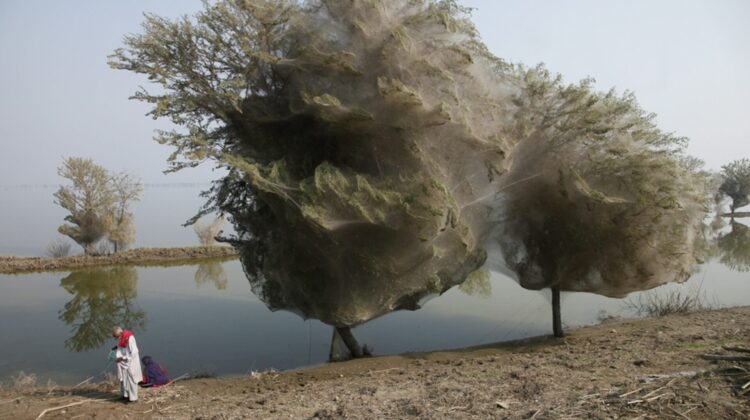
Imagine looking up at the sky and instead of raindrops, seeing millions of tiny spiders drifting down on silken threads. This was the astonishing scene in southern Australia’s Southern Tablelands, where locals recently reported what looked like “snowfall” — but made entirely of spider silk.
What Is Mass Ballooning?
The phenomenon, known as mass ballooning, happens when countless spiders release silk strands that catch the wind and lift them high into the air. Once airborne, the arachnids ride invisible currents to new destinations, sometimes traveling for miles before gently falling back to earth.
Unlike the giant orb-weavers or tarantulas that fuel nightmares, these sky-faring spiders are tiny adults, often from the sheet-web weaver or money spider families. They are almost weightless, making them perfect “aerial plankton.”
Why Do They Do It?
Scientists aren’t entirely sure what triggers ballooning on such a massive scale. But one thing is clear: the behavior is survival-driven. Spiders crawl to high points — fence posts, tall plants, even rooftops — and release threads that act like parachutes in reverse, pulling them skyward.
Most of the airborne travelers never make it. Many fall victim to predators, bad weather, or exhaustion. But those that do survive become pioneers, repopulating new areas and restoring balance to ecosystems devastated by floods, fires, or farming.
Australia’s “Spider Snowfall”
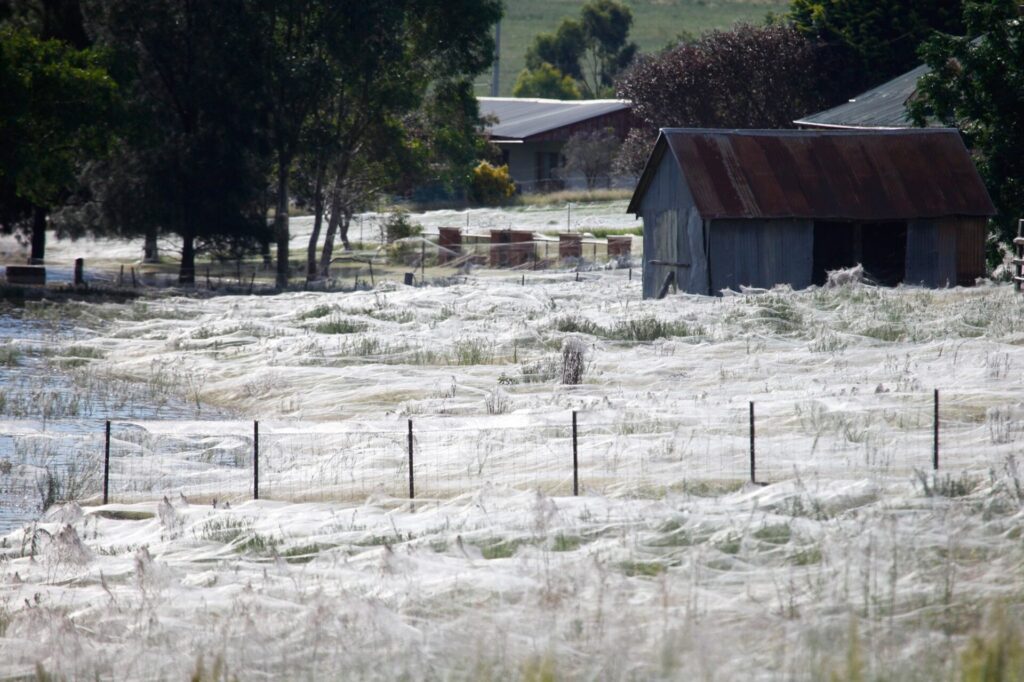
To locals, the sight of entire fields, trees, and fences draped in white silk can be unnerving. Keith Basterfield, a resident of Goulburn, described it as “seeing spiderwebs falling from the sky, almost like snow.”
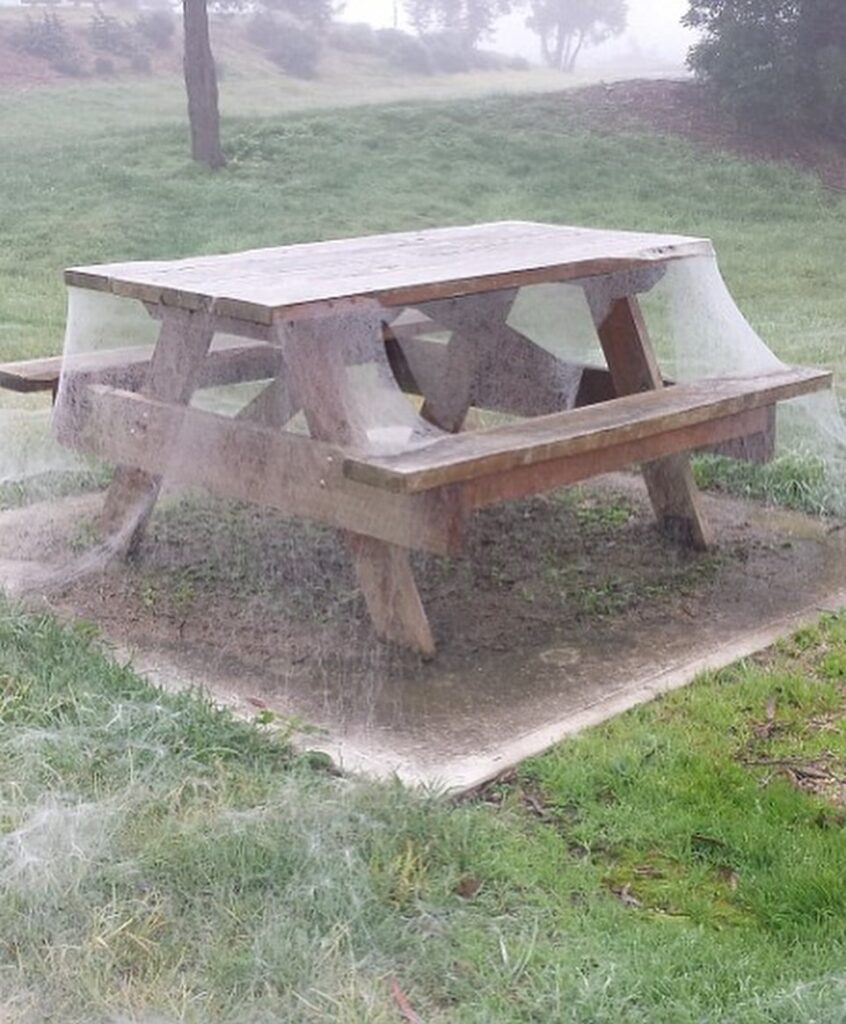
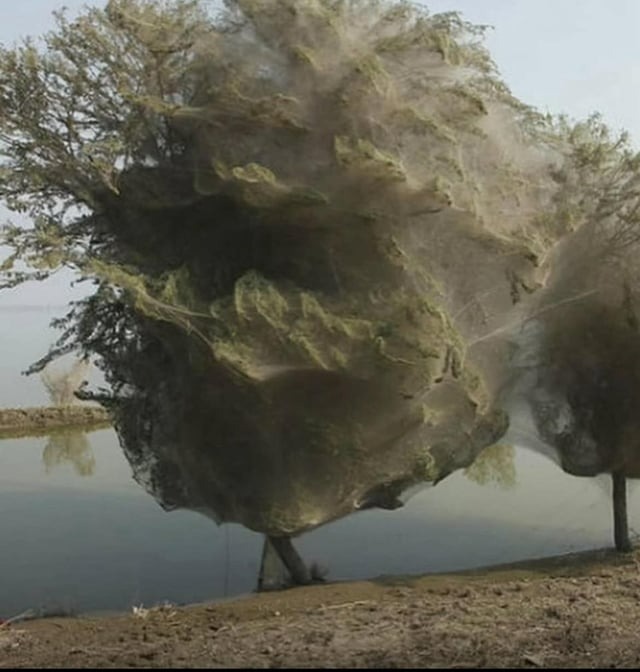
This is not the first time Australia has experienced such spectacles. In 2012, heavy rains triggered a ballooning event that left acres of land covered in shimmering sheets of silk. Experts explained that it allowed spiders to escape rising floodwaters and survive in higher, safer terrain.
Nature’s Master Weavers
While unsettling for arachnophobes, ballooning showcases the versatility of spider silk — one of nature’s greatest evolutionary breakthroughs. The threads are strong, elastic, and remarkably adaptable, serving as tools for hunting, shelter, and even flight.
Entomologist Robert Matthews once described ballooning webs as a “vast trampoline” that keeps spiders alive when fleeing floods. Other researchers emphasize that ballooning highlights spiders’ crucial role in restoring biodiversity, since they are often the first creatures to recolonize disturbed landscapes.
Harmless to Humans
Despite their dramatic entrance, mass ballooning spiders pose no threat to people. Their bites are harmless, and their aerial journeys serve as one of nature’s most spectacular — and least understood — survival strategies.
For scientists and nature lovers, the sight of millions of spiders filling the skies is both eerie and awe-inspiring. It’s a reminder that even the smallest creatures have astonishing abilities, hidden until the right moment reveals them.
Leave a Reply