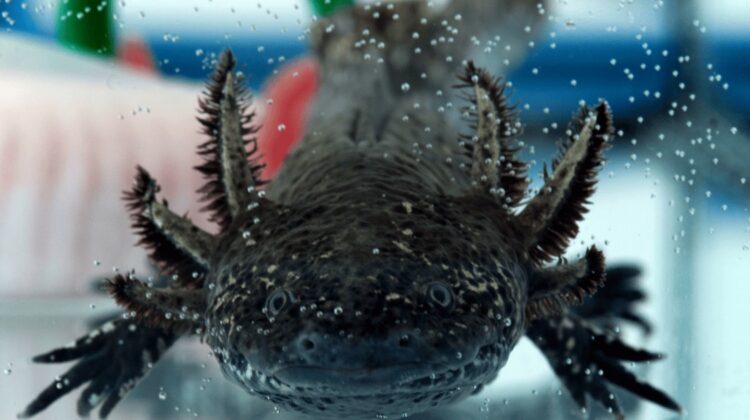
Axolotls are famous for regrowing limbs, organs and even parts of their brains. Now researchers in Germany say the slime on their skin could hold clues to fighting drug-resistant infections and cancer. The findings are early, but they’re intriguing.
Peptides in the Slime
Axolotls (Ambystoma mexicanum) are endangered amphibians native to the lakes and canals around Mexico City. Their skin mucus contains antimicrobial peptides, short chains of amino acids that are part of the immune system of nearly all living things and help protect against germs.
A team at Hannover Medical School in Germany, led by biologist Sarah Strauß, analyzed peptides from the mucus of axolotls bred in the lab. The study was published in the journal PLOS ONE in early 2025.
From Thousands to Four
The researchers identified thousands of candidate peptides and used a prediction tool to rank them, then synthesized 22 of the most promising. They tested them against methicillin-resistant Staphylococcus aureus (MRSA), a drug-resistant bacterium, and against a line of breast cancer cells.
Four of the 22 peptides significantly inhibited MRSA, and in some cases the team said they worked better than vancomycin, a reserve antibiotic used when other drugs fail.
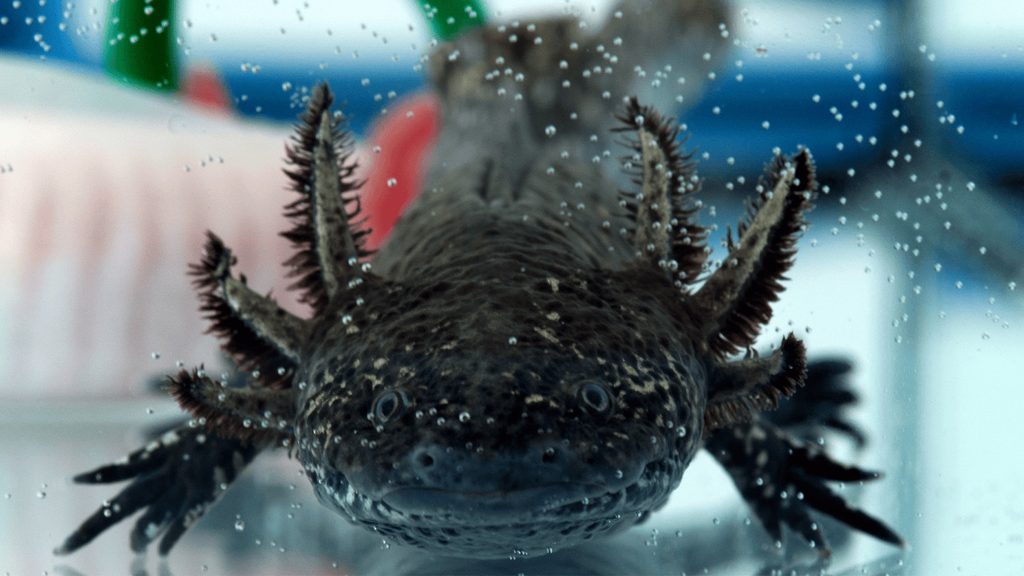
A Surprise: Cancer Cells
Three of those four peptides also showed activity against cancer. In a cell culture, they triggered programmed cell death in breast cancer cells. “We observed that the peptides specifically kill cancer cells without attacking healthy breast tissue cells,” Strauß said.
The researchers also found that in treated cancer cells, tumor-suppressor genes were switched on more and cancer-driving genes less.
Why Peptides Matter
Peptides attach to the surface of bacteria and can punch holes in the cell wall or bind to key molecules, killing the microbe. Because they work differently from many antibiotics, scientists hope bacteria will find it harder to develop resistance. The challenge is producing them: the team said they’re expensive and time-consuming to make, and harder to produce in microorganisms than some antibiotics.
What the Study Doesn’t Show
The results come from lab dishes, not from animals or people. The cancer experiments used a single breast cancer cell line, and the researchers say more studies are needed to confirm the findings. There is no treatment yet, and nobody should expect axolotl-derived drugs soon. The study is best seen as a promising first step.
Axolotls Themselves Are at Risk
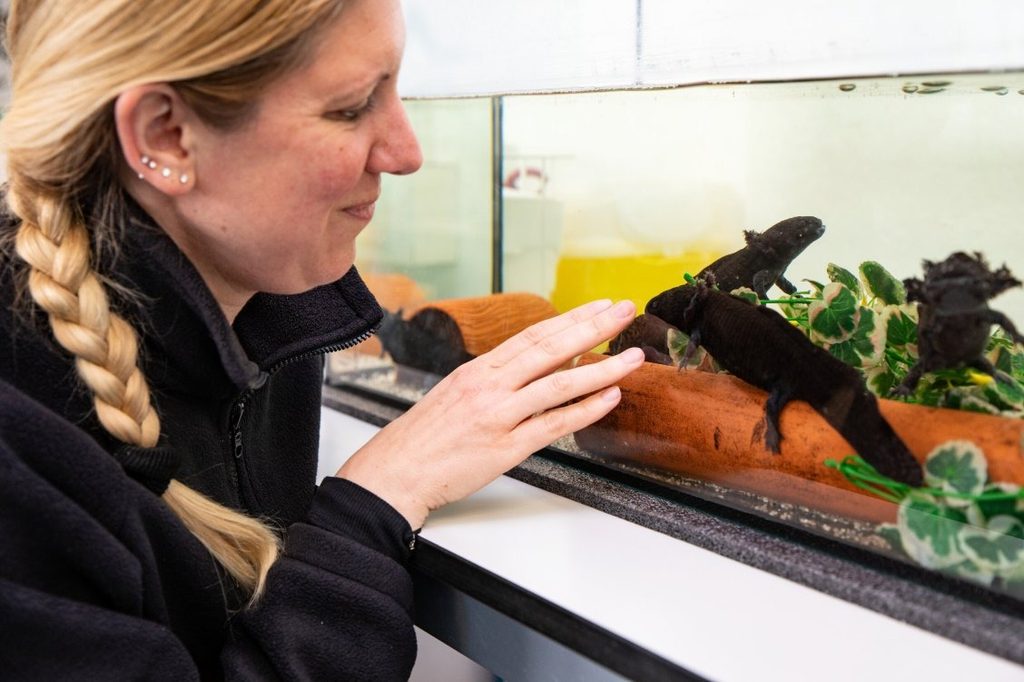
Wild axolotls are threatened by habitat loss, pollution and invasive predators in their tiny range near Mexico City. The animals used in this study came from captive breeding.
Support Science and Conservation
If this research interests you, there are a few ways to get involved:
- Support conservation. Compare axolotl conservation charities and wildlife donation programs.
- Visit Mexico City. Compare Xochimilco boat tours and Mexico City travel packages.
- Fund research. A donation to cancer research helps early-stage science.
- Keep an axolotl? Browse axolotl aquarium kits, water conditioners and tank filters, and buy only from responsible breeders.
- Plan for health costs. Compare health insurance plans and critical illness cover.
Frequently Asked Questions
What did the study find? Four peptides from axolotl mucus inhibited MRSA in the lab, and three of them also triggered cell death in breast cancer cells.
Is this a cure for cancer or MRSA? No. The results come from lab experiments, and more research is needed.
Where was it published? In the journal PLOS ONE, by researchers at Hannover Medical School.
Are axolotls endangered? Yes. They are threatened in the wild, and the animals in this study were bred in captivity.
Sources: PLOS ONE, Hannover Medical School, Popular Science, and Bionity, all covering the study of antimicrobial peptides from axolotl skin mucus and their activity against MRSA and breast cancer cells.
Leave a Reply