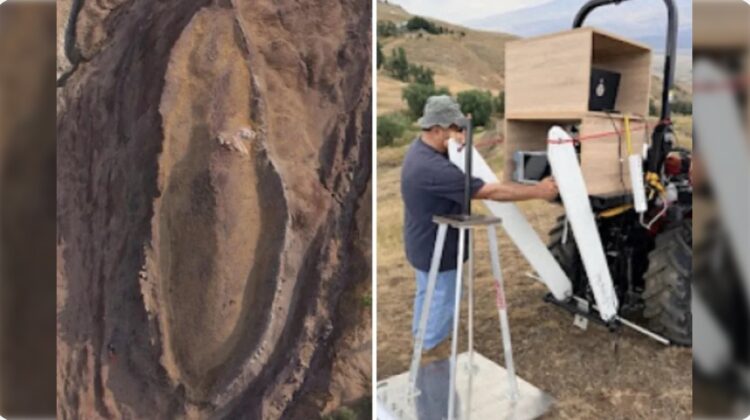
An international research team has released the first footage captured from inside a massive, boat-shaped rock formation in eastern Turkey that some believe could be connected to the biblical account of Noah’s Ark.
What the Video Shows
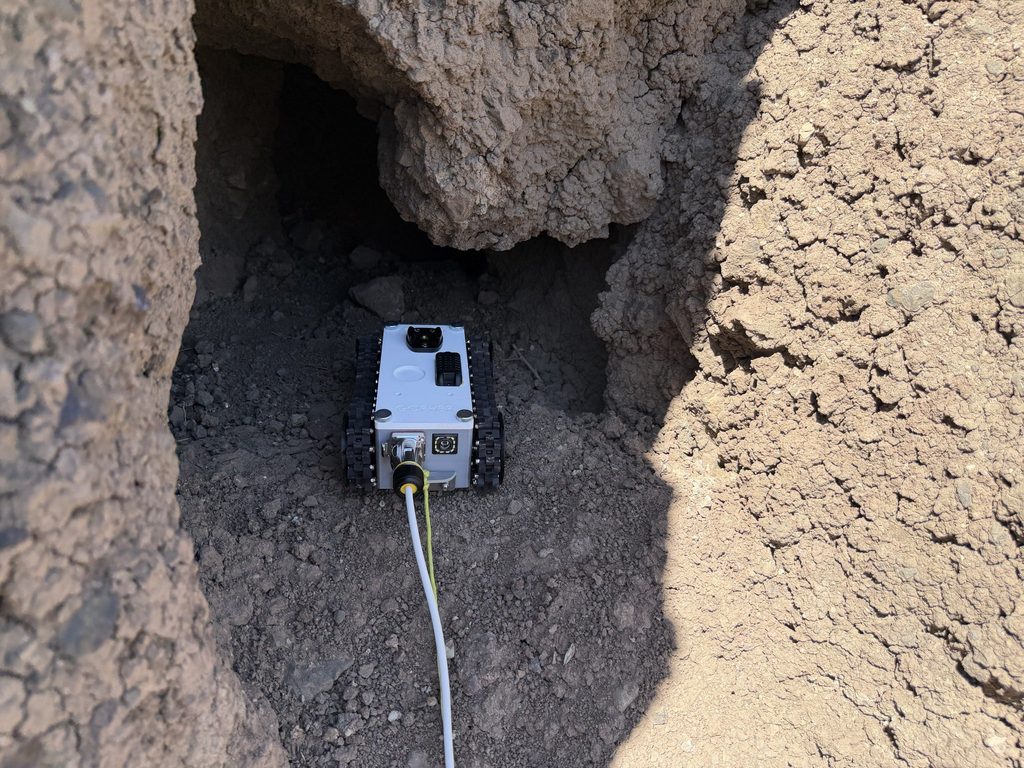
Noah’s Ark Scans, a U.S.-based research organization, shared drone footage on X, calling it the first look at “footage from inside Noah’s Ark.” The video came from Gopher, a custom-built underground exploration robot equipped with a high-resolution camera, designed by Australian engineers to navigate tight spaces without destructive digging.
The robot was lowered into core drilling holes in an attempt to reach mapped voids beneath the formation’s surface. According to the team, the footage supports what earlier radar scans suggested: an absence of solid rock or bedrock inside the structure, a claim that has not yet been independently verified. The drone’s wheels struggled on the loose sediment lining the shafts, and engineers are now modifying its mobility system to better maneuver and film inside the dark interior.
The Site at the Center of the Search
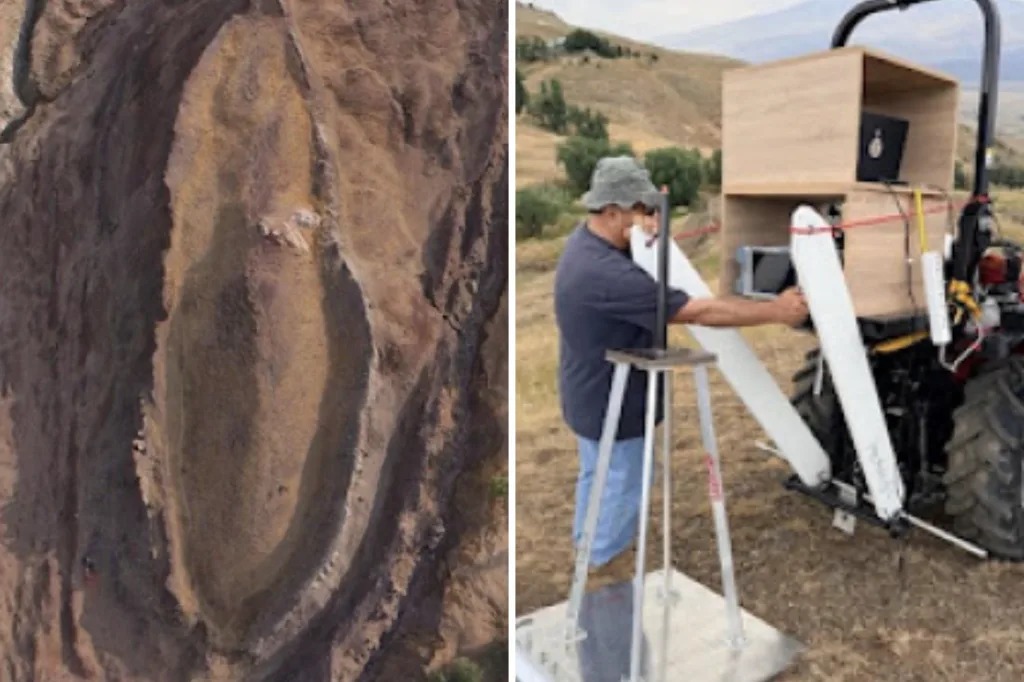
The Durupınar Formation sits roughly 18 to 20 miles south of Mount Ararat, the mountain range Genesis 8:4 names as the resting place of the ark after the biblical flood. Turkish army captain İlhan Durupınar first identified the formation’s distinctive ship-like outline in 1959, following severe rains and earthquakes in the region in 1948.
Andrew Jones, founder of Noah’s Ark Scans and the project’s vice president, has spent years advocating for deeper investigation of the site. “We believe the Durupınar Formation is the remains of Noah’s Ark, and that is exactly why we want to put it through the strongest scientific testing we can,” Jones said.
A Major, Permitted Expedition
The current investigation, running through much of 2026, is directed by archaeologist Professor Cenker Atila of Sivas Cumhuriyet University and involves roughly 20 researchers and students from five countries. The team has used ground-penetrating radar, electrical resistivity tomography, LiDAR, and core drilling to study the formation.
Dr. Khosrow Bakhtar, a veteran radar specialist who led the geophysical survey through his firm Bakhtar Research and Engineering, said preliminary data did not show “a simple homogeneous solid-rock signature.” No clear bedrock boundary has been identified in the deeper radar data processed so far, well below where a shallow rock core would typically appear.
Researchers have drilled core samples to depths of up to about 18 meters, nearly 60 feet, and collected roughly 1,000 soil samples from 150 locations across the site. Jones said the team encountered layers of rich organic material they believe could represent decayed material from the structure’s upper levels, along with an unusually hard layer several meters down that was tough enough to break a drill bit. Outside the formation’s outline, researchers also recovered pottery fragments dating from the Chalcolithic period through the Iron Age, though those finds are separate from the question of what lies beneath the formation itself.
Scientists Remain Divided
The theory that Durupınar holds the remains of the ark has been debated for decades, and not everyone studying the site agrees. A 1996 study by geologist Lorence Collins and explorer David Fasold concluded the formation was “a completely natural rock formation,” dismissing the ark theory as “bogus.” More recently, geologist Andrew Snelling has argued that features seen in geophysical scans could have purely natural explanations.
Jones has acknowledged the limits of the current evidence. “This is a major breakthrough in our ability to investigate what lies beneath this remarkable site,” he said, while stressing that the team’s preliminary field observations still require laboratory analysis before any firm conclusions can be drawn. A more detailed report, along with additional fieldwork, is planned for the coming year.
Visiting Mount Ararat and the Durupınar Site
The renewed attention on Durupınar has also drawn interest from travelers hoping to see the formation in person. The site sits in eastern Turkey’s Ağrı Province, a remote mountainous region accessible by guided day tours from nearby towns, with most operators combining a visit to the formation with stops at other regional landmarks like Ishak Pasha Palace. Because the area borders sensitive military zones, independent travel can be restricted, and most visitors book through licensed local tour operators who handle any required permits. Travel insurance that explicitly covers remote or high-altitude regions is worth checking before booking, since standard policies don’t always include areas near Turkey’s eastern border.
Frequently Asked Questions
Has it been scientifically proven that the Durupınar Formation is Noah’s Ark?
No. Researchers have found preliminary signs the formation may not be solid bedrock, but they have been explicit that laboratory analysis of collected samples is still pending, and there is no scientific consensus confirming any connection to a biblical vessel.
What is the Gopher drone used in the investigation?
It’s a custom-built underground exploration robot, named for the “gopher wood” mentioned in Genesis, designed to travel through narrow boreholes and capture video and samples from spaces too small or unstable for human access.
Why do some scientists dispute the Noah’s Ark theory for this site?
Earlier research, including a 1996 geological study, concluded the formation is a naturally occurring rock structure, and some geologists maintain that unusual radar readings can be explained by natural geological processes rather than a buried structure.
Can the public visit the Durupınar Formation?
Yes, it is accessible via guided tours from towns near Mount Ararat, though the formation sits close to a sensitive border region, so most visitors go through licensed tour operators familiar with local access requirements.
Sources: The Debrief, Technology Magazine, Ground News, Euro Weekly News, and Politis, all citing Noah’s Ark Scans, Dr. Khosrow Bakhtar, and Professor Cenker Atila of Sivas Cumhuriyet University.
Leave a Reply