
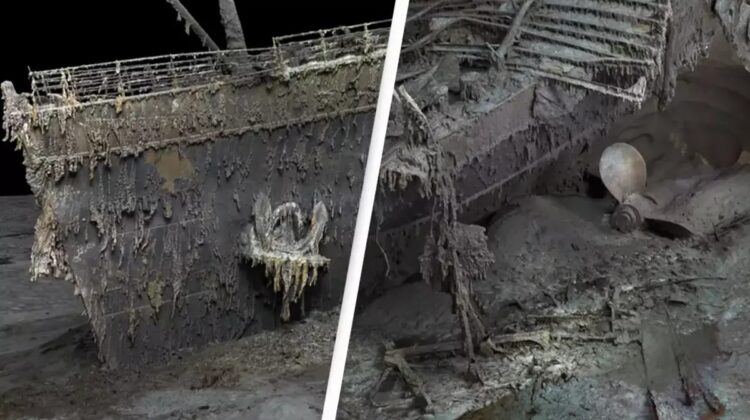
An expert has weighed in on why passenger remains are undiscoverable.
Human remains have never been found inside the RMS Titanic despite an estimated 1,517 people losing their lives in the tragic accident — and the reason why may surprise you.
Whether you’re a history buff, a film fanatic, or self-identify as a nauticalophile (ship-lover), there is something about the RMS Titanic’s wreckage that seemingly fascinates us all.
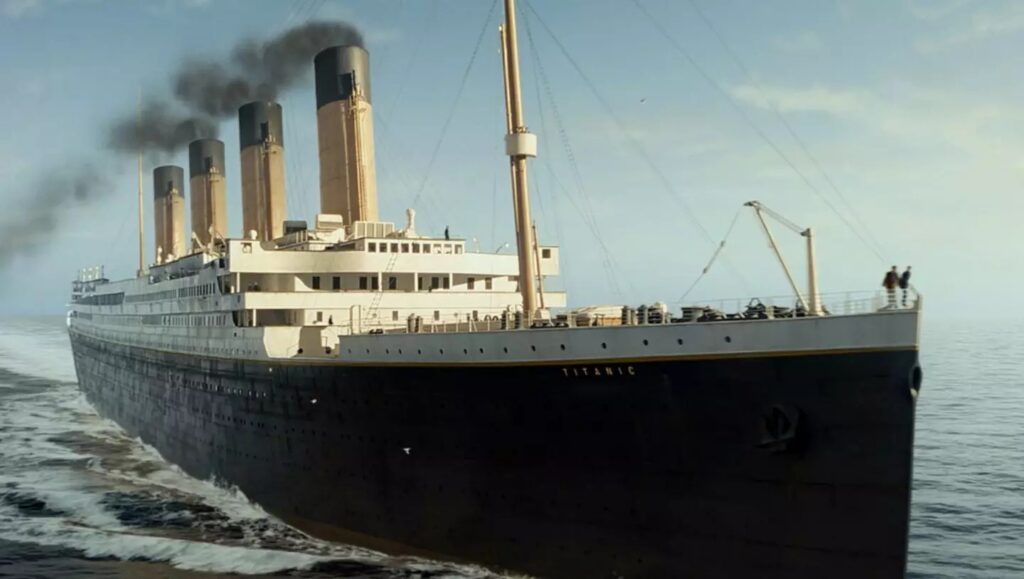
During its maiden voyage, the largest ocean liner in service at the time famously hit an iceberg in the Atlantic Ocean that tore open six of its watertight compartments, exceeding the ship’s design capacity for survival.
The wreck of the Titanic, situated around 325 nautical miles south-southeast off the coast of Newfoundland, lies in two main pieces, situated about 2,000 feet apart.
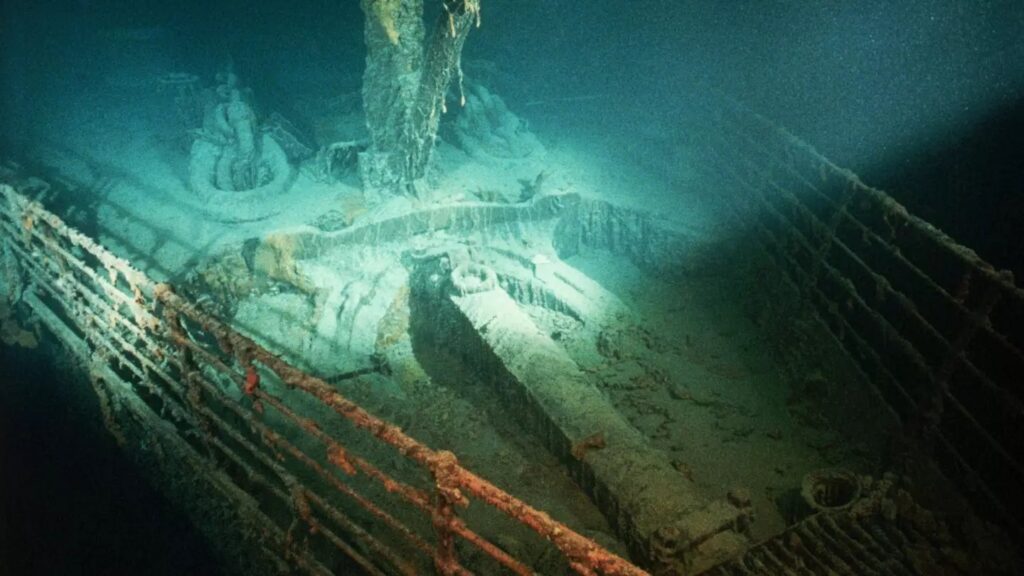
The site has been visited by Academy Award-winning director James Cameron 33 times, according to CNN. However, the Titanic filmmaker has never seen human remains bedded among the furniture and lost treasures.
“We’ve seen clothing. We’ve seen pairs of shoes, which would strongly suggest there was a body there at one point. But we’ve never seen any human remains,” he explained to the New York Times in 2012.
So, why haven’t explorers found any skeletons amid the devastating wreckage? Well, the answer lies in the depth at which the wreckage came to rest — 12,500 feet down in the Atlantic Ocean.
Bacteria in the deep ocean are capable of extracting nutrients from bones, which is why some passenger remains have been removed.
Another reason for the lack of skeletons is down to the chemical composition of the seawater, which changes as you descend into the depths.
Deep-sea explorer Robert Ballard, who first discovered the Titanic’s wreck in 1985, explained that below a certain depth, water actually dissolves bones on its own.
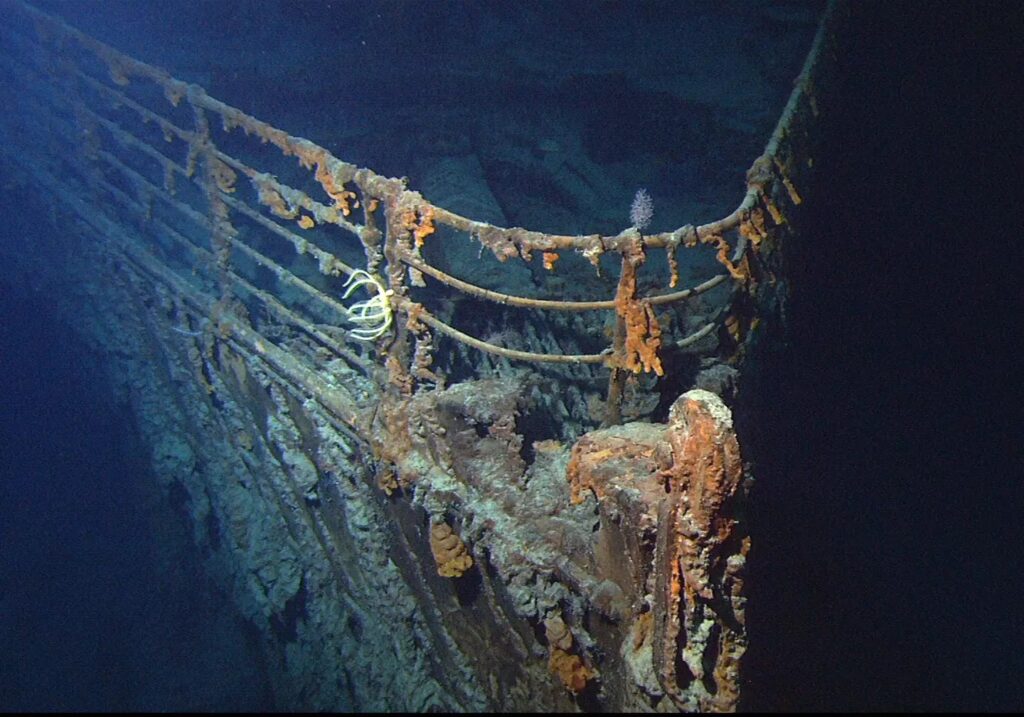
He said: “The water in the deep sea is undersaturated in calcium carbonate, which is mostly, you know, what bones are made of.
“For example, on the Titanic and on the Bismarck, those ships are below the calcium carbonate compensation depth, so once the critters eat their flesh and expose the bones, the bones dissolve.
“Now, in the Black Sea, because there are no critters to eat, the bones should not be exposed. So you should have perfectly mummified fossils.”
One study found that placing a pig carcass roughly the same size as a human on the seabed resulted in it being reduced to bones in just four days, with bones gone after around six months.
So after more than a century, it’s no surprise there is nothing left. Internet users were left stunned at this realization, with some taking to Reddit to share their surprise.
One person wrote: “I thought they’d be squished into jelly…”
Another said: “Wait, since when do dead people sink?” while a third added: “The sea is human broth, confirmed?”
But while there are no skeletons on the Titanic, there is evidence of the passengers who were once on board in the form of their shoes.
Modern Deep-Sea Technology and the Future of Ocean Exploration
The mystery of the Titanic continues to inspire major advancements in deep-sea exploration technology, marine robotics, and AI-powered underwater drones.
Today, companies invest millions in autonomous submersibles, 3D ocean mapping systems, and environmental monitoring sensors designed to study shipwrecks and protect marine ecosystems.
Experts rely on cutting-edge engineering simulation software, data analytics, and advanced sonar imaging to safely navigate and document deep-ocean environments.
These innovations not only unlock secrets of the past but also drive the future of maritime safety, climate research, and sustainable ocean technology.
If you’re fascinated by ocean exploration or want to learn how AI and robotics are revolutionizing underwater discovery, check out the latest breakthroughs in marine engineering and subsea technology development — where science, safety, and innovation meet beneath the waves.
Leave a Reply