
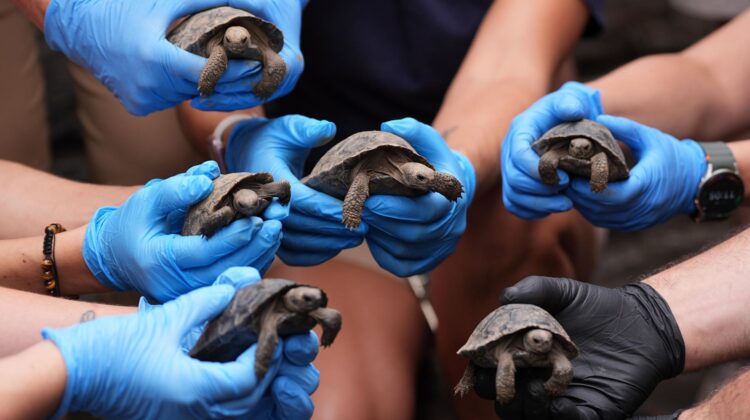
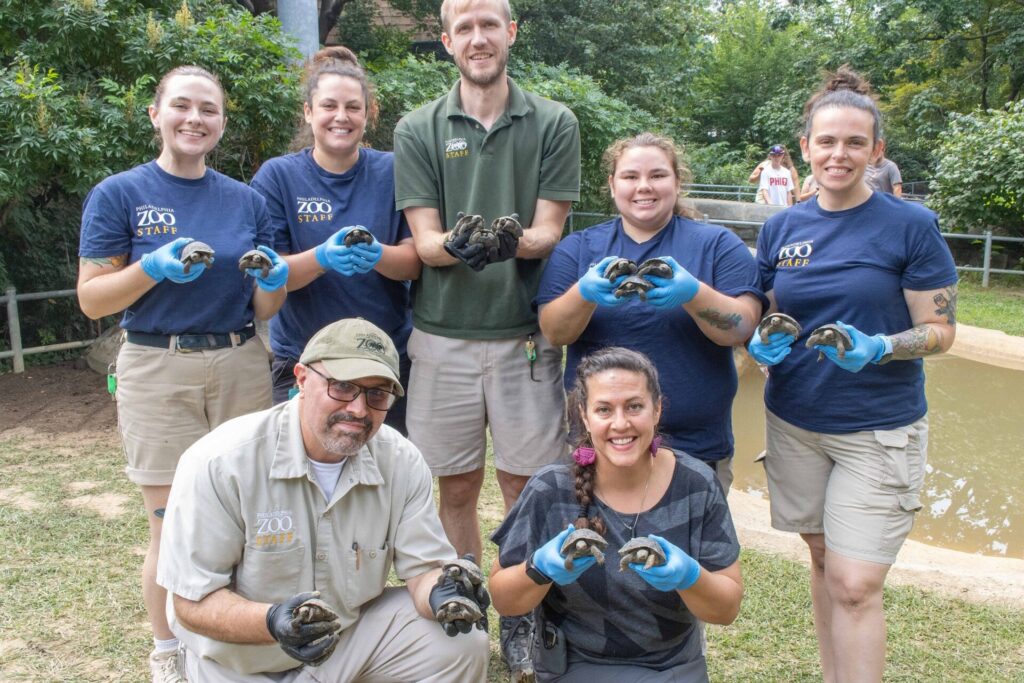
The Philadelphia Zoo is celebrating a once-in-a-lifetime milestone: the birth of 16 critically endangered western Santa Cruz tortoises, all born to a pair of parents estimated to be around 100 years old.
A Historic First for “Mommy”
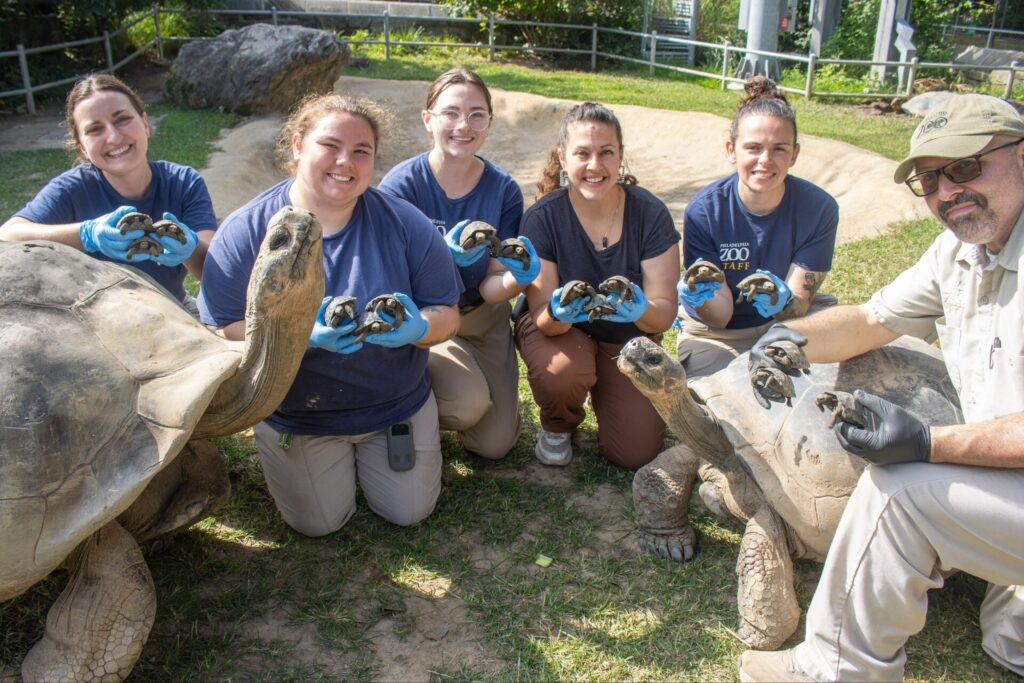
The hatchlings were welcomed this year by “Mommy,” a female tortoise who has lived at the zoo since 1932, and her mate “Abrazzo,” who arrived five years ago from Riverbanks Zoo and Garden in South Carolina. Despite her long residency, Mommy had never produced offspring until now — making these hatchlings her first progeny in nearly a century.
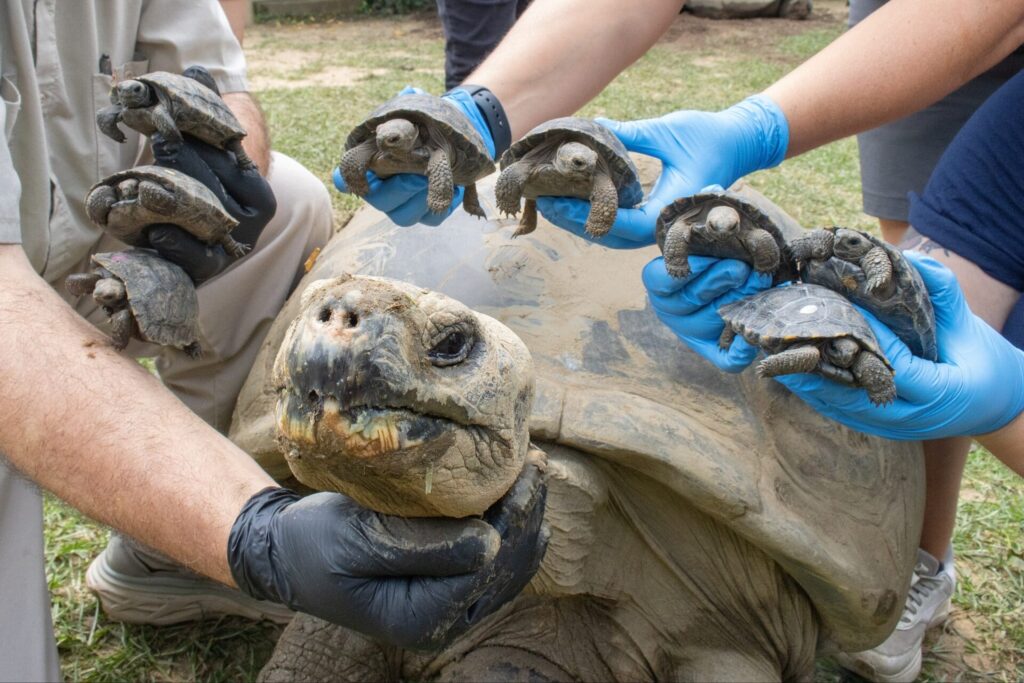
“Now this animal, who’s been in Philadelphia since 1932, will be represented here for, hopefully, another 100 years because her offspring are now part of our collection,” said Lauren Augustine, the zoo’s director of herpetology.
The Golden Girls and More
The hatchlings were born in a series of clutches between spring and summer 2024. Four females were named after characters from the Golden Girls TV series, while others were given unique names such as Zee, James, Colette, Soledad, Isabelle, Roger, Fausto, Caldero, Lee, Marigold Puddlefoot, and Kelpy.
To help staff distinguish between the babies, the zoo uses nontoxic colored nail polish markings on their shells.
Conservation Importance
Western Santa Cruz tortoises are one of 13 species native to the Galápagos Islands off Ecuador. They are the largest species of tortoise, capable of living up to 200 years, and are considered critically endangered.
Both Mommy and Abrazzo are seen as genetically valuable individuals, making their offspring an important win for conservation. The young tortoises will remain at the Philadelphia Zoo for at least a year before being transferred to other accredited facilities as part of international breeding programs.
A Legacy of Giants
The Philadelphia Zoo also houses two giant Aldabra tortoises, Wilma and Betty. Meanwhile, elsewhere in the U.S., a 135-year-old Galápagos tortoise named Goliath at Zoo Miami became a father for the first time earlier this year — proving that for these ancient giants, it’s never too late to contribute to their species’ survival.
Leave a Reply