
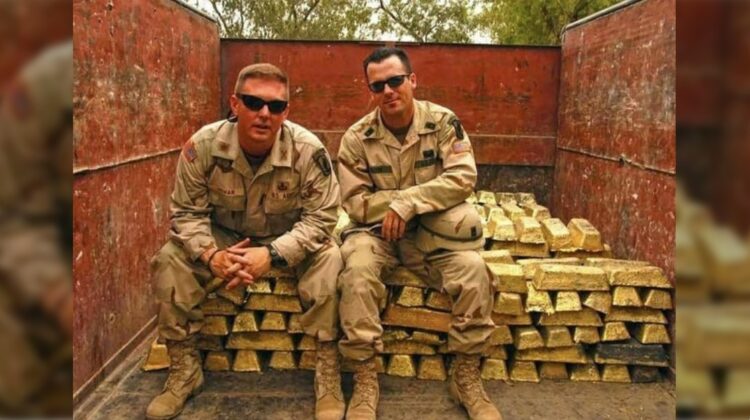
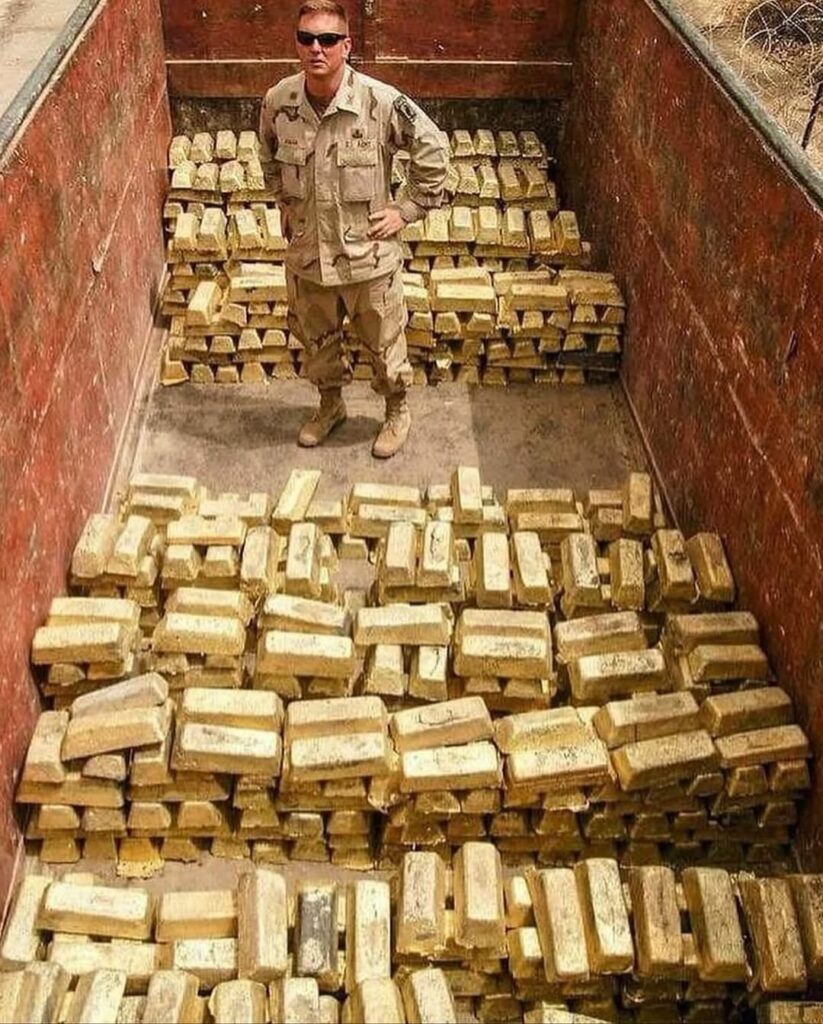
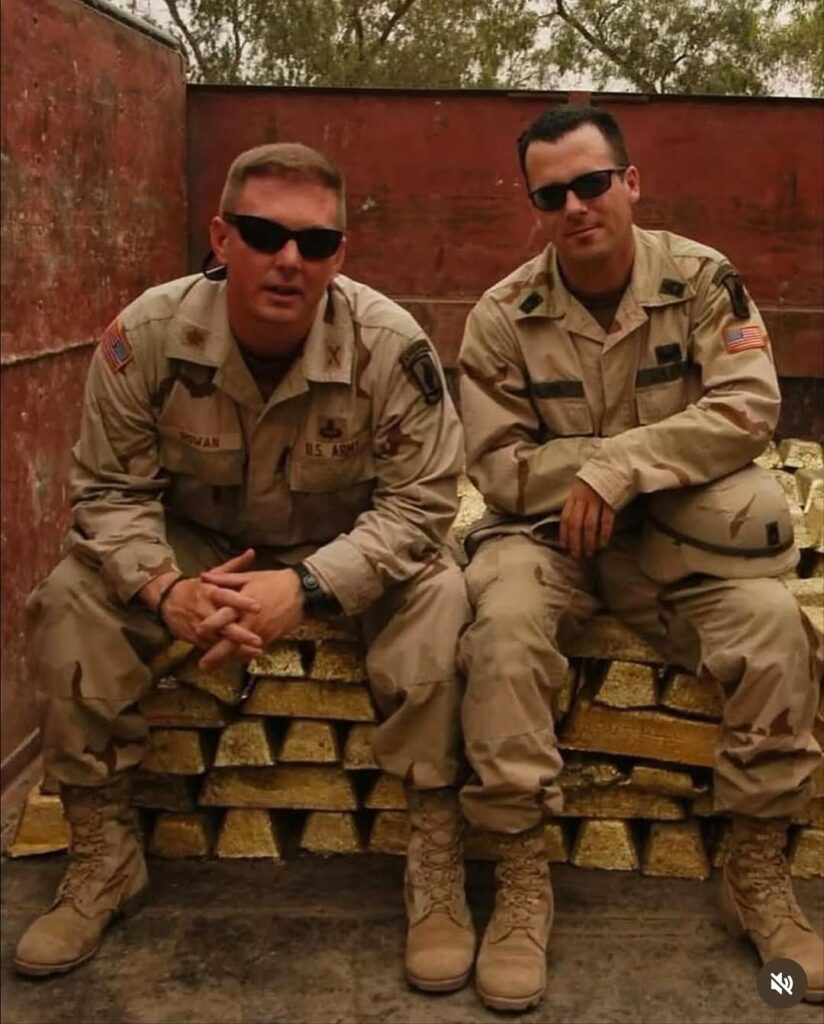
A rare photograph taken in 2003 shows a U.S. soldier from the 173rd Airborne Brigade standing beside stacks of gold bars recovered during the early stages of the Iraq War — a moment that quietly reflects the economic and political collapse unfolding at the time.
As Saddam Hussein’s government rapidly disintegrated, northern Iraq entered a period of chaos marked by looting, power vacuums, and the uncontrolled movement of state assets. During patrol operations near the city of Kirkuk, U.S. forces intercepted trucks that were discreetly transporting large quantities of gold away from secured areas.
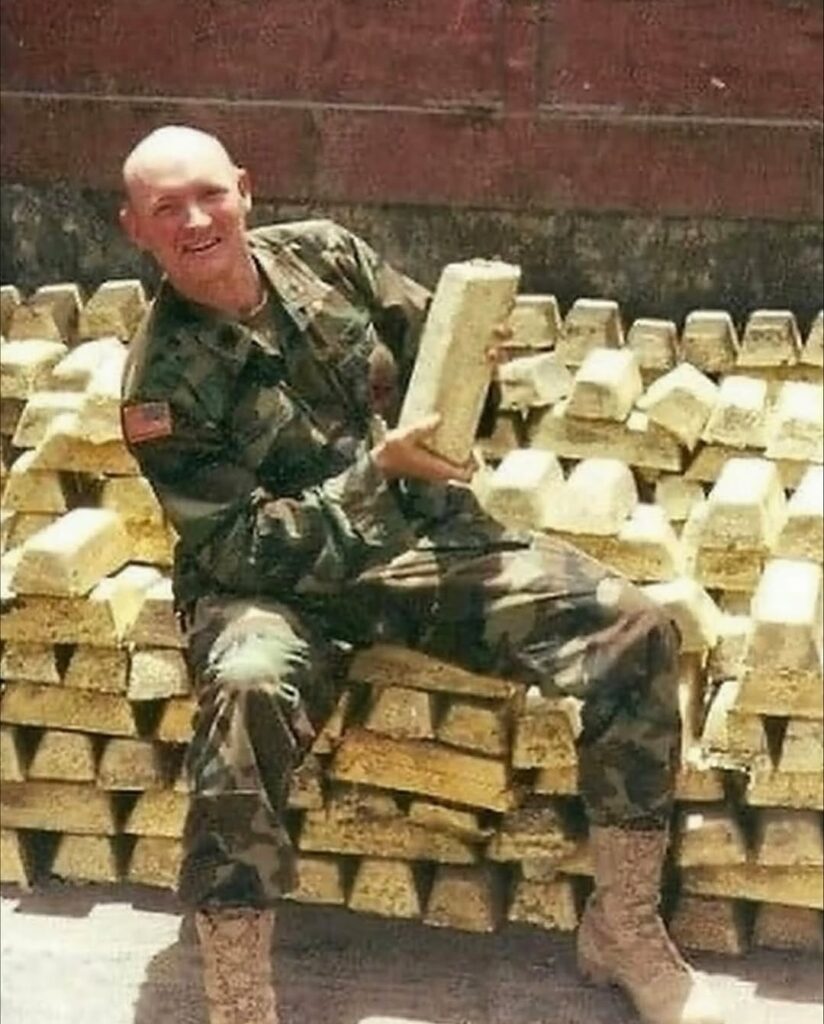
The operation resulted in the recovery of approximately 1,000 gold bars, widely believed to belong to the Iraqi state and linked to the former regime. At the time, Iraqi financial reserves — including cash, gold, and documents — were at high risk of being smuggled out of the country or seized by armed groups amid the collapse of central authority.
Military units operating in the region were tasked not only with combat operations but also with stabilizing critical infrastructure and safeguarding strategic resources. Gold reserves, in particular, were considered essential to any future effort to rebuild Iraq’s economy, stabilize its currency, and support post-war governance.
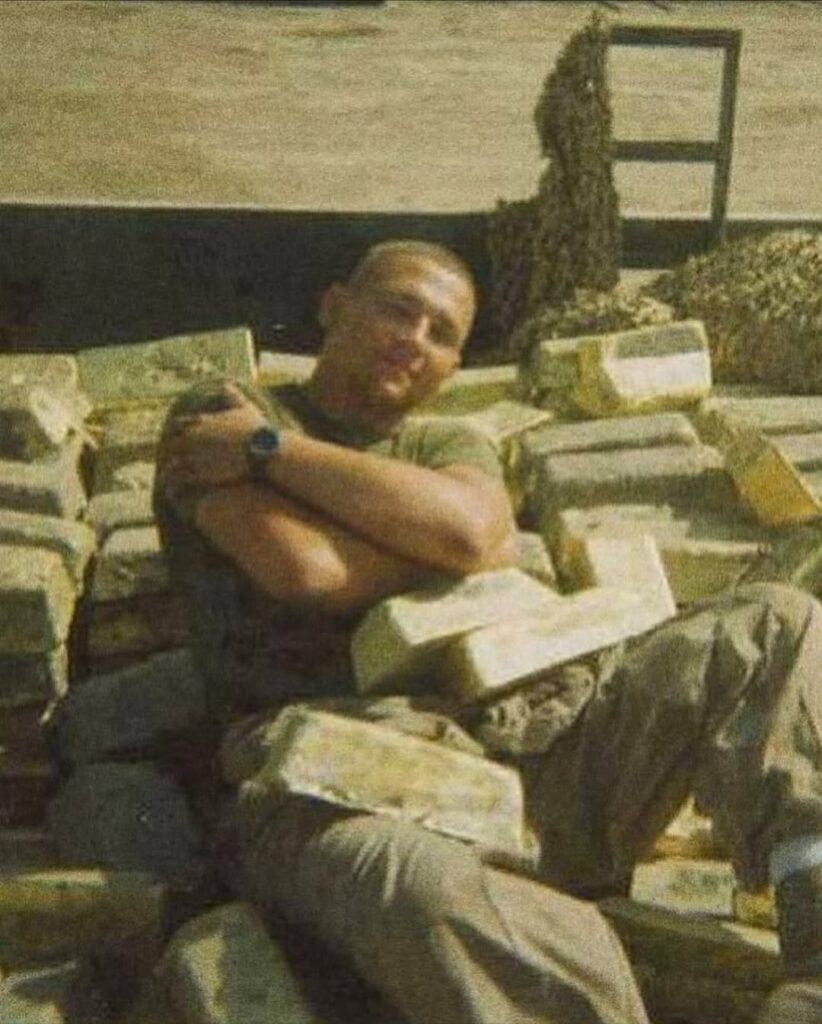
The discovery near Kirkuk was not an isolated incident. During the same period, coalition forces uncovered hidden cash reserves, documents, and valuables in government buildings, underground vaults, and private residences tied to senior figures of the former regime. These recoveries highlighted how authoritarian systems often concentrate national wealth in controlled networks, making such assets vulnerable during regime collapse.
The 173rd Airborne Brigade, deployed primarily in northern Iraq, played a key role in securing major urban centers, oil facilities, and transportation routes. Their presence helped prevent further loss of national resources at a time when state institutions had largely ceased to function.
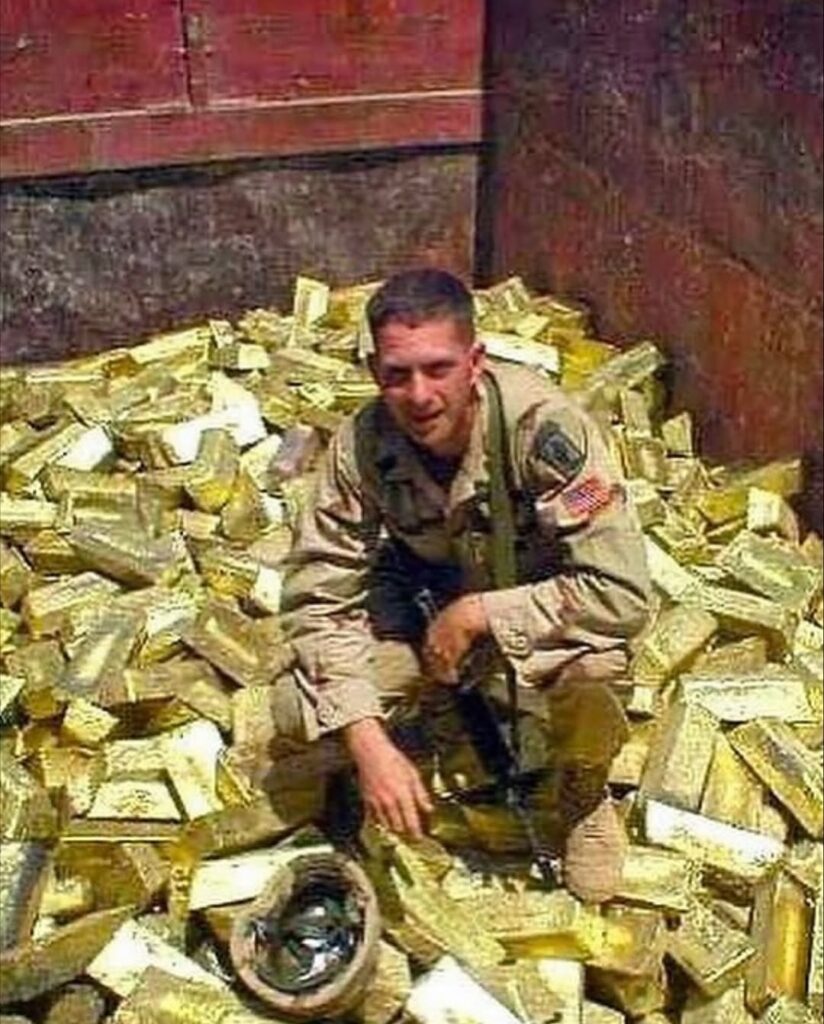
Photographs like this one rarely make headlines, yet they offer a powerful glimpse into the less-visible dimensions of war. Beyond the battlefield, modern conflicts involve economic security, protection of national wealth, and decisions that can shape a country’s recovery for decades.
Today, the image stands as a reminder that wars are fought not only with weapons, but also over control of resources, financial systems, and the foundations of future stability.
Moments like this continue to influence global conversations around post-war reconstruction, financial security, and the responsibility of occupying forces to protect national assets. Understanding how resources are managed during periods of political collapse helps inform modern policy discussions about economic recovery, international law, and long-term regional stability in conflict-affected nations.
Leave a Reply