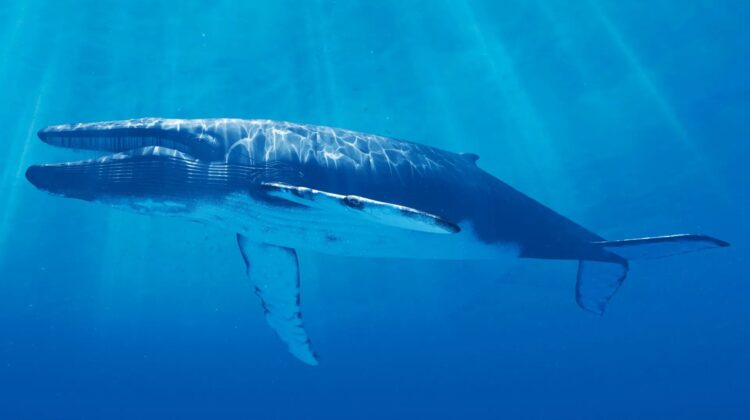
Blue whales, the largest animals ever known to live on Earth, may be sending scientists a worrying signal. Researchers have noticed that these massive marine mammals are becoming quieter in some parts of the ocean, and the change could point to deeper problems in the marine environment.
Blue whales can grow to around 100 feet in length, roughly the size of three school buses placed end to end. Despite their enormous size, only an estimated 10,000 to 25,000 individuals remain in the world’s oceans today.
These giants are known not only for their size but also for their powerful vocalizations. Blue whale calls are extremely low in frequency and can travel hundreds of miles underwater, allowing whales to communicate across vast distances.
For decades, scientists have used these calls to monitor whale populations and study their behavior.
The Importance of Whale Communication
Blue whales rely on sound for several important reasons. Their calls help them:
- Locate potential mates
- Coordinate movement across large ocean areas
- Maintain contact with other whales
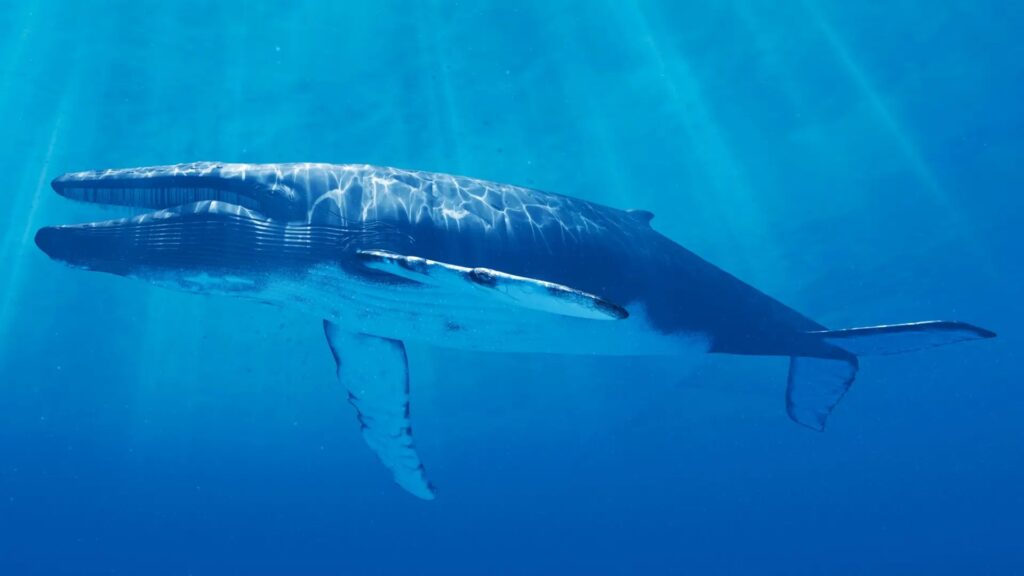
Because the ocean is so large and visibility underwater is limited, sound is the most effective way for whales to communicate.
However, in recent years researchers have observed fewer whale calls in some regions, raising concerns about what might be happening in the ocean.
A Warning From the Ocean
Scientists began closely monitoring whale sounds during a massive marine heatwave known as “The Blob,” which affected parts of the Pacific Ocean for several years.
During this event, ocean temperatures rose significantly, disrupting marine ecosystems and affecting the food supply for many species.
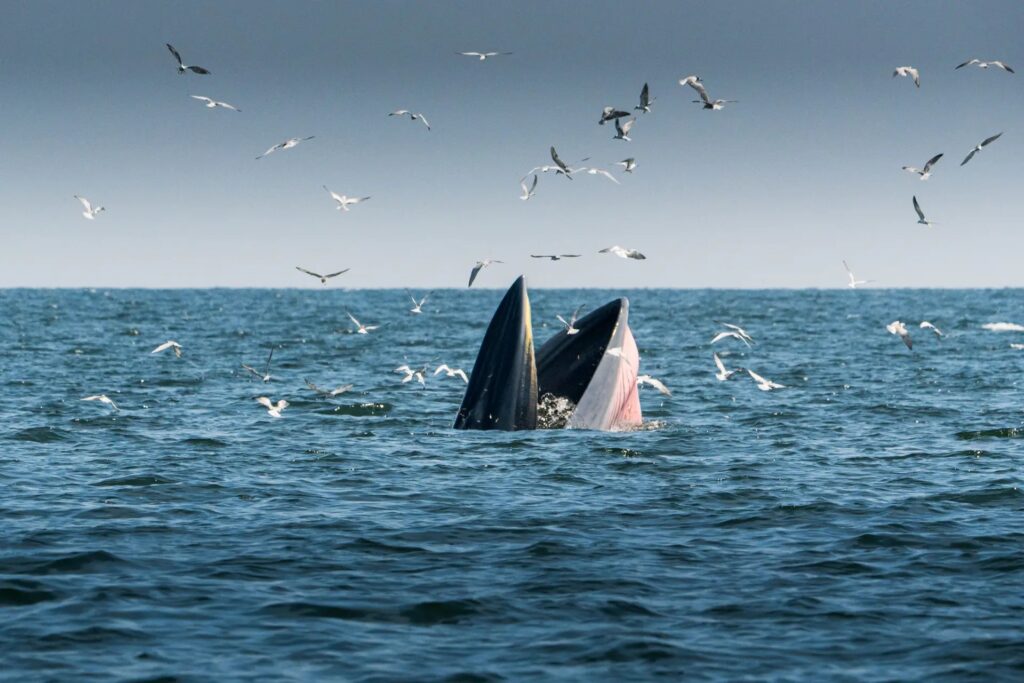
One of the biggest impacts was a sharp decline in krill, the tiny shrimp-like creatures that blue whales depend on for food.
An adult blue whale can consume up to four tons of krill every day, helping explain why these animals can weigh close to 200 tons.
When krill populations dropped, whales had to spend far more time searching for food. Researchers believe this intense search for nourishment may have caused the whales to vocalize less often.
Scientists describe the situation in simple terms: it can be difficult to “sing” when survival becomes the main priority.
The Role of Climate Change
Marine heatwaves are becoming more common as global ocean temperatures rise. These events can disrupt entire food chains, affecting everything from microscopic organisms to the largest predators in the sea.
If food sources become scarce across large areas of the ocean, whales may struggle to find enough nutrition to survive and reproduce.
Researchers warn that this could have serious long-term consequences for whale populations and the marine ecosystems they help support.
Why Blue Whales Matter to the Ocean
Blue whales play an important role in maintaining healthy ocean ecosystems.
Their waste releases nutrients such as:
- Iron
- Nitrogen
- Phosphorus
These nutrients help fertilize microscopic marine algae known as phytoplankton, which form the base of many ocean food chains.
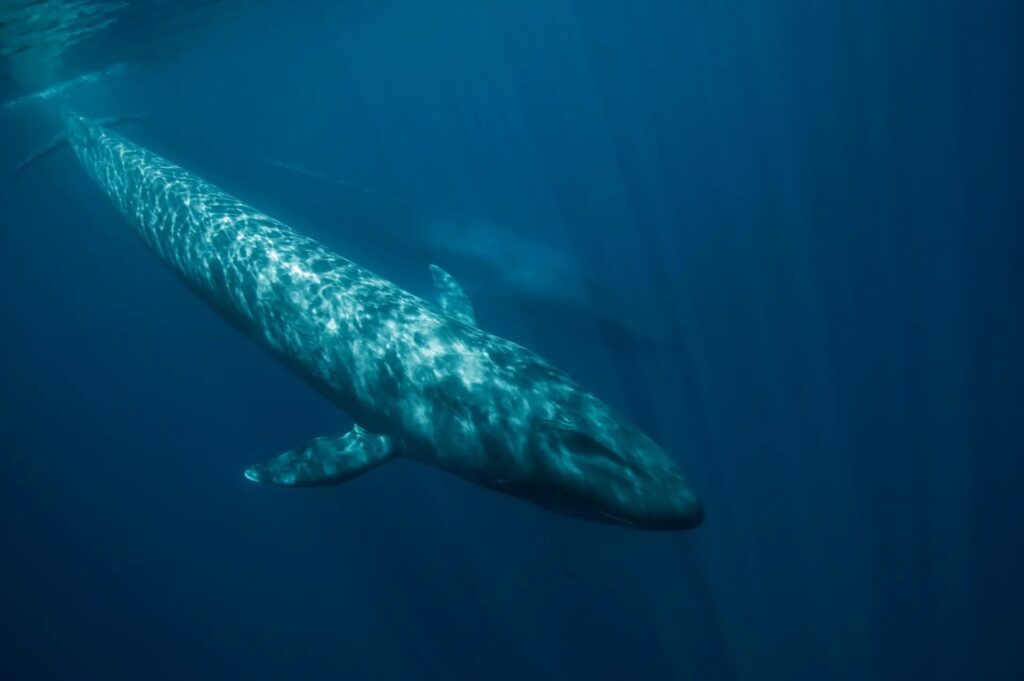
Whales also transport nutrients across long distances as they migrate between feeding and breeding areas. This process helps distribute essential nutrients throughout the ocean.
Without blue whales, many marine ecosystems could become less productive, affecting numerous species that depend on healthy ocean food webs.
A Global Ecological Signal
The decline in whale vocalizations may be more than just a behavioral change. For scientists, it could be an early indicator of broader environmental stress in the oceans.
Changes in whale activity often reflect shifts in ocean temperature, food availability, and ecosystem stability.
If the world’s largest animals are struggling to find food, researchers warn that it may signal deeper challenges affecting marine life on a global scale.
Marine conservation research plays a critical role in understanding climate change, ocean ecosystems, environmental monitoring, marine biology technology, and sustainable ocean management. Advanced tools such as satellite tracking systems, underwater acoustic monitoring, oceanographic data analysis, and climate modeling technology help scientists study large marine animals and protect fragile ocean environments for future generations.
Leave a Reply