
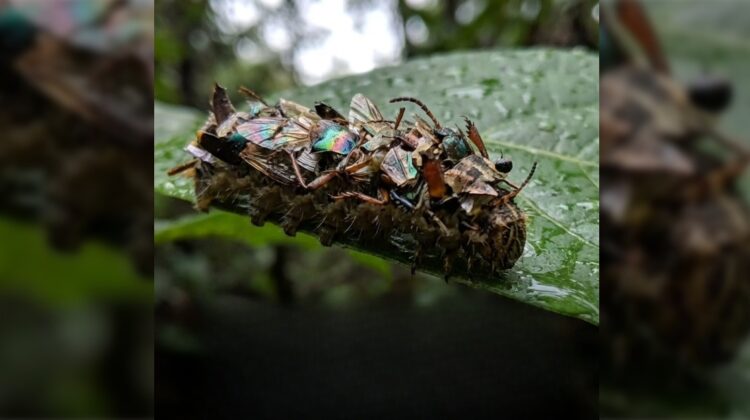
When most people think of caterpillars, they imagine harmless leaf-eating insects slowly transforming into butterflies or moths. But scientists have discovered a shocking exception that behaves more like a tiny predator from a horror movie.
Researchers studying a rare species of caterpillar found that instead of feeding only on plants, it actively hunts other insects — and uses their body parts as protection.
This unusual behavior has fascinated scientists and revealed just how strange the insect world can be.
A Predator in Caterpillar Form
The newly documented caterpillar doesn’t simply eat leaves like most members of its kind. Instead, it attacks small insects and other arthropods it encounters.
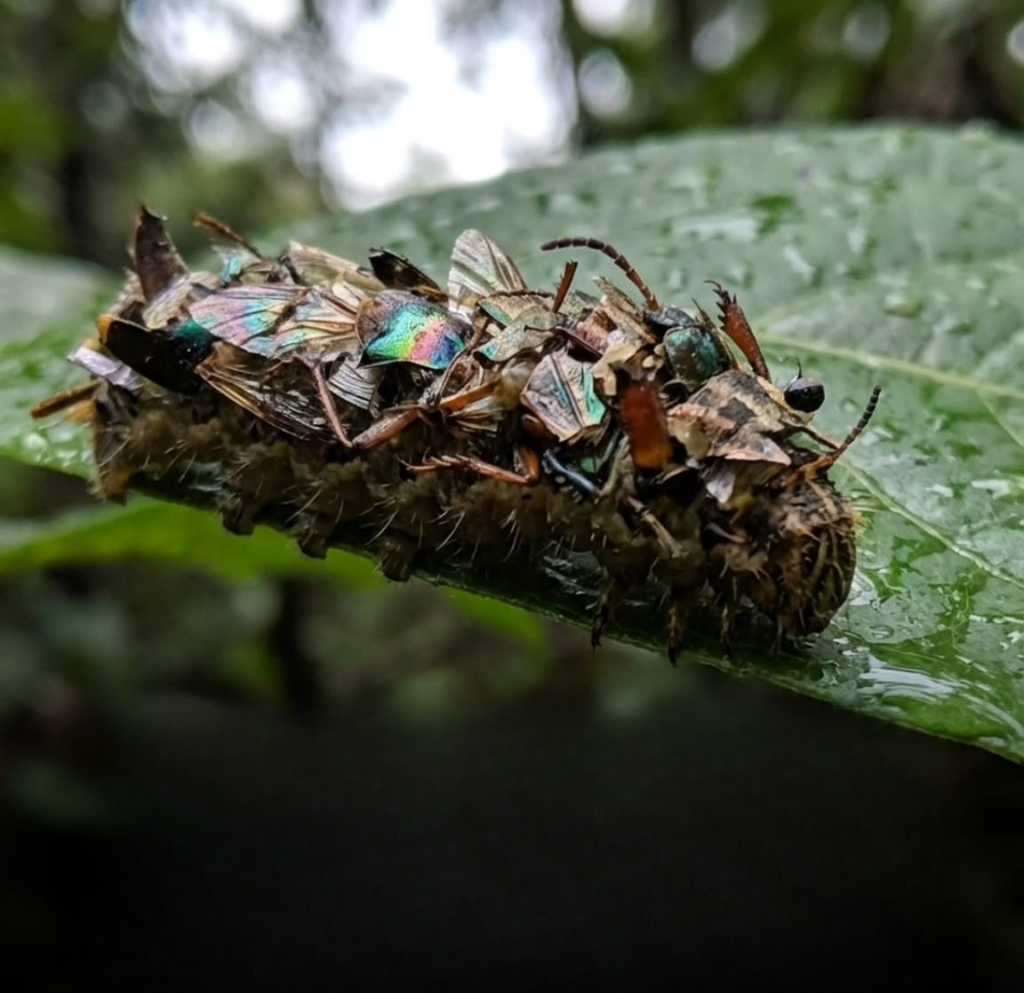
After killing its prey, the caterpillar performs an even more surprising action: it carefully cuts apart the bodies and attaches the remains to its back.
These body parts — including legs, wings, and fragments of exoskeleton — create a disturbing but effective layer of armor.
A Clever Survival Strategy
Scientists believe this gruesome “coat” serves two important purposes.
First, it helps camouflage the caterpillar by making it resemble a pile of debris or insect remains on the forest floor. This makes it far less noticeable to predators.
Second, the sharp and irregular pieces attached to its body may provide physical protection, discouraging birds, spiders, and other predators from attempting to eat it.
This unusual defensive behavior shows how some insects evolve extremely creative survival strategies.
Nature’s Unexpected Behaviors
The insect world is full of strange adaptations, but this discovery stands out as one of the most dramatic examples of predator behavior in caterpillars.
While most caterpillars are herbivores, a small number have evolved carnivorous habits. In this case, the species demonstrates not only hunting behavior but also a unique method of disguise using the remains of its victims.
Scientists say discoveries like this highlight how much there is still to learn about the complex and often surprising behaviors of insects.
Why Discoveries Like This Matter
Studying unusual species helps researchers better understand evolution, predator-prey relationships, and how animals adapt to survive in challenging environments.
Even small creatures like caterpillars can reveal important insights into the diversity of life on Earth.
Nature, it seems, can be far stranger than fiction.
Entomology and biodiversity research continue to uncover remarkable insect behaviors that help scientists understand ecosystems and environmental balance. Studying insect species contributes to fields such as agriculture, pest control, and conservation biology, offering insights that can support sustainable farming, biodiversity protection, and environmental management.
Leave a Reply