
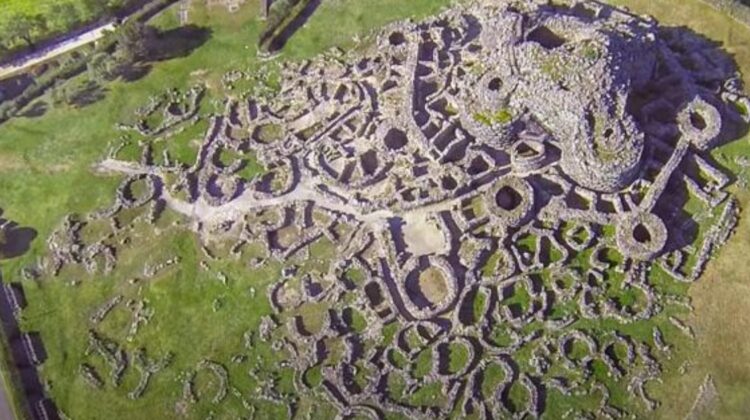
Hidden among the rolling hills of Sardinia, Italy, stands one of Europe’s greatest archaeological mysteries: Su Nuraxi di Barumini. This massive Bronze Age fortress has watched over the island for nearly 4,000 years, long before the rise of Rome and Greece, and remains a marvel of prehistoric engineering. With its towering megaliths, intricate design, and mysterious origins, Su Nuraxi is more than an ancient ruin—it is a window into a lost civilization that left no written history, only a monumental legacy carved in stone.
A Civilization Lost to Time
Su Nuraxi was built around 1600 BCE by the Nuragic civilization, a culture unique to Sardinia. The Nuragic people flourished for over a thousand years, yet we know remarkably little about them. They left no written records, no myths, and no chronicles; everything we know comes from archaeology.
Their most iconic creations are nuraghi—towering stone structures found all over Sardinia. Su Nuraxi is the most famous and best-preserved of these, recognized as a UNESCO World Heritage Site for its historical and cultural importance.
An Architectural Marvel
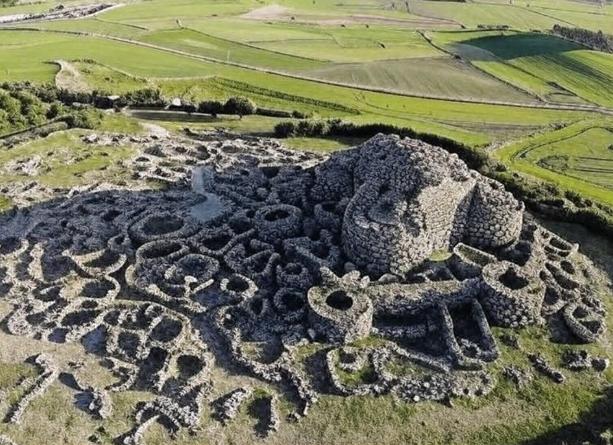
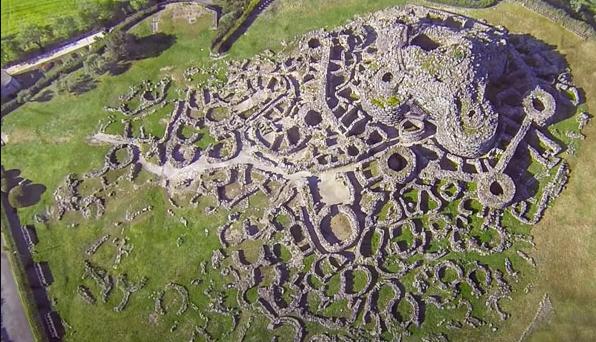
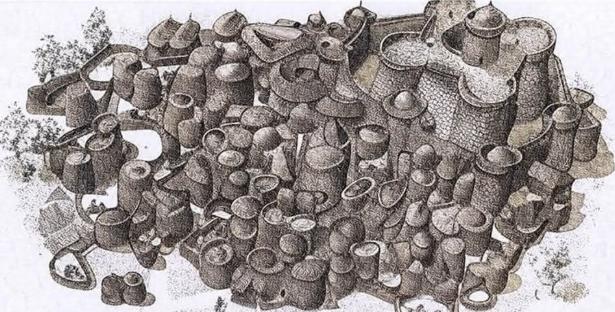
At the heart of Su Nuraxi stands a central tower (nuraghe), once rising to around 20 meters (65 feet). Surrounding it are four smaller towers, connected by thick defensive walls, forming a massive stone stronghold. Over the centuries, an entire village of over 200 circular stone huts grew around the fortress, arranged in a near-perfect pattern.
Even more impressive is how these structures were built. The Nuragic people used multi-ton basalt boulders, stacking them without mortar yet achieving remarkable stability. Many of these stones were quarried and transported with no cranes, wheels, or advanced tools—an engineering feat that baffles archaeologists to this day.
Advanced Society in the Bronze Age
Excavations at Su Nuraxi have revealed a complex society. Archaeologists found metal tools, weaving equipment, ceramic vessels, and evidence of trade with other Mediterranean cultures. Despite their apparent isolation, the Nuragic people built advanced settlements capable of defense, agriculture, and industry.
The fortress was likely a multi-purpose center—serving as a military stronghold, political headquarters, religious site, and symbol of power for the Nuragic elite. Its design reflects a culture with exceptional architectural knowledge, organization, and social structure.
Mystery and Interpretation
Much about Su Nuraxi remains unknown. Was it primarily a fortress, a ceremonial hub, or even a royal residence? Why did the Nuragic civilization leave no writing or mythology behind? Some historians believe the absence of records was deliberate, suggesting a society that preserved its culture through oral tradition rather than script.
The name “Su Nuraxi” itself means “The Nuraghe” in Sardinian, emphasizing how deeply these structures are woven into local identity.
A Monument That Withstood Millennia
Su Nuraxi’s survival is nothing short of miraculous. Over the centuries, it endured earthquakes, weathering, and changing civilizations. Today, visitors can walk through its narrow corridors, climb its towers, and stand in the center of a fortress that predates many of history’s greatest empires.
In 1997, UNESCO declared Su Nuraxi a World Heritage Site, calling it a “unique testimony to the ancient Nuragic civilization and its mastery of stone architecture.” It remains Sardinia’s most important archaeological site, attracting scholars and travelers from around the world.
Why Su Nuraxi Matters Today
Su Nuraxi is more than a ruin; it’s a powerful reminder of human ingenuity. It shows that advanced societies existed long before written history and that greatness isn’t always measured in gold or literature—sometimes, it’s etched in stone.
For modern visitors, Su Nuraxi offers a chance to explore one of Europe’s oldest and least-understood civilizations. Walking through its massive walls feels like stepping back into a time when people, with only simple tools and determination, built monuments strong enough to outlast empires.
Leave a Reply