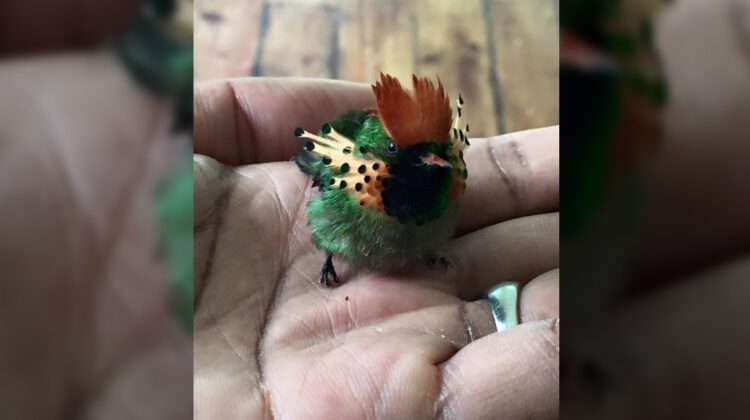
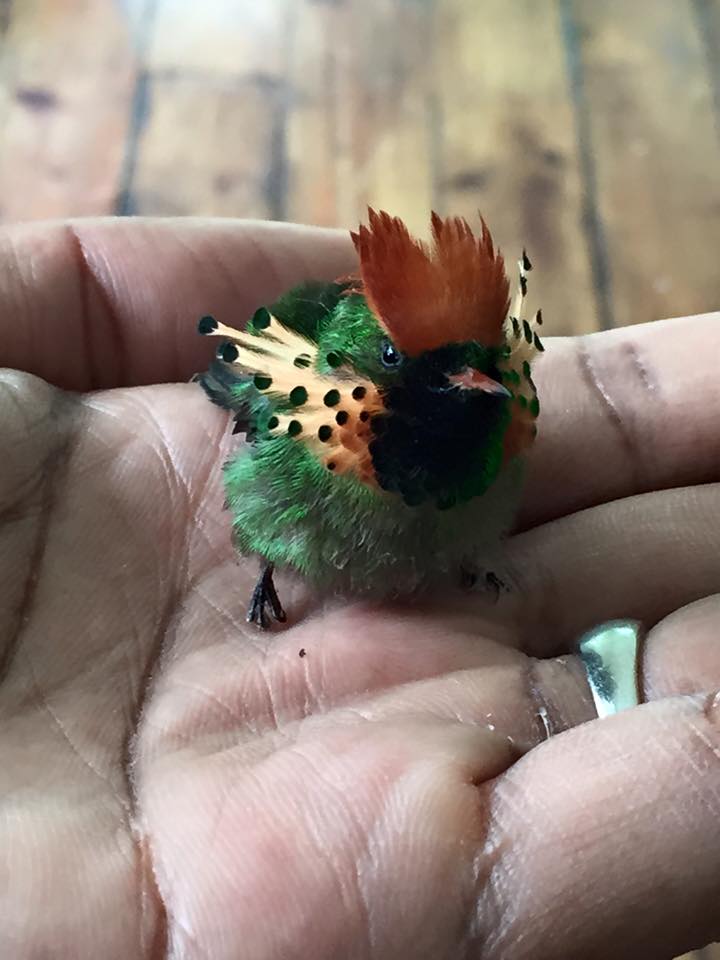
Visitors to the Asa Wright Nature Centre in Trinidad’s Arima Valley are used to seeing hummingbirds darting between flowers on the estate’s famous verandah. But one recent visitor needed a very different kind of encounter — a tiny Tufted Coquette so exhausted it could barely stay upright, until staff at the centre stepped in to help it recover.
Photographer Linda Mason Perlin captured the moment, showing the miniature hummingbird perched calmly on a finger while it regained its strength, before eventually flying off on its own.
Why a Hummingbird This Small Can Run Out of Energy So Fast
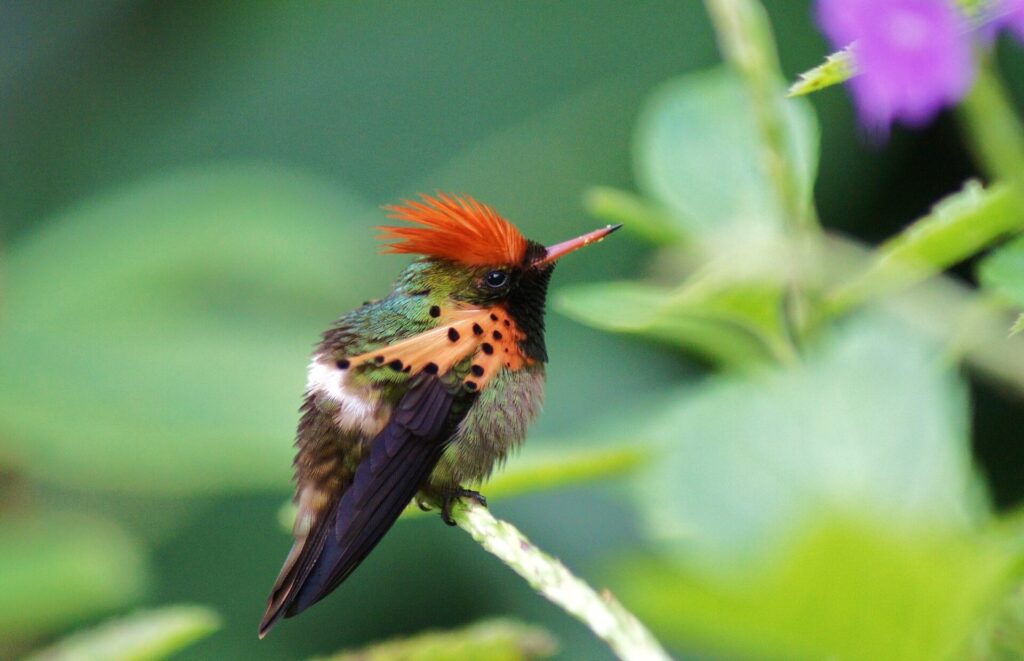
The Tufted Coquette (Lophornis ornatus) isn’t just small for a hummingbird — according to the Asa Wright Nature Centre itself, it’s the smallest resident bird species found anywhere in Trinidad, measuring only about 2.75 inches long. Males are especially striking, with a spiky rufous crest and black-spotted orange plumes fanning out from the sides of the neck, feathers so unusual the bird is often mistaken for a large bumblebee buzzing between flowers rather than a bird at all.
That tiny size comes with a serious metabolic cost. Hummingbirds have among the fastest metabolisms of any animal on Earth, and their hearts can beat well over 1,000 times a minute during flight. To keep up with that energy demand, they need to feed almost constantly — and a Tufted Coquette that goes too long without nectar, especially during periods of heat, stress, or heavy activity, can become dangerously depleted very quickly. In extreme cases, hummingbirds enter a state called torpor, a temporary, deep energy-saving state that can look, to an untrained eye, uncomfortably close to death.
Staff at nature centres experienced with hummingbirds typically respond to an exhausted bird by offering sugar water at a concentration similar to natural nectar, then keeping the bird calm and warm until it regains enough strength to fly under its own power — which is what appears to have happened here.
A Reserve Built for Encounters Like This
The Asa Wright Nature Centre has operated as a nature resort and scientific research station since 1967, spread across roughly 1,300 acres in Trinidad’s Northern Range. It’s considered one of the top birdwatching destinations in the Caribbean, with more than 250 bird species recorded on the property over the years — making close encounters between staff, visitors, and wildlife in need a fairly regular occurrence.
Moments like this one are a small but genuine reminder of the quiet, ongoing work reserves like Asa Wright do — not just protecting habitat on a large scale, but occasionally stepping in, one exhausted hummingbird at a time.
Photo and observation credit: Linda Mason Perlin, taken at Asa Wright Nature Centre, Trinidad.
Leave a Reply